On Two Wheels, Reaching Every Child
With support from Gavi, the Vaccine Alliance, a vaccinator in Kasur is breaking barriers to ensure every child is protected with vaccination

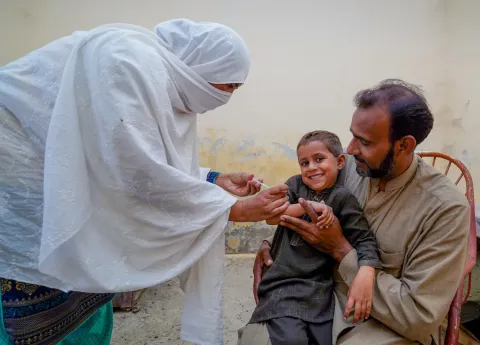
Kasur, Punjab: The narrow streets of a peri-urban settlement in Kasur begin to stir as the hum of a motorbike echoes through the lanes. At the handlebars is Saba Samuel, her vaccination kit strapped behind her, moving from one home to the next with quiet determination.
In a place where women riding motorbikes is still uncommon, Saba stands out. But for the families she visits, she is known for something more important. She ensures their children are protected from life-threatening diseases.
Her journey into healthcare began at home, where her father worked in the health department and her sister is a nurse, making care and prevention part of everyday life.
“I saw how my father and sister helped people,” Saba recalls. “That inspired me. I wanted to do something where I could serve my community, especially children.”
Driven by that purpose, she pursued a diploma in vaccination and joined the Expanded Programme on Immunization (EPI) as a vaccinator. For Saba, the decision was personal.
“I have always loved children,” she says with a smile. “When you vaccinate a child, you are protecting their entire future.”

Reaching the unreached
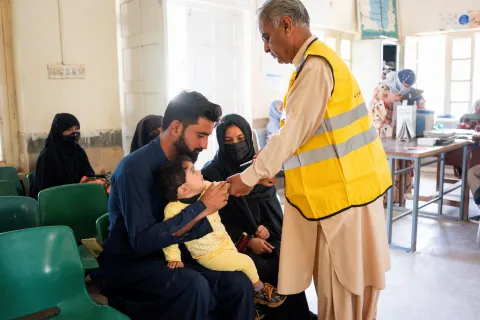
Saba’s work focuses on reaching families in remote areas who miss routine immunization. Through the Gavi supported Big Catch-Up (BCU) initiative with UNICEF, vaccinators like her identified and vaccinated children missed in previous years, especially during COVID-19.
Across Punjab, the campaign has reached over 1 million children, including more than 210,000 zero-dose children. These are children who might have remained unprotected but reaching them requires access.
For vaccinators like Saba, distance and transport are major challenges. “You can have a list of children, but reaching them is the real work,” she says.
Two wheels, stronger coverage
Reaching remote areas came with challenges, especially transport, as many communities were far from health facilities. Instead of waiting for a solution, Saba became one.
“I requested a motorbike so I could travel to these areas myself,” she says. With her father’s encouragement, she learned to ride, got her license, and stepped into a role still rare for women in her community.
“At first, people were surprised, but now they recognize me. They know I’ve come to support their children.” Her motorbike is more than transport. It represents access, independence, and commitment.
Building trust across communities
As a member of a religious minority, Saba navigates unique social dynamics but uses them to build trust. She meets local Imams and requests mosque announcements to inform families about vaccination visits.
Combined with door-to-door outreach, this helps her gather mothers and children for sessions. “I sit with mothers, listen to their concerns, and explain how vaccines protect their children,” she says. Her approach reflects the BCU focus on community engagement to reach missed children.

A day in life
Saba’s day begins early as she reviews her micro plan and maps out children needing vaccines. She coordinates with Lady Health Workers and community leaders to inform families before heading into the field.
By mid-morning, she is visiting homes or setting up outreach sites. “We check every child. If they missed even one dose, we make sure they get it,” she says. Each vaccination is recorded and followed up to ensure no child is left behind.
Changing mindsets, inspiring others
Saba’s work is not only improving immunization coverage, it is also changing perceptions. Other vaccinators, especially women, now look up to her as an example of what is possible.
“She has shown that with determination, you can overcome any barrier,” says a fellow health worker. “She goes where others hesitate to go.”
In communities where access was once limited, more children are now receiving their vaccines on time. And behind many of those numbers is Saba’s persistence.

A simple mission
For Saba, the motivation remains clear and deeply personal.
“Every child deserves protection,” she says. “If I can reach even one child who would have otherwise been missed, that is enough reason for me to keep going.”
As she rides off to her next stop, weaving through the streets of Kasur, her mission continues with one household, one conversation, one child at a time.
Because sometimes, the journey to saving children’s lives begins on two wheels.