Finding protection beyond the doorstep
With funding from Japan, UNICEF supports vaccinators working in high-risk areas of Balochistan to protect children from polio.

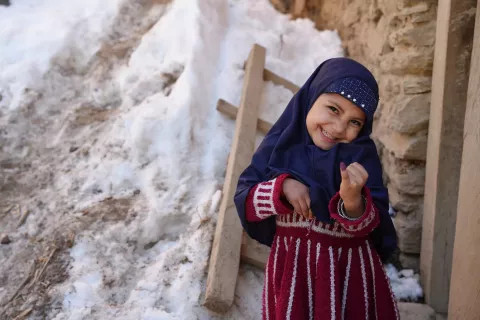
Four-year-old Anisa lives in Nala Boundary, one of Quetta’s densely populated neighborhoods classified as a high-risk area for poliovirus circulation. Like many families in these urban pockets, frequent movement, extreme heat, and limited access to vaccination services meant that Anisa had missed previous rounds of polio vaccination.
During earlier campaigns, vaccination teams had come to the area, but she remained unvaccinated. For her family, polio vaccination had not felt urgent or accessible until a different approach was used to reach their street.
Reaching a missed child through Immunity Express
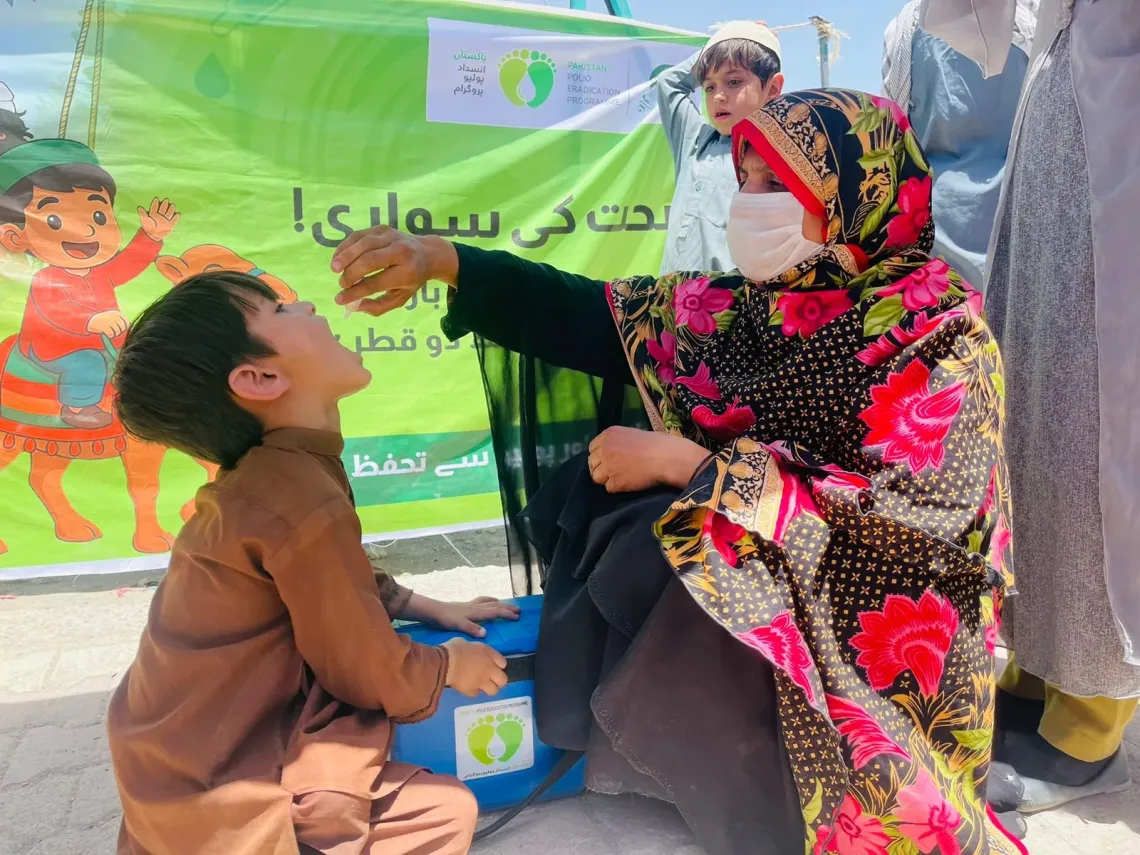
On a hot afternoon during the April 2025 polio campaign, her brother Rafiullah,10, heard laughter and music outside his home. Curious, he stepped out and saw decorated camels, colorful swings, and children gathered around what looked like a small community fair. It was an Immunity Express vaccination point, established to reach children missed earlier in the campaign.
Rafiullah ran back home and returned moments later with Anisa and their father. When a polio worker gently checked her finger, there was no vaccination mark. After receiving consent from Anisa’s father, the health worker administered the polio drops. Soon after, she was laughing on a swing, her earlier hesitation replaced by excitement.
“I’m very happy,” said Rafiullah. “My sister wasn’t vaccinated before. The polio team gave her the
drops here, and now she’s smiling. I’m glad she’s protected.”
For Anisa’s father, the experience marked an important shift in understanding. “We never really recognized the significance of polio vaccination before,” he said. “But seeing how easily my child was vaccinated here made us understand its importance. Now my daughter is vaccinated, and that gives me peace.”
His words reflect a broader challenge in high-risk urban settings where missed children are often the result of access barriers and limited engagement, rather than outright refusal.

Immunity Express: Reaching the Unreached
Immunity Express was piloted across 14 high-risk Union Councils in Quetta during consecutive polio vaccination campaigns in April and May 2025. Implemented as a targeted social and behavior change initiative, it complemented house-to-house vaccination by establishing visible, child-friendly vaccination points that encouraged families to come forward voluntarily.
During catch-up days, 763 missed children were identified, of whom 468 were successfully vaccinated through Immunity Express including Anisa, demonstrating how complementary outreach approaches can convert vaccine availability into actual uptake.
This initiative was made possible through support from the Government of Japan (JICA), that supports UNICEF vaccine procurement to ensure uninterrupted vaccine availability. Despite temperatures exceeding 45°C, vaccination teams operate at full capacity, equipped with adequate vaccines, cold boxes, and logistics.
A respected community influencer from the area observed how the initiative changed perceptions.
“As a community, we now understand the importance of such initiatives,” he said. “Through activities like Immunity Express, trust is built around polio vaccination. When families feel included and children feel safe, acceptance increases.”

Protecting Every Child
For Anisa, one visit to a lively community vaccination point meant protection against a lifelong disability. For her brother Rafiullah, it meant happiness and relief. And for Quetta’s high-risk communities, it represented another step toward a future where no child is left unprotected, regardless of where they live.
With continued support from the Government of Japan, UNICEF remains committed to ensuring that polio vaccines are not only procured but delivered reliably and used effectively to reach every child—especially those missed before.