The Unsung Heroes of Polio Eradication in Pakistan
With funds from Canada and Rotary International, UNICEF is supporting a strong force of community mobilizers, so every child can receive polio drops

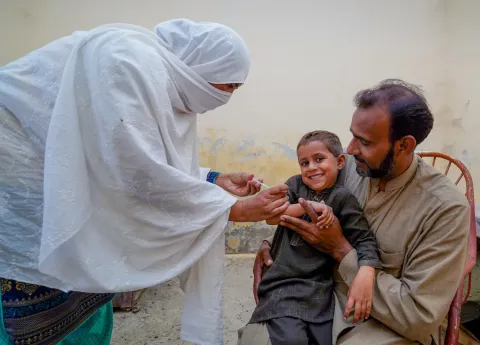
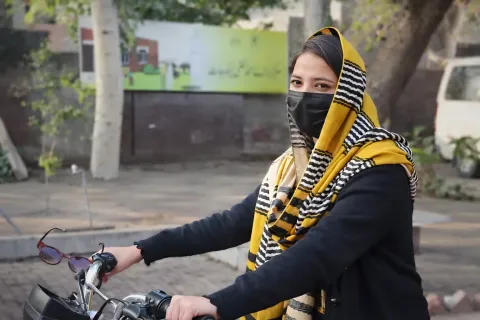
Taxila, Punjab: In the dusty lanes of Taxila, located along the historic Grand Trunk Road in Rawalpindi District, Azmat Rasool, a Community Mobiliser is on a mission to immunize children in her community.
In Pakistan’s fight to eradicate polio, she is one of more than 400,000 frontline workers including 225,000 female vaccinators, resolute in their commitment to prevent this crippling disease so children survive and thrive.
The Government of Canada and Rotary International are key partners in supporting Pakistan's Polio Eradication Programme. With their generous support, UNICEF has been able to strengthen its community mobilization efforts in the country’s most challenging areas. On the frontlines of this effort is Azmat, who works tirelessly to ensure every child, especially those most at risk, receives the life-saving polio vaccine.
Polio, or poliomyelitis, is a crippling and potentially deadly infectious disease caused by the polio virus. It primarily affects children under the age of five and can lead to irreversible paralysis. While most of the world has eliminated polio, Pakistan remains one of only two countries, along with Afghanistan, where the virus continues to circulate endemically.
Despite massive nationwide immunisation drives and global support, misinformation, and mistrust continue to hamper polio eradication efforts in Pakistan.
The virus spreads quickly, particularly in areas with poor sanitation and high population mobility.
Targeting high-risk areas
Rawalpindi and Lahore, two of the largest districts in Punjab province, account for 40 percent of the country’s high-risk mobile population.
Communities of seasonal migrants pose a unique challenge to Pakistan’s polio eradication efforts. They are difficult to track, hard to access, and often carry cultural or religious suspicions about the vaccination programme.
UNICEF, under the leadership of the Government of Pakistan, and in collaboration with other global health partners, has taken proactive steps to combat the existence of polio.
As part of efforts to target high-risk urban populations in Rawalpindi and Lahore, over 500 Community Mobilisers have been deployed. These workers are the face of the immunisation campaign for communities - trusted neighbours and not uniformed health officials.
Leaving no child behind
Azmat became a Community Mobiliser committed to reach every family with a young child in her community. Her mission is to ensure that no child remains unvaccinated and at risk.
Her journey has not been easy.
Azmat’s husband is a construction worker and was initially not in favour of her taking up this job. He knew the risk as there have been incidence of polio teams being attacked and fired upon.
She managed to convince him explaining that it was about every child’s health and future.
“I told him that vaccination can save children from paralysis, or even death. Eventually, he agreed and is now one the biggest supporters of my work,” says Azmat.
“My first assignment was a difficult one. I visited a family to vaccinate their children, and they thought I had ulterior motives, theft or something. They did not want a stranger giving their children any kind of vaccine,” Azmat recalls.
“I stayed calm and relied on empathy and patience. I told the family that I am a registered member of the health department and showed them my official card explaining that I meant no harm and had only come to give polio drops to their children.”
“I told them that I am a mother too and know how important it is for a child to be vaccinated at the right age,” she adds.
Azmat’s resilience and honesty resonated, and the family understood the real purpose of her visit.
“After two hours, I had answered all their questions, they agreed for me to vaccinate their children,” Azmat says with a sense of accomplishment.

The resolve and courage of Community Mobilisers is recognised and regarded by the entire health community in Pakistan.
“We acknowledge and are mindful of the bravery and persistence of our Community Mobilisers,” says Yasmin Bibi, who is the Union Council In-charge of the area where Azmat works.
“They not only respond to crises but also prevent them.”
“Newly arrived families from other provinces often refuse their children being given polio drops. They have heard rumours and are reluctant to vaccination. In such cases, Community Mobilisers play a crucial role. They involve influencers such as community elders, mosque imams, and gradually build a network of trust, Yasmine explains.”
“The end objective for all of us is to leave no child unvaccinated.”
Until polio is eliminated from Pakistan, the journey for health works like Azmat Rasool, is long and hard, and far from over.
Their role is crucial in every polio immunization campaign until the disease is completely eradicated.
The fight against polio is not just about medicine or science. It is about connection, communication, and courage. With dedicated community mobilisers like Azmat Rasool, and the support of donors like the Government of Canada and Rotary International, Pakistan is inching closer to becoming polio-free.