Empowering Teachers, Transforming Futures
Funded by EU, UNICEF provides impetus to transforming education in Sindh
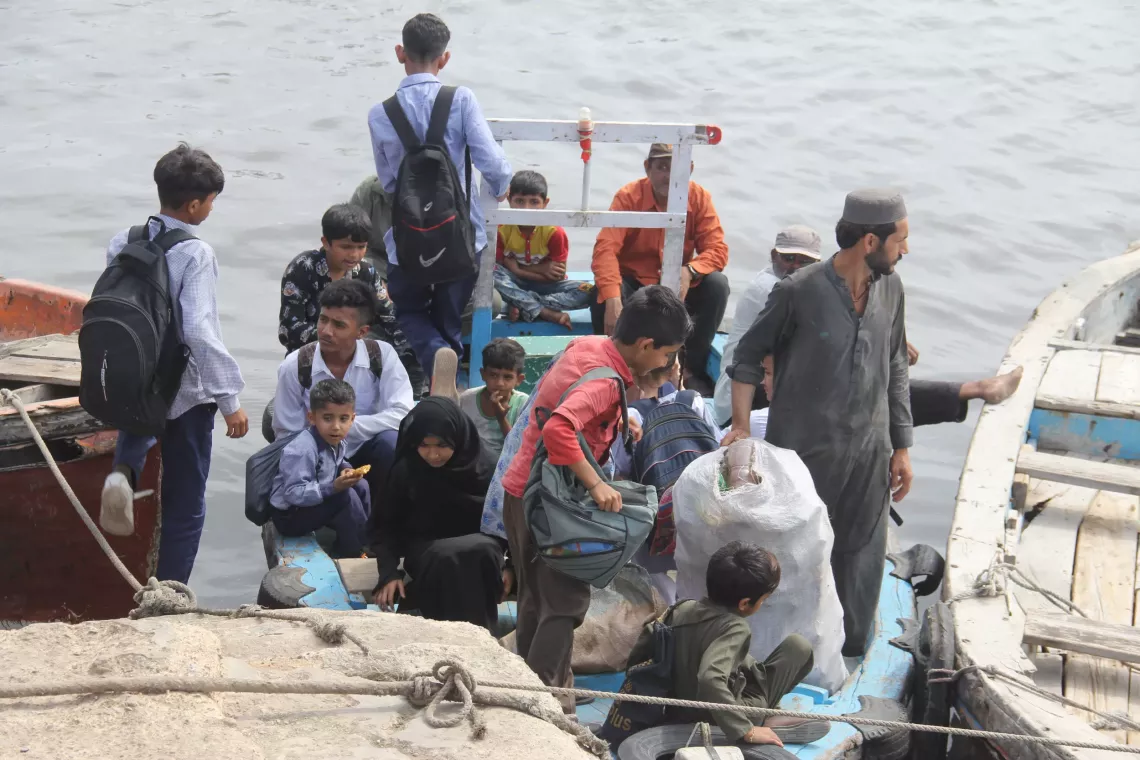
Karachi, Sindh: Baba Island is one of many small islands dotted along the coast of Karachi.
Believed to be nearly 400 years old, the small yet densely populated island is home to over 30,000 residents.
Comprising mostly fishermen, the communities inhabiting Baba Island have few resources and remain isolated from the mainland. Their only connection to Karachi is via a ferry service to Keamari Harbour.
One of the few public schools on the island is the Government High School Younusabad. With just a handful of teachers and hundreds of students, the school mirrors the overpopulation of the island itself.
“There has always been the issue of too few teachers for so many students,” laments Javeria, a 15-year-old grade seven student.
“And teaching was always about lecturing and writing on the blackboard. For instance, during a mathematics class, the teacher would write the question on the board, ask the class, and then write the answer herself.”
“We resorted to rote learning, memorizing the content solely to pass exams,” she adds.
With teachers unfamiliar with modern pedagogy - the theory and practice of how students learn - their approach remained conventional, confined largely to blackboard-based instruction. This raised concerns about the overall quality of education.
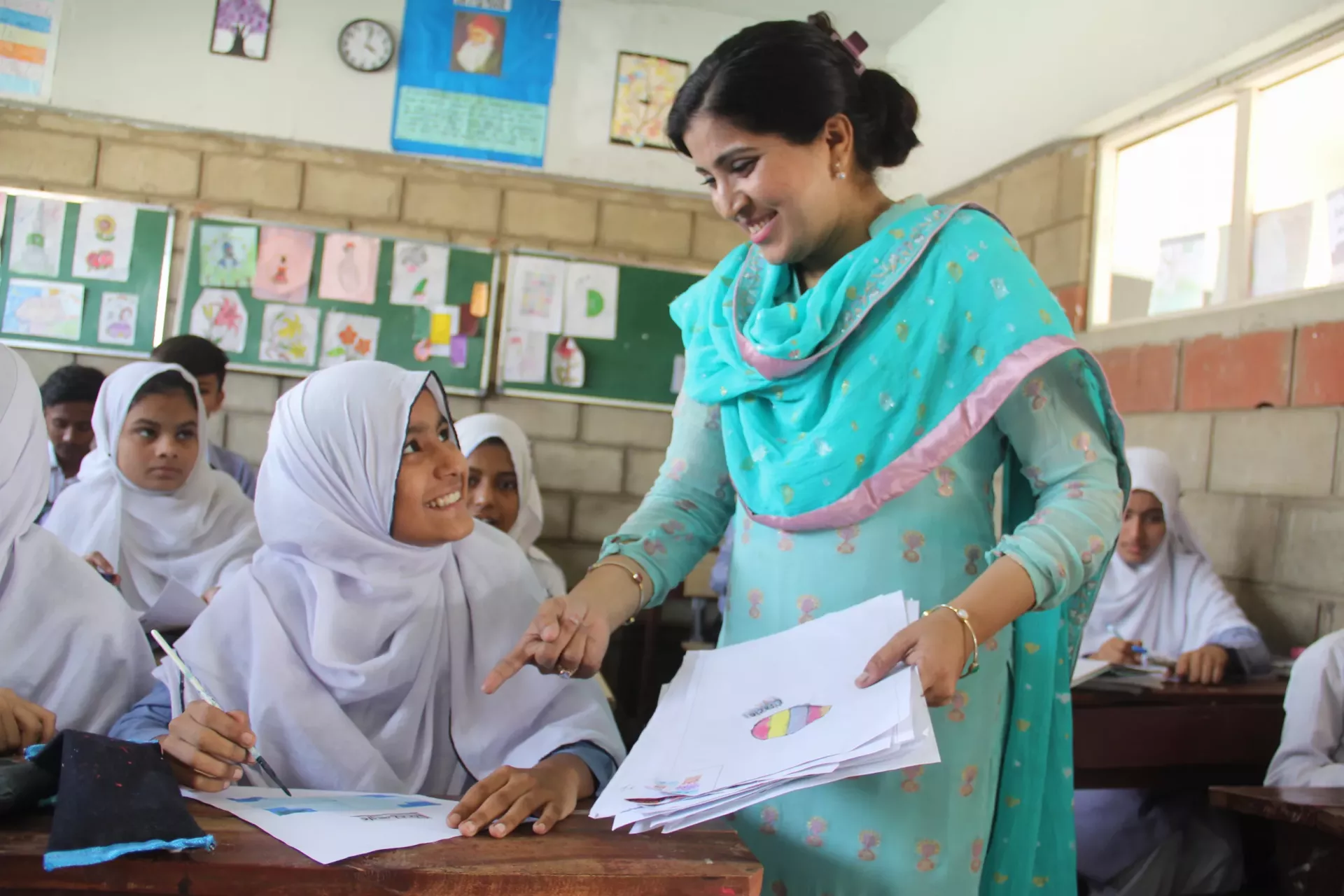
“When these students advanced to higher grades, their understanding remained shallow, limited to memorization and recall,” shares Farzana Sarwar, Javeria’s newly appointed teacher and a qualified, experienced instructor.
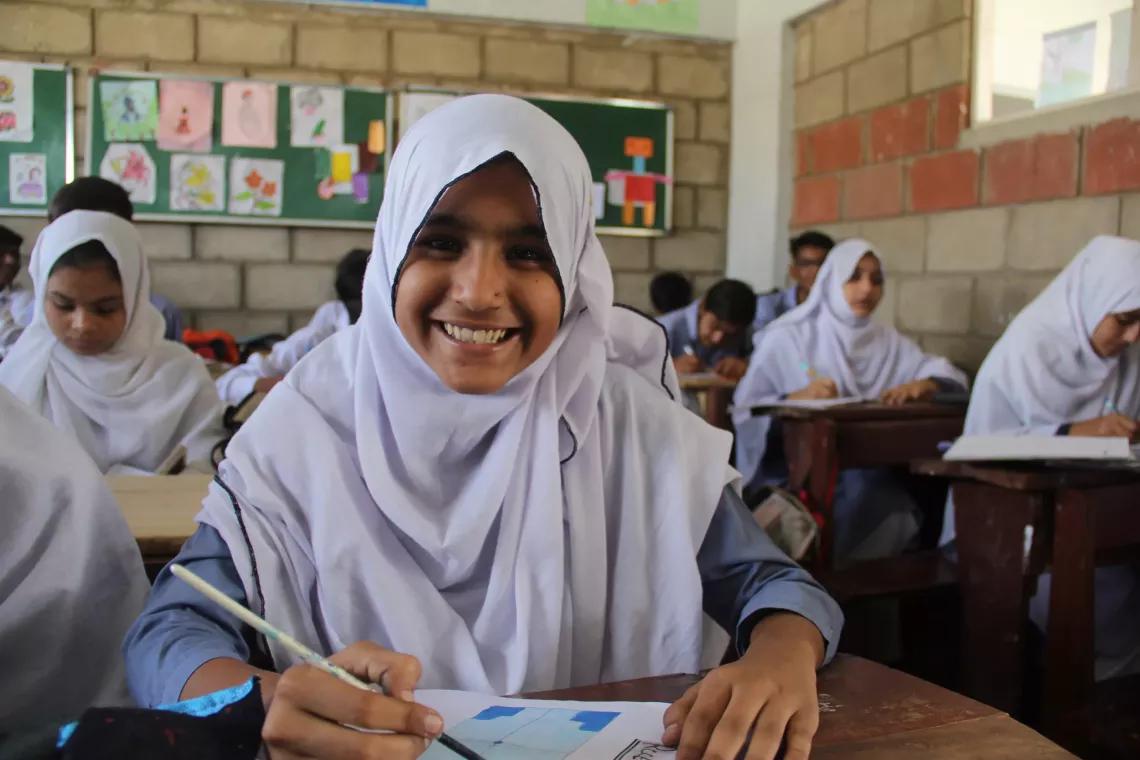
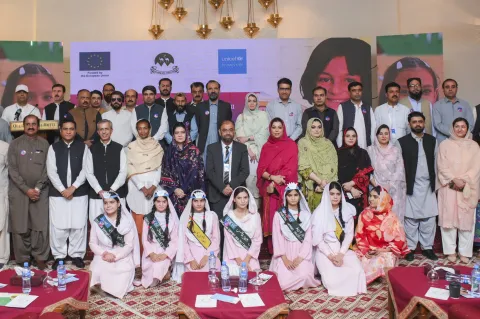
A shift toward modern teaching approaches to better engage students and improve learning outcomes was introduced under the Sindh Technical Assistance for Development through Enhanced Education Programme (STA-DEEP) - a project funded by the European Union (EU) and implemented by UNICEF.
UNICEF provided technical support to the School Education and Literacy Department (SELD) to develop an upgraded Continuous Professional Development (CPD) Plan for schoolteachers.
Additionally, it supported the development of a revised School Clustering Policy aimed at addressing the isolation of rural schools, which often operate with limited resources, few teachers, and little access to professional development opportunities.
Under this policy framework, Guide Teachers are being trained to support fellow educators within their clusters, and teacher progress is regularly monitored.
In-service teacher training has been rolled out across 14 districts in Sindh, aiming to build capacity and promote classroom practices aligned with modern pedagogical methods. Class observations, daily follow-ups, and constructive feedback are core components of the initiative.
Child-friendly learning methodologies are central to this transformation. Workbooks based on engaging exercises and support activities have been introduced to guide instruction.
“The initiative brought in a student-centered learning model, completely different from the traditional lecture-based method,” says Farzana.
“As a Guide Teacher, I now commute to neighboring islands like Manora and Bhit to teach at smaller schools linked to our main cluster.”
The new teaching methodology has had a noticeable and positive impact on students’ learning. A wave of change is visible in classrooms and throughout the schooling experience.
Art and theatre have been integrated into the curriculum and are now used as effective tools to enhance understanding.
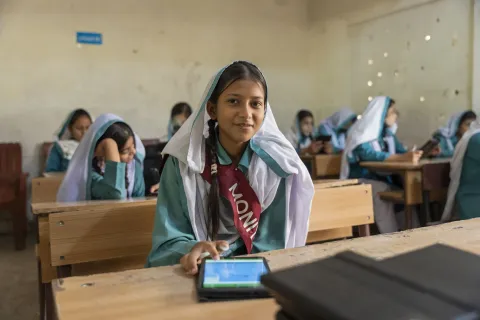
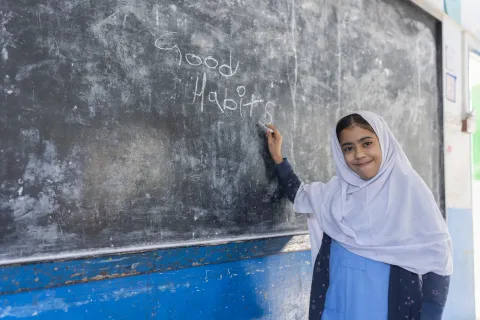
“Instead of doing everything themselves, our newly trained teachers now ask us to solve problems on the board,” explains Javeria.
“They also give real-life examples to help us understand. We no longer memorize content blindly. Instead, we grasp concepts through engaging stories and group activities.”
“Our self-confidence has grown, and we’ve overcome stage fright by participating in events planned for special occasions. Previously, I didn’t understand the point of celebrating these days. Now, we eagerly look forward to them.”
Counseling sessions have also been introduced, giving students the chance to express their aspirations and receive tailored guidance for the future.
All these measures have led to greater class participation, enhanced student self-esteem, and a renewed passion to learn—both inside and outside the classroom.