Nearly 1 in 16 internet-using children in Pakistan experienced technology-facilitated exploitation and abuse in one year – UNICEF
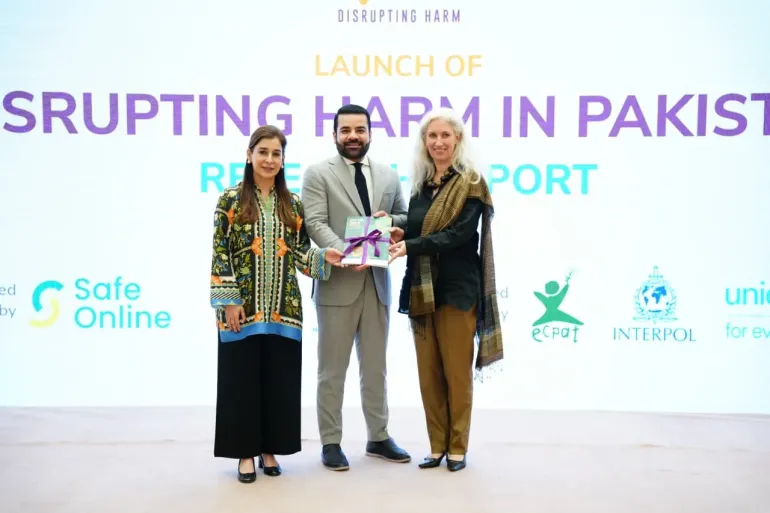
Islamabad, 3 September 2026 - Nearly 1 in 16 internet-using children aged 12–17 in Pakistan experienced at least one form of technology-facilitated sexual exploitation and abuse in a single year - equivalent to approximately 1.5 million children - according to new research from UNICEF Office of Strategy and Evidence – Innocenti, ECPAT International, and INTERPOL, funded by Safe Online.
The report “Disrupting Harm in Pakistan: Evidence on Technology-Facilitated Child Sexual Exploitation and Abuse” draws on a nationally representative household survey of children aged 12-17 and their parents and caregivers, interviews with frontline and justice professionals, and an analysis of laws and policies to examine the scale and nature of technology-facilitated child sexual exploitation and abuse in Pakistan. The research provides valuable insight into children’s experiences, the circumstances in which abuse can occur, and the barriers they may face in accessing help and protection.
The forms of abuse documented include unwanted sexual images or conversations, requests to share images of private parts, the sharing of children’s images without their permission, threats or blackmail involving such images or sexual activity, and the use of artificial intelligence to create fake images or videos.
“The digital world should be a safe space for children. We must shift from asking children simply to avoid risks to building stronger systems that prevent abuse and hold perpetrators and digital platforms accountable. Every child has the right to learn, connect and explore the digital world safely and with confidence, knowing that the systems around them are working to protect them from exploitation and abuse,” said UNICEF Representative in Pakistan, Pernille Ironside.
“In Pakistan, Disrupting Harm brings important evidence on the realities children face online and the gaps that must be addressed to keep them safe. Through Safe Online’s $15 million investment across 25 countries, we are committed to turning evidence into meaningful action to address these critical challenges. We commend the Government of Pakistan, ECPAT, INTERPOL, UNICEF and local partners for their leadership,” Marija Manojlovic, Executive Director, Safe Online
The report highlights the extent to which technology-facilitated sexual exploitation and abuse remains hidden in Pakistan. More than half of children subjected to technology-facilitated sexual exploitation and abuse did not tell anyone, while none of the children surveyed reported to formal avenues, including helplines, social workers and police. Community stigma, victim-blaming and a lack of trust in police keep children and their families silent. Abuse is never a child’s fault. This highlights the need for safe, confidential, and accessible ways for children to seek help and support.
“The survey shows girls and boys in Pakistan have been subjected to technology-facilitated sexual exploitation and abuse at similar rates, but their experiences can differ significantly. For boys, stigma and expectations around masculinity can mean they are overlooked as victims and discouraged from speaking about what happened. Recognising and responding to boys’ unique experiences must be part of effective child protection,” Andrea Varrella, Head of Programme: Justice and Child Rights, ECPAT International.
In 85 per cent of incidents cited by children in the report, the perpetrator was someone the child already knew, challenging the perception of online abuse as primarily a “stranger danger” risk. Social media platforms accounted for 44 per cent of reported instances of abuse, making it the most commonly reported digital environment in the research. The report also identifies evolving risks, including sexual extortion, blackmail, and AI-generated sexual abuse material.
"The findings from Disrupting Harm Pakistan highlight the urgent need to strengthen protection for children facing technology-facilitated sexual exploitation and abuse. By identifying legal and institutional gaps alongside the lived experiences of children and survivors, the research provides actionable recommendations to improve prevention, reporting, victim support, and criminal justice responses. These findings can support law enforcement and key stakeholders in strengthening national responses, in line with INTERPOL’s global efforts to combat crimes against children. Strengthening collaboration across sectors will be essential to ensuring technological advances are not exploited at the expense of children’s safety,” Mark Beavan, Head of INTERPOL Crimes Against Children Unit
Creating a safer digital environment for children requires action across the entire system - from stronger laws for the digital age and regulation and greater accountability for online platforms, to safety-by-design measures, and child-centered justice systems. This must be complemented by safe and confidential pathways for children to seek help. Prevention efforts must also address stigma and victim-blaming attitudes within communities which place responsibility on the child instead of the perpetrator. The responsibility for online safety should not fall on children alone.
“Pakistan has an important legal foundation for protecting children from online exploitation and abuse. The priority now is to ensure that these protections translate into action - that children and families can access justice, that cases are handled in a child-sensitive and dignified manner, and that institutions have the capacity and resources to respond effectively. Stronger implementation and accountability are essential to ensuring that every child receives meaningful protection and access to justice,” said Chairperson National Commission on the Rights of the Child, Ayesha Raza Farooq.
UNICEF calls for coordinated action across government, law enforcement, justice and social services, as well as communities, schools, families and digital platforms, to strengthen prevention, protection and response and create safer environments for children, online and in-person.
###
Notes to Editors
Technology-facilitated child sexual exploitation and abuse refers to the ways digital technologies and platforms are used to enable or amplify the sexual abuse and exploitation of children in both online and in-person settings.
The full report by ECPAT International, INTERPOL and UNICEF Innocenti, “Disrupting Harm in Pakistan: Evidence on Technology-Facilitated Child Sexual Exploitation and Abuse,” can be accessed here.
Today, UNICEF also launches a global report, “Through Children’s Eyes: How Digital Technologies Enable Child Sexual Abuse,” which presents data and evidence from 21 countries around the world, including Pakistan, on the prevalence, experiences and impacts of technology-facilitated sexual exploitation and abuse affecting children.
Link to the global report here.
Global multimedia materials available here.
Media contacts
About UNICEF
UNICEF, the United Nations agency for children, works to protect the rights of every child, everywhere, especially the most disadvantaged children and in the toughest places to reach.
Across more than 190 countries and territories, we do whatever it takes to help children survive, thrive, and fulfil their potential.
For more information about UNICEF and its work for children, visit www.unicef.org