Water of hope
How Mele is rebuilding life after the 2024 earthquake

When the earth shook beneath Mele on 17 December 2024, homes cracked, hillsides crumbled, and in the chaos of landslides, Mele’s lifeline – its water system – was buried and broken.
Michel Taravaki, the Chairman of the Mele Water Supply Committee, still remembers the moment he realised both of the village’s main water tanks were gone.

“The earthquake cracked the two tanks, the pipes were broken and buried by the landslides,” he said.
“More than 8,000 people were impacted. We had no water at all.”
People turned to the rivers for survival, walking ten minutes down to fetch water for cooking, cleaning, and bathing. But the water was muddy, contaminated, and unsafe for drinking.
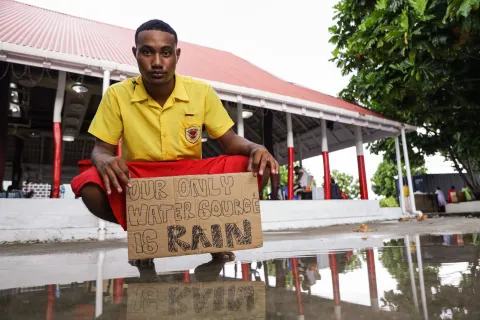
“People, especially children and more vulnerable members of the community, got sick – diarrhoea, coughing,” Michel explained. “We used rainwater for drinking when it came. When there was no rain, people had no choice."
Elders and people with disabilities suffered the most. Families began digging boreholes and drilling wells in desperation, but the water quality was poor and unreliable.
“Since the earthquake, life has not been normal,” Michel said quietly. “We couldn’t shower freely, children missed school, and people were frustrated. We lost hope.”
As part of the immediate emergency response efforts, UNICEF moved quickly to help families in Mele by delivering seven tanks and organising water trucking to the community. Within just a few days, people once again had access to clean, safe water – bringing a sense of relief amid the hardship that followed the earthquake. Water trucking was only a temporary solution to meet the community’s immediate needs while longer-term recovery efforts were being planned.

A Community Rebuilds Together
Hope began to return weeks later, when UNICEF and the Department of Water Resources stepped in to support long-term recovery efforts. UNICEF procured new pipes and the new 300,000-litre storage tank.
“The new tank is in place. We’ve agreed on the pipeline route, and the pipes have been laid," Michel said proudly.

But this is not a top-down project – it’s a partnership. Every Wednesday, since August 2025, 30 to 40 villagers gather to help clear roads, dig trenches, and prepare the path for the new pipes.
Michel explained, “It took one month for us to clean the bush to the source. Then, we cleared three roads. The day we found the right route – it felt like a big victory. The community was so happy.”
For 13-year-old Aurora, a student at Melemaat School, the earthquake changed her daily routine in ways that no child should experience.
“Every day, I had to go to the river to fetch water,” she said. “It was tiring. I couldn’t play with my friends. School was closed sometimes because there was not enough rainwater.”
Her words carry the weight of many children in Mele – growing up too fast in a village struggling to rebuild, still dreaming of the simple joys of clean water and playtime.
For Leisva Vatoko, a mother and volunteer, the new water project represents more than just infrastructure – it’s about dignity, unity, and resilience.
“I grew up here, and we always had water issues,” she said. “After the earthquake, it was worse. No water at all. People had to walk long distances to the river and carry heavy buckets back.”
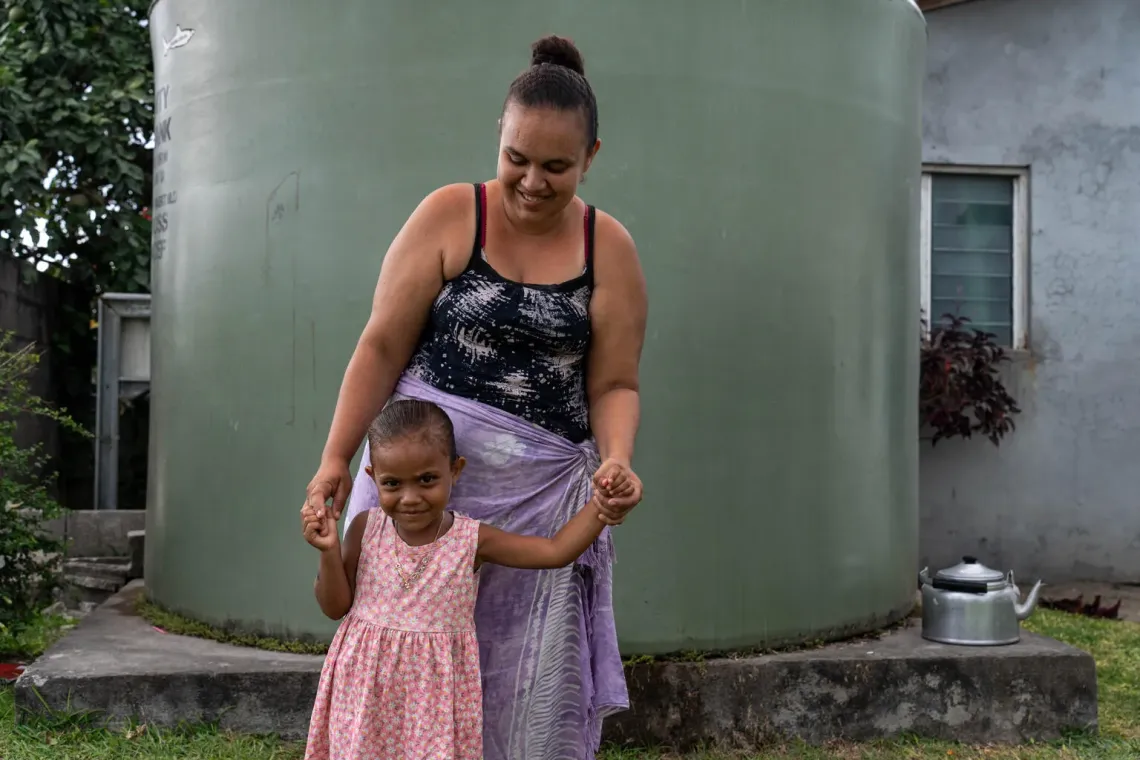
She recalls the first time the temporary rainwater tanks, provided by UNICEF as part of the emergency response, were filled thanks to water trucking.
“People were so happy. But, fixing Mele’s water system, thanks to the catchment, is a dream come true for everyone in Mele.”
Restoring Life, One Pipe at a Time
For Michel and the Water Supply Committee, thanks to UNICEF’s ongoing support, this project is more than a rebuild; it’s a rebirth. “When the first pipes were installed, people said it was like a Christmas gift,” he said. “Now we see hope again.”
When clean water finally flows again through Mele’s pipes, it will carry with it the strength, unity, resilience and hope of an entire village that turned disaster into determination.
“Water is life. And now, life is coming back to Mele.”