No child left behind
Unlocking inclusion through assistive technology
When Dorothy Grace sees her wheelchair, she smiles.
For the 11-year-old girl from Paunangisu on Efate, the wheelchair is much more than a piece of equipment.
Dorothy cannot walk. For years, her mother, Jessica, and the rest of the family did everything they could to care for her. They regularly massaged her muscles and used a pram that Dorothy’s father had brought from Australia to move her around.
But as Dorothy grew older, everyday life became increasingly difficult.
“Before, I was feeling so sorry for Dorothy because she was mainly staying at home.”
Simple activities that many families take for granted, like going to church, attending community events or spending time outdoors together became challenging. As a result, Jessica often stayed home with her daughter, missing out on social activities herself.
Everything changed after a recent check-up, when specialists assessed Dorothy’s needs. “We received a new wheelchair that is adaptable,” says Jessica. “Dorothy can lie down if she needs to rest. It is safer and adjusted to her body.”
The impact was immediate.
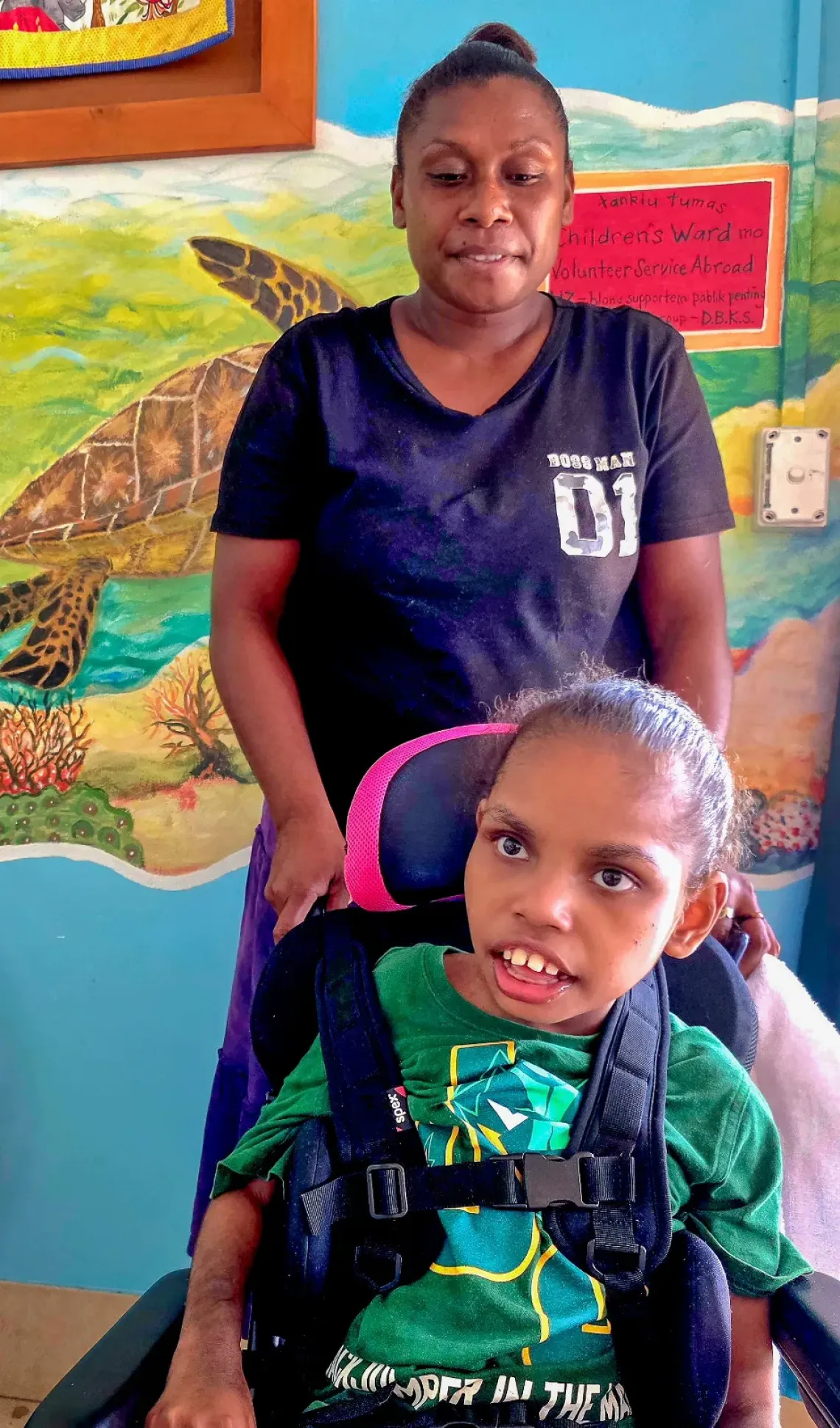
“Dorothy loves the wheelchair,” Jessica says. “She smiles because she knows it is an opportunity to go outside.”
Today, Dorothy and her mother can move around the yard with ease. The family can attend church services, village gatherings and community events together. Dorothy can meet people, see new things and participate in activities that were once out of reach.
“It changed the life of the whole family,” Jessica says. “Now we can spend time together and attend social events together.”
For Dorothy, access to a wheelchair brought independence, confidence and joy.
The story reflects what healthcare professionals across Vanuatu witness every day.
Daniel Frankem, a physiotherapist at Vanuatu National Hospital who has worked with children with disabilities for more than a decade, says assistive technology devices such as wheelchairs, walking frames and walking sticks can transform lives.
“When children with disability have access to assistive technology, they feel included in society,” he says. “They can go to church, watch a football game, take part in activities and even attend school. It is life-changing for them and for their family.”
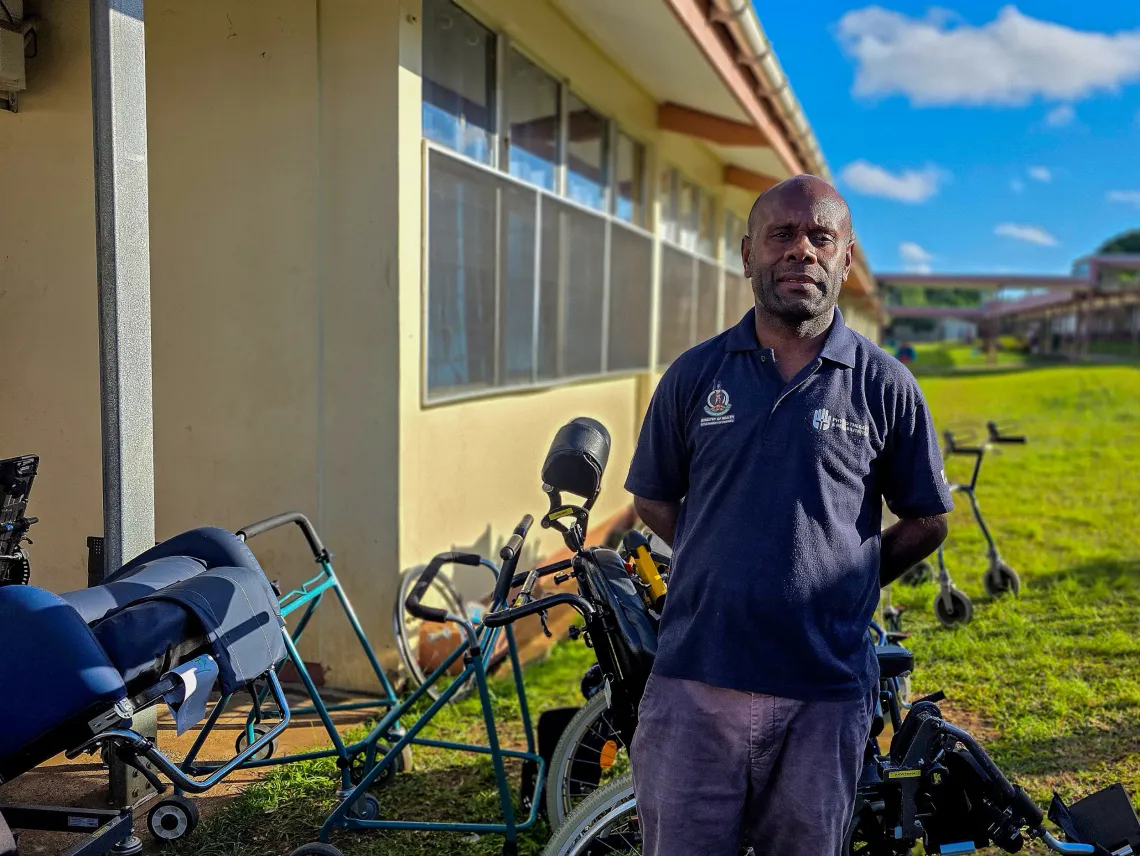
Without these devices, many children with disability remain isolated at home.
“When they don’t have those devices, children with disability mainly stay at home,” Daniel explains. “Some parents have told us their child spent years confined in bed. Assistive technology changes that.”
Daniel also stresses the importance of early screening and support. “Parents, health workers, teachers, and children with disability, we can work together to ensure children with disability reach their full potential and become more independent.”
Dorothy’s journey powerfully illustrates how assistive technology can transform the lives of children with disability and their families across Vanuatu.
For Dorothy, the difference can already be measured in smiles, shared family outings and the freedom to explore the world around her – just like every child should.
Her story reflects the experience of many children with disability who have the potential to learn, participate and thrive but face barriers because they do not have access to the support they need. Through assistive technology, children with disability can gain greater independence, confidence and opportunities to take part in school, family life and their communities.
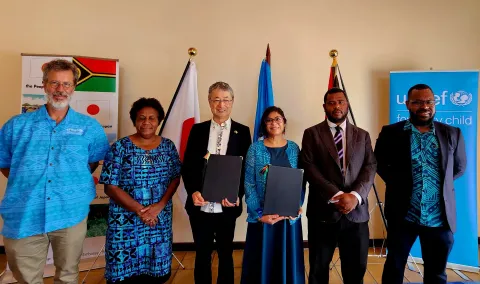
These are the outcomes at the heart of SPARK Vanuatu – Strengthening Pacific Assistive Technology and Rehabilitation for Kids. Over the next three years, the programme aims to reach more than 3,000 school-aged children across Vanuatu, including an estimated 2,050 children needing eyeglasses, 340 children requiring hearing aids and 680 children who could benefit from mobility devices such as wheelchairs.
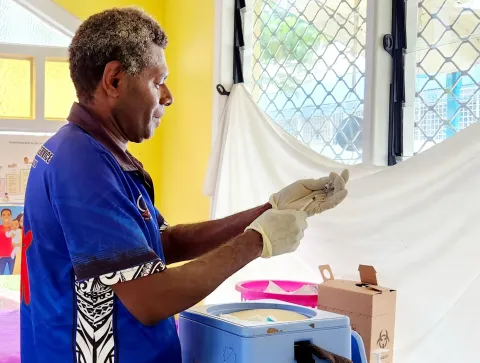
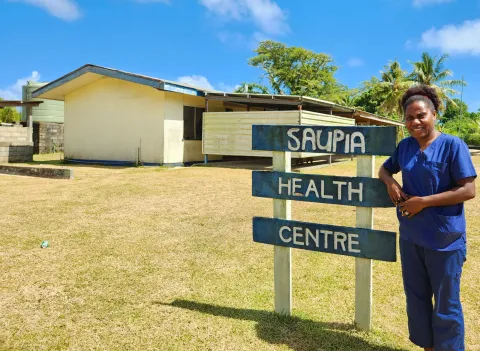
Training has been delivered on Efate and Santo to teachers, health workers and other stakeholders to strengthen early identification, screening and referral systems. By bringing together families, schools, health services and communities, SPARK will help ensure children receive assistance earlier, before they fall behind in their learning and development. The programme represents an important step towards a more inclusive Vanuatu, where every child, regardless of ability, has the opportunity to reach their full potential and ensures no child is left behind. This programme is a partnership between the Government of Vanuatu, including the Ministry of Health, the Ministry of Education and Training, and the Ministry of Justice, Youth and Community Services, and civil organisations like Vanuatu Society for People with Disability, currently supported by ATscale through UNICEF.