The power of song during COVID-19
Children in Kiribati learn about COVID-19 preventive measures through a school song

In 2020 the Government of Kiribati partnered with UNICEF and developed an initiative to reach school children with COVID-19 preventive measures in a unique way.
A song was written about COVID-19 and the lyrics described how the virus was passed on to others and how communities could prevent the spread of the disease.
During the launch of the song, the Minister for Education Hon. David Collins in his remarks said, “This song will not only remind our children to follow proper hygiene and preventative measures to prevent themselves from getting infected with COVID-19, but it will also remind our teachers, parents and communities of their important roles in ensuring these safety precautions.”
After the COVID-19 song was launched, the song was played at events and incorporated into the Ministry of Education and the Ministry of Health & Medical Services roadshows in communities. It was also played on the radio and all schools on South Tarawa were given a free copy of the song, including public transports. The song was a huge hit and went viral!
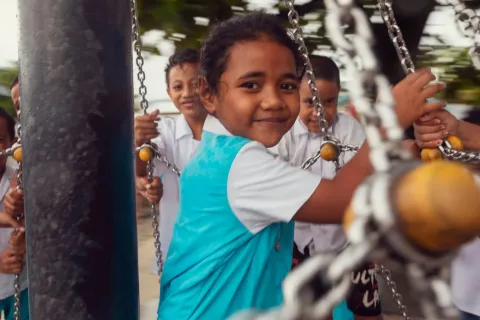
“I really enjoy singing the COVID-19 song with my classmates,” says Wakia Kaono, a Grade 2 student at Rurubao Primary School located in Bairiki, on the capital of South Tarawa. Wakia’s teacher played the song at school to promote and instill the importance of children's hand hygiene.
Wakia who lives with her parents and older brother in Tannako ni Matang Community in Teaorareke, one of the largest villages on South Tarawa also mentioned that she learned something very new and that is, “to sneeze or cough into my elbow instead of into my hands and I also learned that I have to wash my hands properly with soap and water before eating and after using the restroom.”
Mrs. Temoanne Kaono, Wakia’s mother, commended her daughter’s behavior change saying, “I was very surprised to see a big change in Wakia’s behavior after hearing and learning the COVID-19 song. She often reminds me, her father and brother to cough or sneeze into our elbows by demonstrating it whenever we cough or sneeze. Additionally, we do not have to remind her to wash her hands after using the toilet and before eating because it is now a habit for her to wash her hands with soap and water at the right times. We also have a tippy-tap constructed outside the house that she uses to wash her hands as well as everyone at home and those who come to visit.”
Temoanne said, “I believe the song is very useful and effective in sending an important message directly to children who are most vulnerable to diseases and viruses.” She also added that the song tells children how to prevent themselves from contracting diseases. “I have seen not only my child change her behavior but also the children in my community. The children have all learnt how COVID-19 is spread and most importantly the preventive measures. The song is now so popular and played everywhere!”
Temoanne said, “I believe the song is very useful and effective in sending an important message directly to children who are most vulnerable to diseases and viruses.” She also added that the song tells children how to prevent themselves from contracting diseases. “I have seen not only my child change her behavior but also the children in my community. The children have all learnt how COVID-19 is spread and most importantly the preventive measures. The song is now so popular and played everywhere!”
UNICEF has supported the Ministry of Education and Government of Kiribati to develop its COVID-19 Contingency Plan which helps prepare schools and national systems to function effectively in the event of future COVID-19 outbreaks. UNICEF is currently supporting the Ministry of Education on the development of remote learning systems, the establishment of Learning Passport and radio lessons and building teachers’ capacity for the development of remote learning materials.
UNICEF Pacific would like to thank Dubai Cares for their financial contribution to its Education Programme.