

North Macedonia has recorded the largest improvement globally in child survival
WHO, UNICEF and UNFPA commend the country for a decade of progress in newborn and child survival
- English
- Македонски
- Shqip
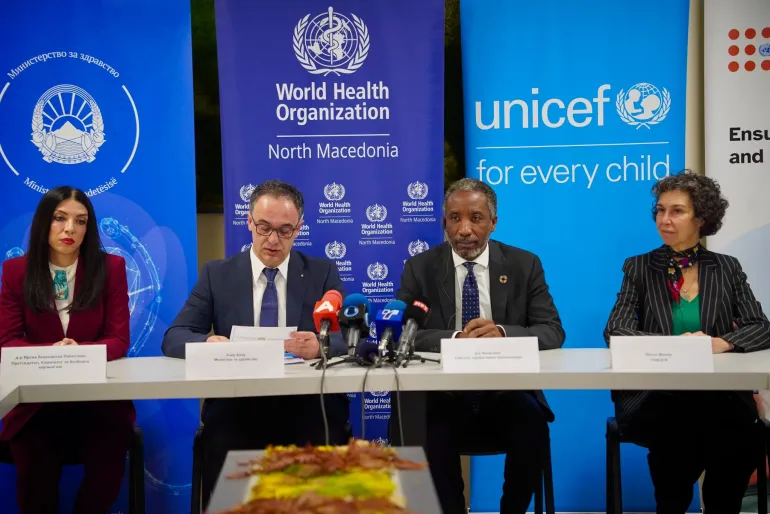
Skopje, 19 March 2025 – The World Health Organization (WHO), United Nations Children’s Fund (UNICEF) and the United Nations Population Fund (UNFPA) commend North Macedonia for the progress it has achieved in reducing newborn and under-five mortality over the past decade, placing the country among the top performers worldwide for Sustainable Development Goal 3.2.
This progress comes at a time when global gains have slowed significantly, with millions of preventable child deaths each year. While many countries are off track to meet global targets, North Macedonia shows that sustained political commitment, strong policies and evidence‑based health system reforms can deliver rapid and lasting results.
Since 2015, North Macedonia has achieved the largest improvement child survival worldwide, reducing neonatal mortality by 87 per cent and under‑five mortality by 75 per cent.
These gains reflect a country‑led transformation of maternal and newborn care. After a spike in neonatal deaths in 2015, the Ministry of Health - supported by WHO, UNICEF and UNFPA - swiftly strengthened emergency obstetric and newborn care, updated clinical protocols, improved neonatal resuscitation and infection prevention practices, enhanced referral pathways and reinforced skilled care at birth. Reforms were later institutionalized through the Perinatal Care Masterplan 2020–2030 and routine perinatal mortality audits, embedding accountability, learning and risk‑stratified care across all levels of the system.
Looking ahead, sustaining progress will require continued focus on quality, equity and resilience - ensuring high standards of care in all facilities, strengthening continuity of care from pregnancy to early childhood, reducing inequities for vulnerable populations, supporting a skilled health workforce, and using data and audits to drive continuous improvement. Protecting families from financial barriers and ensuring universal access to essential maternal and child health services will remain critical.
North Macedonia’s experience reinforces a clear global lesson: strong policies and proven, evidence‑based interventions save lives. Quality antenatal care, skilled health personnel at birth, effective referral systems and continuous outcome monitoring remain among the most impactful and cost‑effective investments countries can make.
At a time of slowing global and regional progress, North Macedonia stand as a powerful example of health system transformation delivering results and a reminder to sustain investment in maternal, newborn and child health to ensure resilience, equity and quality for future generations.
For more information, please contact:
Margarita Spasenovska | World Health Organization | Tel: (070) 306 724 | [email protected]
Suzie Pappas Capovska | United Nations Children’s Fund | Tel: (02) 3231-244 | [email protected]
Irena Spirkovska | United Nations Population Fund | Tel: (02) 3249 588 | [email protected]
Media contacts
About UNICEF
UNICEF, the United Nations agency for children, works to protect the rights of every child, everywhere, especially the most disadvantaged children and in the toughest places to reach. Across more than 190 countries and territories, we do whatever it takes to help children survive, thrive, and fulfil their potential.


