They Came to Register. What They Were Really Looking For Was Hope.
In Kamabama-Takoki, Sokoto State, families rebuilding their lives after displacement are finding hope through the National Social Register.

Morning sounds different these days in Kamabama-Takoki, a riverine community in Sokoto State.
A year ago, the silence was broken only by fear. Families had fled after armed attacks forced them to abandon their homes, farms and businesses. Today, the sounds are different. Birds greet the sunrise. Children once again fill open spaces with laughter. And cutting through it all is the voice of the town crier, moving from street to street after the dawn prayers, calling people to gather at the community centre.
Officials have arrived to register households into Nigeria's National Social Register.
For many here, it is far more than a government exercise.
It is a sign that someone finally knows they exist.
The story of Kamabama-Takoki is really the story of two communities brought together by hardship. Years ago, residents of the original Kamabama settlement were relocated following the construction of a dam and settled alongside neighbouring Takoki village. They kept their separate identities but learned to live as one community. Life was never easy. Poverty, poor services and isolation had already made daily survival difficult before violence arrived.
When the attacks came, families fled with little more than what they could carry. Mothers held on tightly to their children. Elderly people struggled to keep pace. Hundreds sought refuge nearly 30 kilometres away in Shagari. Schools closed. Markets disappeared. Health services stopped. Farms were abandoned. Even after security improved and families slowly returned home, rebuilding their lives proved much harder than rebuilding their houses.
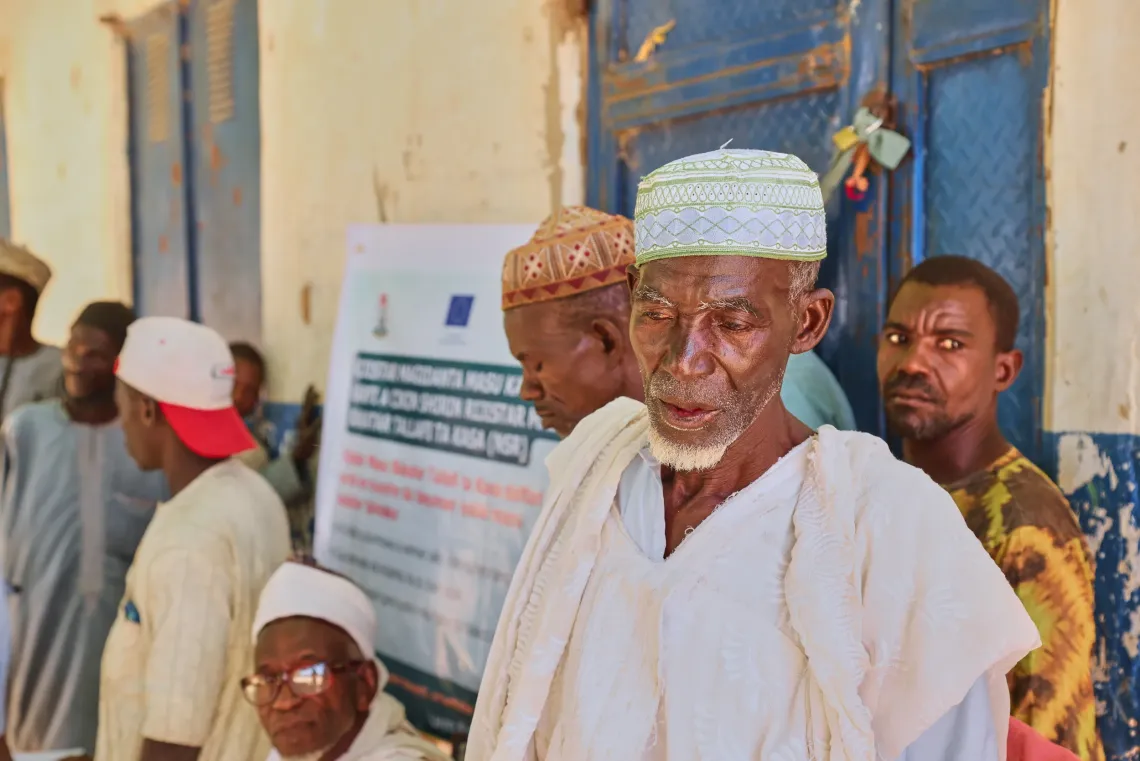
Among those waiting patiently for registration is 65-year-old Mantu Musa.
She clutches her registration card as she quietly watches the queue move forward.
"My only request," she says softly, "is that they register me. Maybe one day I can receive support to survive."
Before the attacks, Mantu earned a modest living selling grains and other food items. Her business depended on Hajia Mariga, a respected trader who supplied women like her with food on credit. They would sell the goods, repay the debt and keep a small profit to feed their families. It was a simple system built on trust.
Then the attack came.
"Hajia Mariga was killed during the raid," Mantu says, lowering her eyes. "When she died, my business died too."
Without anyone to extend credit, Mantu had no way of starting again. Her income disappeared overnight.
"All I have now," she says quietly, "is patience and hope."
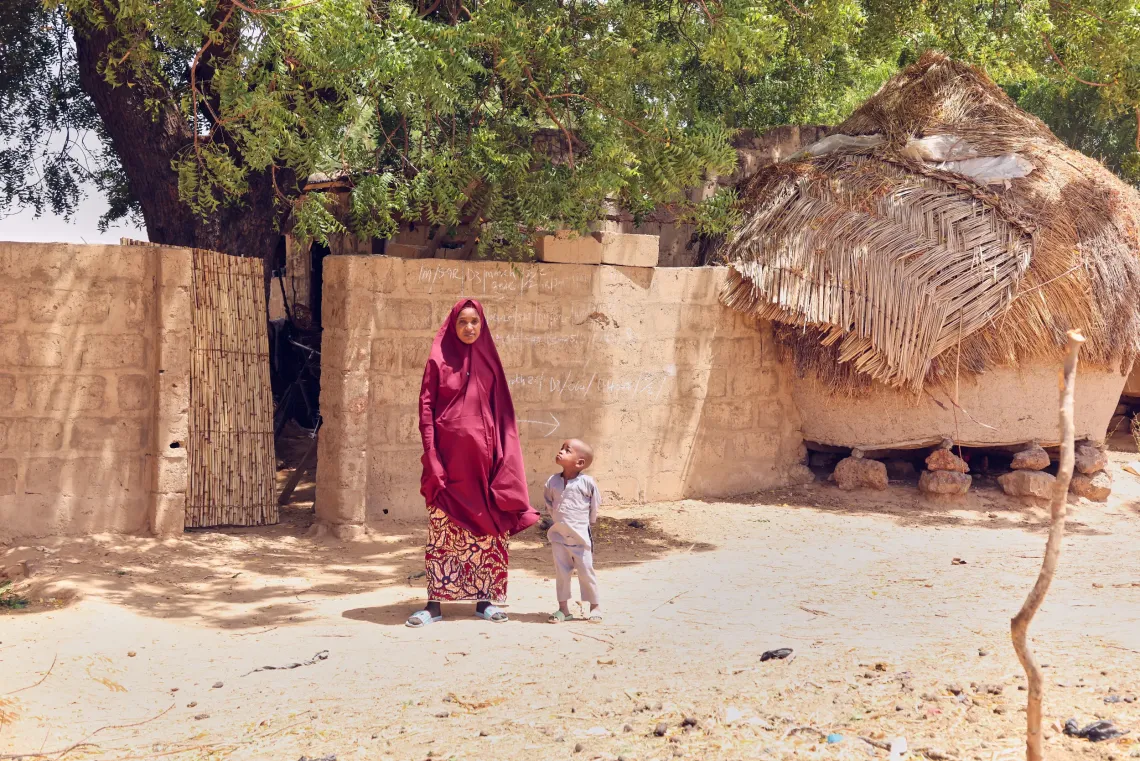
A few places behind her sits 36-year-old Fatima Tukur, a mother of five boys.
Before insecurity forced the family to flee, Fatima combined petty trading with grinding and processing food for people in the community. It was never a big business, but it kept food on the table while her husband spent much of the year in southern Nigeria looking for work before returning home for the farming season.
"We managed little by little," she says.
Then violence swept everything away.
Customers disappeared. Food supplies ran out. Income stopped.
"We lost almost everything."
Today, she hopes that registering her family may one day connect them to livelihood support, food assistance or other programmes that will help them rebuild.
Women like Mantu and Fatima have quietly become the backbone of communities recovering from conflict. They continue to care for their families despite losing almost everything themselves, finding ways to keep hope alive when there is little else to hold on to.
The registration exercise has become another step in the community's recovery.
Seventy-year-old Ali Takau also came to attend the sensitisation meeting. He is unsure whether he will ever personally benefit, but he believes the process matters.
"If not for me," he says with a smile, "then maybe for my children and grandchildren."
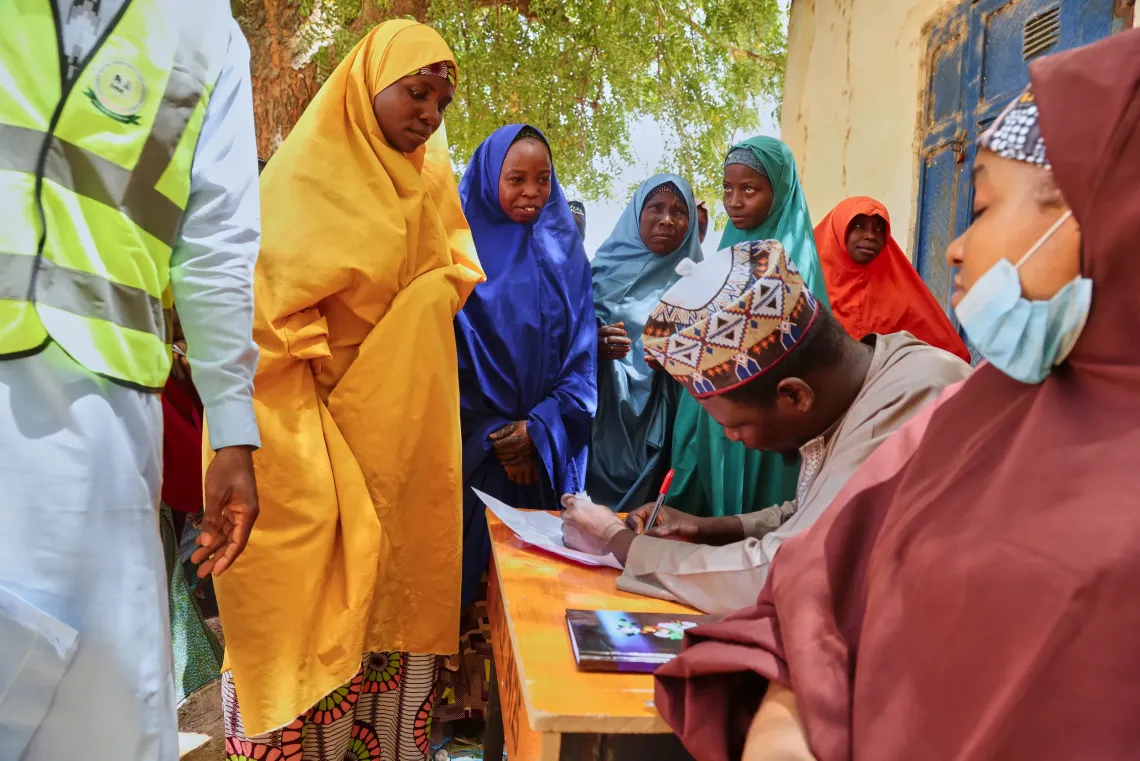
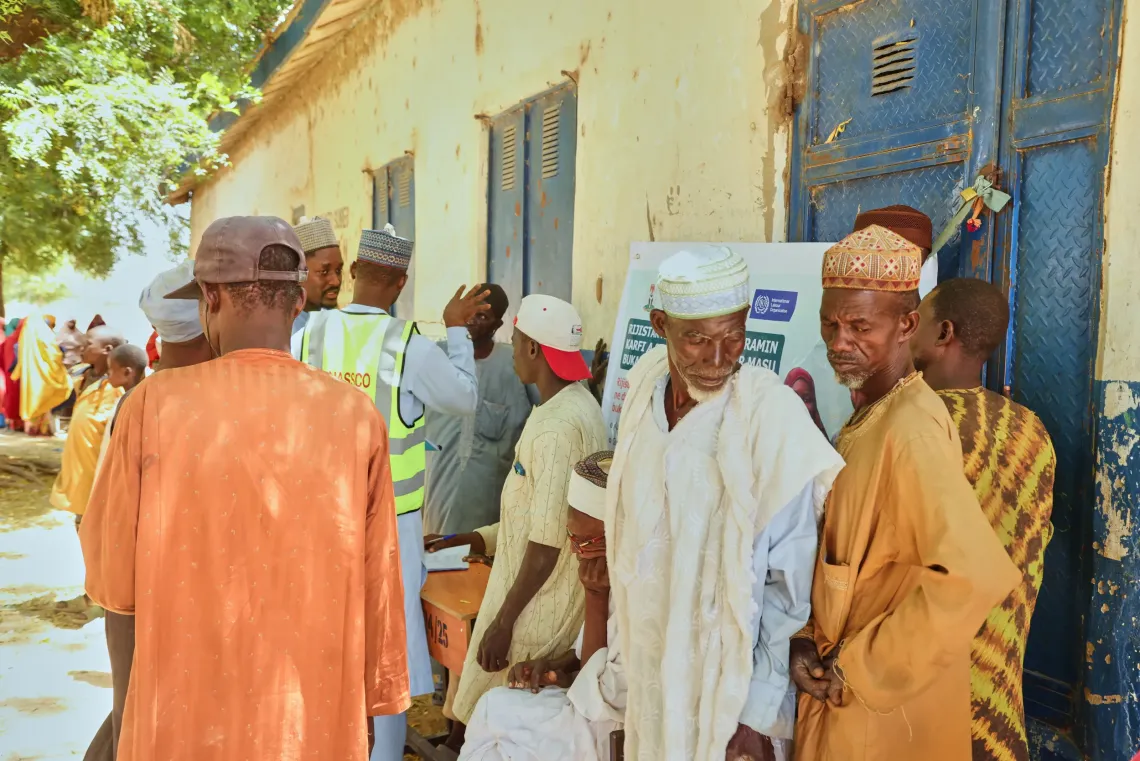
For District Head Ladan Aliyu Danjeka, who oversees both Kamabama and Takoki, the large turnout says everything about the needs facing the community.
"Our people believe that once they are registered, they can finally be reached whenever support becomes available," he says.
That belief matters.
Poverty often leaves people vulnerable. But being invisible makes them even more vulnerable. Without reliable data, families affected by conflict can easily be overlooked by social protection programmes and humanitarian assistance. The National Social Register is helping ensure that those who need support most are no longer left unseen.
Recovery in Kamabama-Takoki is still fragile. Many families continue to struggle with poverty, lost livelihoods and uncertain futures. The scars of displacement have not disappeared.
But something has changed.
People are farming again. Children are back in the community. Families are returning home. And on this morning, hundreds gathered not simply to register their names, but to hold on to the possibility that the future can be different.
Supported by the European Union, the registration exercise is helping ensure that vulnerable families are counted, recognised and connected to the support they may need. In communities once silenced by fear, hope often begins with something as simple as being seen.