Developing Policy for People
The Emergence of Social Policy Institutes in Nigeria
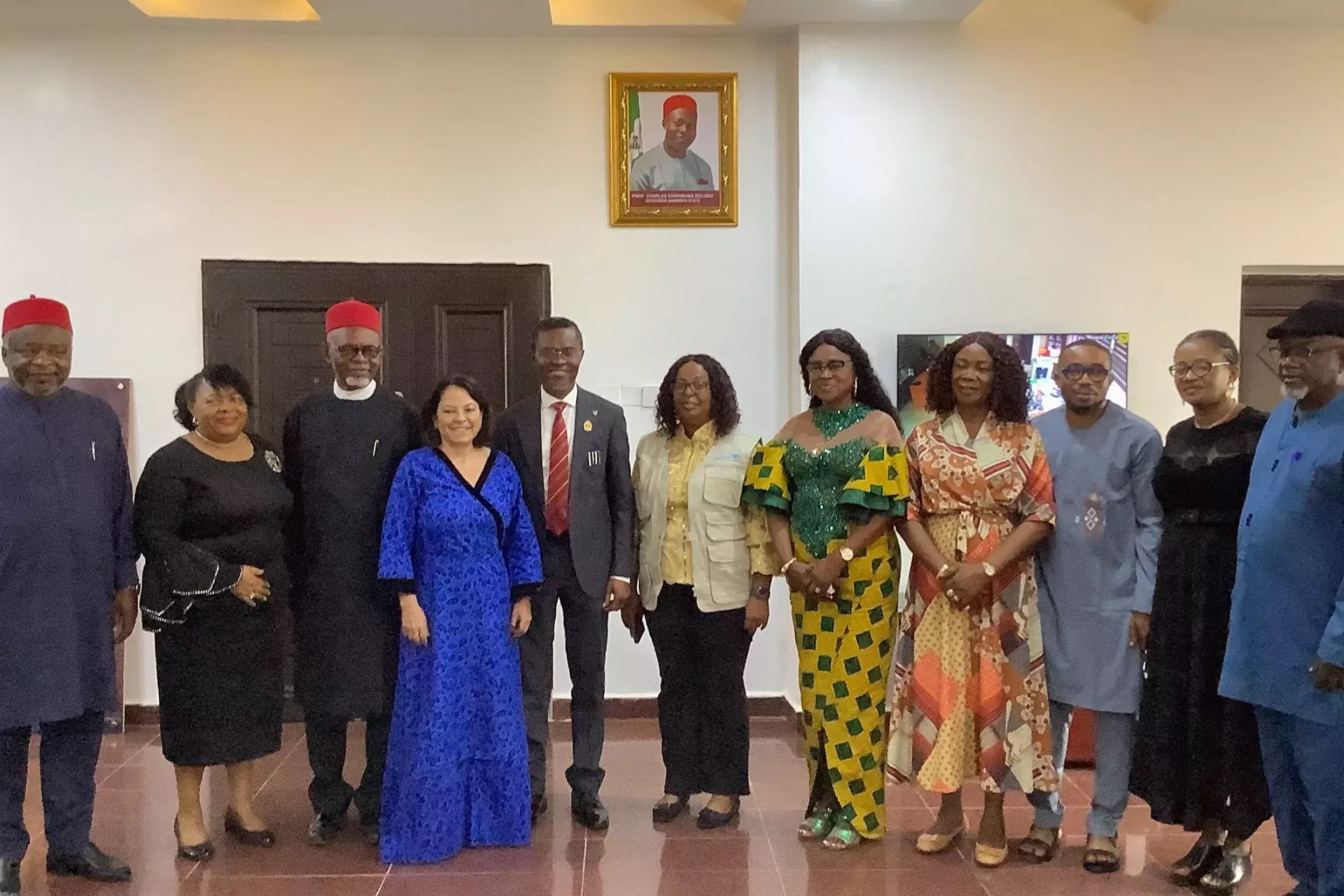
UNICEF has teamed up with two top Nigerian universities to create Institutes of Social Policy at the University of Nigeria, Nsukka (UNN), and Nnamdi Azikiwe University, Awka (UNIZIK), in a transforming effort to increase Nigeria's capacity in evidence-based policymaking and inclusive development.
The initiative was born out of a shared vision to empower academia and government with tools, knowledge, and practical skills to tackle Nigeria’s most pressing development challenges—from poverty and inequality to social protection and inclusive governance.
“The launch of the Institute of Social Policy at Nnamdi Azikiwe University marks a powerful milestone in UNICEF’s partnership with the Government of Nigeria. It reflects our shared commitment to building stronger systems that put children, women, and vulnerable communities at the heart of public policy'', said Cristian Munduate, UNICEF Representative in Nigeria, at the recent launch of the institute.
“By working hand in hand with academia, we are fostering a new generation of leaders equipped with the evidence, skills, and vision to drive inclusive and sustainable development,” she added.
A Vision Rooted in Impact and Inclusivity
The Institute of Social Policy at Nnamdi Azikiwe University (UNIZIK) Awka is designed to fill a long-standing gap in Nigeria’s higher education and policy ecosystem, following the pioneering steps of the University of Nigeria Nsukka (UNN). "We want to produce solutions rooted in our local context while being guided by global standards," said Prof. Uche Nwogwugwu, Director of the Social Policy Institute at UNIZIK. "Our motivation was not just to train students but to build a think-tank that directly influences public policy across Nigeria and beyond."
These institutes serve as hubs for training civil servants, Non-Governmental Organization (NGO) workers, researchers, and students in policy design, implementation, and evaluation. Supported by UNICEF, both institutes have created postgraduate courses in social policy, instituted modular, multidisciplinary courses, and created links with international bodies and institutions.
Learning from the UNN Experience
As the first university in Nigeria to establish such an institute, UNN provided a model for the founding of UNIZIK. Important lessons are the value of multi-stakeholder cooperation, including international best practices within the course of instruction, and making space for hands-on field learning. By hosting seminars and discussions on important policy problems, the UNN social policy institution has also served as a resource hub for government capacity building.
"UNN demonstrated for us that creating a strong institute transcends intellectual interests. Professor Ebele Nwokoye, a faculty member at UNIZIK involved in curriculum development, notes: "It's about relevance, practical application, and engagement with real-world issues."
Designed for Policy Influence and Global Relevance
The institutes were set up from the start to align with UNICEF's global objectives as well as Nigeria's national development priorities.
“Our role is to strengthen upstream systems," said Hamidou Poufon, UNICEF Chief, Social Policy. "These institutes are strategic platforms to drive forward national policy reforms in health, education, child welfare, and governance."
At UNIZIK, the curriculum is designed around five core pillars: equity, planning, budgeting, economic development, and public policy. Each course is adapted to address both Nigerian and African social issues while meeting global academic standards. Faculty development, supported by UNICEF, ensures that educators are well equipped in modern pedagogies and policy analysis tools.
Every course meets world academic standards and is tailored to handle Nigerian and African social concerns. UNICEF supports faculty development, ensuring that teachers receive education in current pedagogies and policy analytic tools.
Collaboration and Challenges
Notwithstanding achievements, both institutions face continuous challenges ranging from limited resources to infrastructure requirements and the need for continued university assistance. Prof. Nwogwugwu said that early on he hosted group meetings using personal money, saying, "The will must be stronger than the wallet. It emphasises dedication.”
Yet, partnerships with organisations like UNICEF have had a big impact. UNICEF has supported anchoring these institutions as centres of excellence in social policy through financing, training, curriculum support, and advocacy.
The Road Ahead
Looking ahead, the institutes want to intensify their presence in world policy debate, grow their international partnerships, and conduct collaborative research. Designed projects include exchange programmes, virtual lectures to serve working professionals and diaspora students, and the building of a UNIZIK institute permanent campus.
Prof. Dennis Amobi, one of the institute's founding faculty members, remarked, "We want this to be a space where policymakers, scholars, and communities come together to reimagine social development."
Indeed, Nigeria is not only joining in worldwide discussions on social development but also helping to lead them with the emergence of the Social Policy Institutes at UNN and UNIZIK