A Shot of Hope
How Enugu’s HPV Campaign Is Protecting a New Generation.

“I feel proud. I feel like I have done something to protect my future.”
Twelve-year-old Chinemerem Agbo still remembers the first time she heard about the Human Papillomavirus vaccine. She had followed her mother to the Uwani Enugu Health Centre on a warm morning, unsure of what waited on the other side of the door. For weeks, her neighbourhood in Uwani, Enugu North had buzzed with rumours. Some girls whispered that the vaccine was painful. Others said it would stop them from having children. The fear felt real, even for someone her age.
But that morning, everything changed.
Inside a large hall at the health centre, Chinemerem sat shoulder to shoulder with dozens of girls her age. Health workers and volunteers moved gently between them, speaking about cervical cancer, the disease that quietly claims the lives of thousands of Nigerian women every year. They explained how HPV, a virus so common that most people never know they had it, is the leading cause, and how a simple vaccine given during adolescence can stop the disease before it starts.
For Chinemerem, the words hit close to home. She thought of her aunt, who had battled cervical cancer the year before. She remembered the long hospital visits, the exhaustion that weighed on the entire family, the fear that settled into their home.
“When the nurse said the vaccine could stop what killed so many women, my heart beat fast,” she said softly. “I didn’t want to grow up and face the same thing.”

Across Nigeria, the HPV vaccination campaign has become one of the country’s most important public health efforts in decades. Supported by Gavi, the Vaccine Alliance and UNICEF, the Federal Ministry of Health is working to protect millions of girls aged 9 to 14, the age when the vaccine offers the strongest shield. The campaign has reached schools, churches, market squares, and remote communities, but its success often rests on moments like this, a young girl listening, understanding, and choosing protection.
In Enugu State, the rollout has been strengthened by strong local partnerships. School vaccination sessions, church outreach, and radio jingles in English and Igbo have carried the message far. Health educators have spent weeks countering misinformation with simple stories and facts, while UNICEF supported community mobilizers have gone house to house, reassuring parents who worry about their daughters’ safety.
Chinemerem’s mother, Mrs Agbo, admitted she was hesitant at first. “People in our compound said many things,” she said. “But when the health sister in charge explained that the vaccine prevents cancer and does not affect fertility, I felt calmer. She showed us messages from Gavi and UNICEF, and I understood this was something important.”

On the vaccination day, the hall was full. Some girls giggled nervously. Others held tight to their mothers' hands. Health workers guided them patiently, explaining every step.
When it was finally Chinemerem’s turn, she took a deep breath. She looked away for a moment, then realized the injection was already done.
A smile broke across her face as the nurse pressed a small cotton ball against her arm. “Is that it? I thought it would be worse,” she laughed. Her confidence rubbed off on the mothers standing nearby, many of whom promised to bring their daughters for the vaccine before the campaign ended.
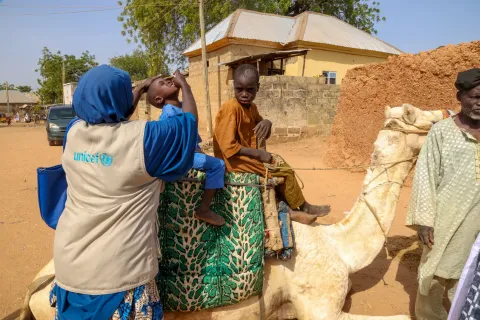
For the health team in Enugu, these moments are powerful. Uptake rates continue to climb, especially in communities where awareness efforts are paired with easy access to vaccination points. Powered by Gavi’s funding and UNICEF’s field presence, mobile vaccination units have reached girls in Ezeagu, Isi-Uzo, and Nsukka, ensuring that distance does not stand in the way of protection.
“The campaign is about more than numbers, it is about shaping a healthier future for Nigerian women,” said Dr Ifeyinwa Anyanyo from UNICEF’s Health Section. “Cervical cancer remains the second most common cancer among women in Nigeria, but it is almost entirely preventable with the HPV vaccine. Each vaccinated girl represents a step toward that future.”
At the Uwani Health Centre, Nurse Sarah Ugwu sees that future every day. “We have many girls between 9 and 12 years being vaccinated through routine immunization and through the ongoing HPV campaign,” she said. “Mothers come with questions. They leave with confidence.”
For Chinemerem, the journey is now personal and complete.
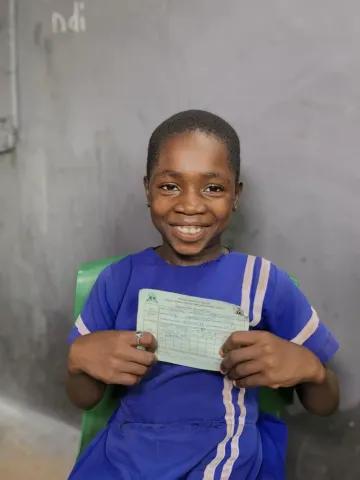
“I feel proud,” she said, holding her vaccination card with both hands. “I feel like I have done something to protect my future.”
Her story reflects a growing wave of awareness and courage across Nigeria. As Gavi and UNICEF continue to support the national HPV vaccination campaign, thousands more girls will take that same bold step, choosing knowledge, hope, and protection for the years ahead.