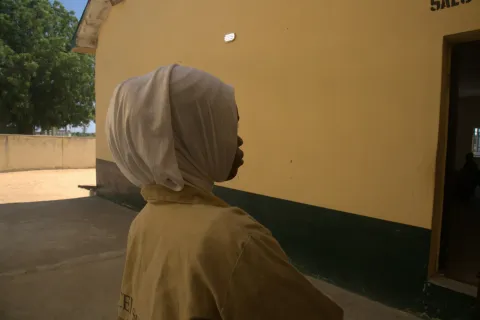
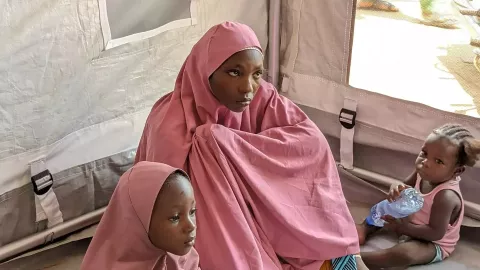
A brighter day for Zara
A survivor’s story of a 16 year old teenager affected by gender-based violence and her path to recovery.
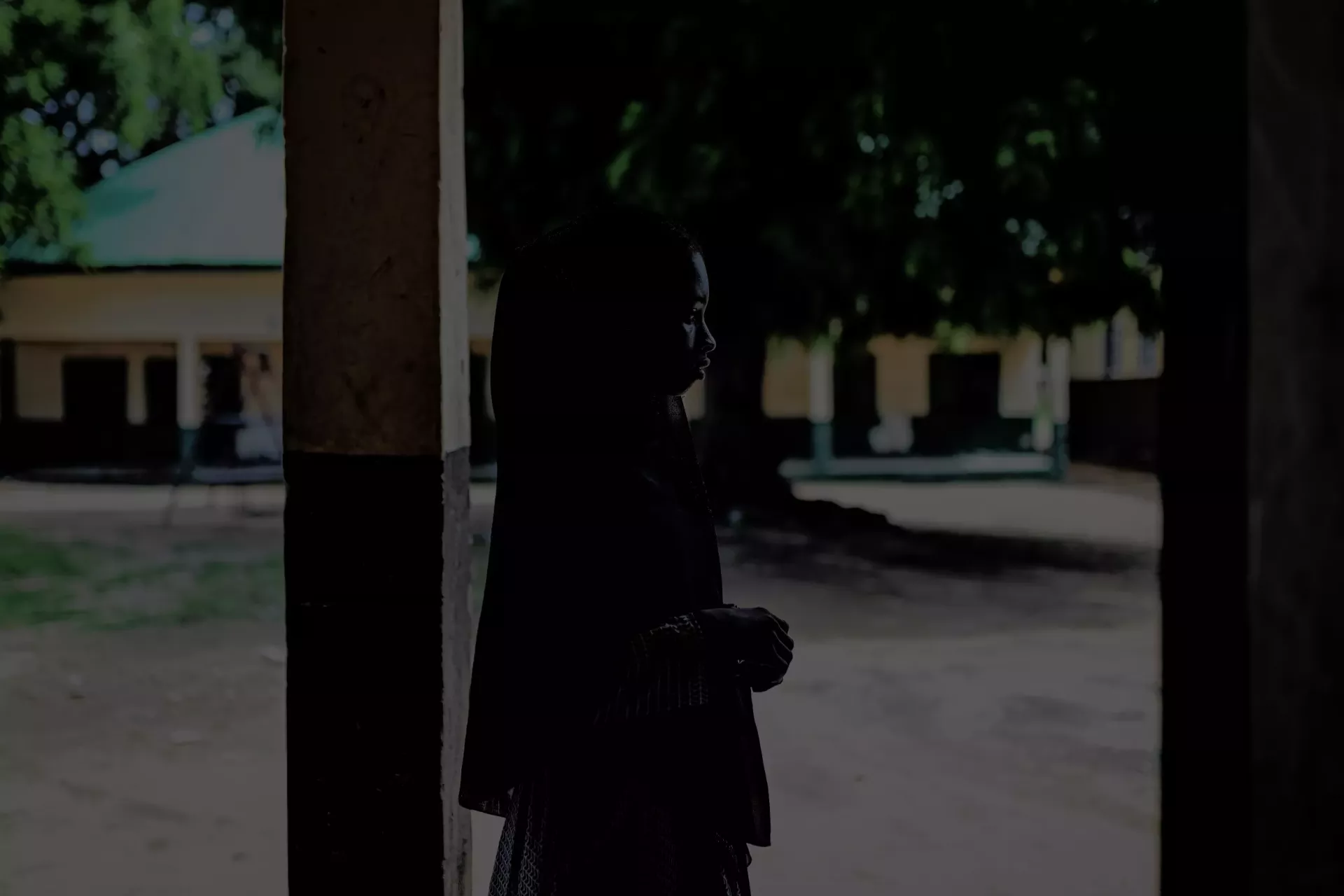
Zara Auwal smiles her brightest when she is playing with her new found friends at the UNICEF-supported playgroup at the Old Bama Primary School in Bama, northeast Nigeria. The afternoon sessions are her favourite part of the day.
We play and sing different songs
But sharing music was a far fetched dream for this 16 year old not so long ago. Third in a family of 6 children, Zara lost her father at a young age of 9. Her mother’s new husband wasn’t keen to parent the brood, leaving Zara in her grandmother’s care. She faced her biggest challenge when her grandmother decided to marry her off without her consent. Before eventually fleeing to Bama, Zara was beaten, starved and humiliated for being stubborn in her choice.
I had to relocate to live with my grandmother in the village. It was a terrible experience because everything changed for me. I lost my friends and everything familiar. I was alone with my grandmother. My siblings were relocated to other family members, and I felt so alone. My grandmother said it was better for us since we could hardly afford two square meals. I disagreed with her but there was nowhere to go. I was 14. I didn’t want to be a wife at the time.To my grandmother, I was being disobedient. She said I was not helping the family. But I was afraid. I did not understand why I should marry against my will.
Having escaped that horror and relocated in her new home in Bama, the teenager found support from family friends who eventually enrolled her at the UNICEF-aided play centre in town. The impact of protracted conflict in northeast Nigeria has left a deep unseen scar on children and teenagers like Zara.
The 16 year old has come a long way in her healing process through systematic psychosocial therapy sessions. At ease with new friends, surrounded by laughter and play, this centre has helped Zara to overcome long-term anxiety and rediscover the lighter side of childhood.
With growing livelihood and food insecurity, families who thrived on farming lost their land and income. Girls like Zara are often at the receiving end of multiple rights’ violations and their coping mechanisms often find a home in depression.
Having grown up with child labour, gender-based violence and child marriages, these children found succour through immersive programmes supported by UNICEF, with funding support from UNICEF France (French National Committee). UNICEF is actively engaged with local governments in northeast Nigeria to improve the resilience and self-reliance of women and children directly or indirectly affected by conflict.
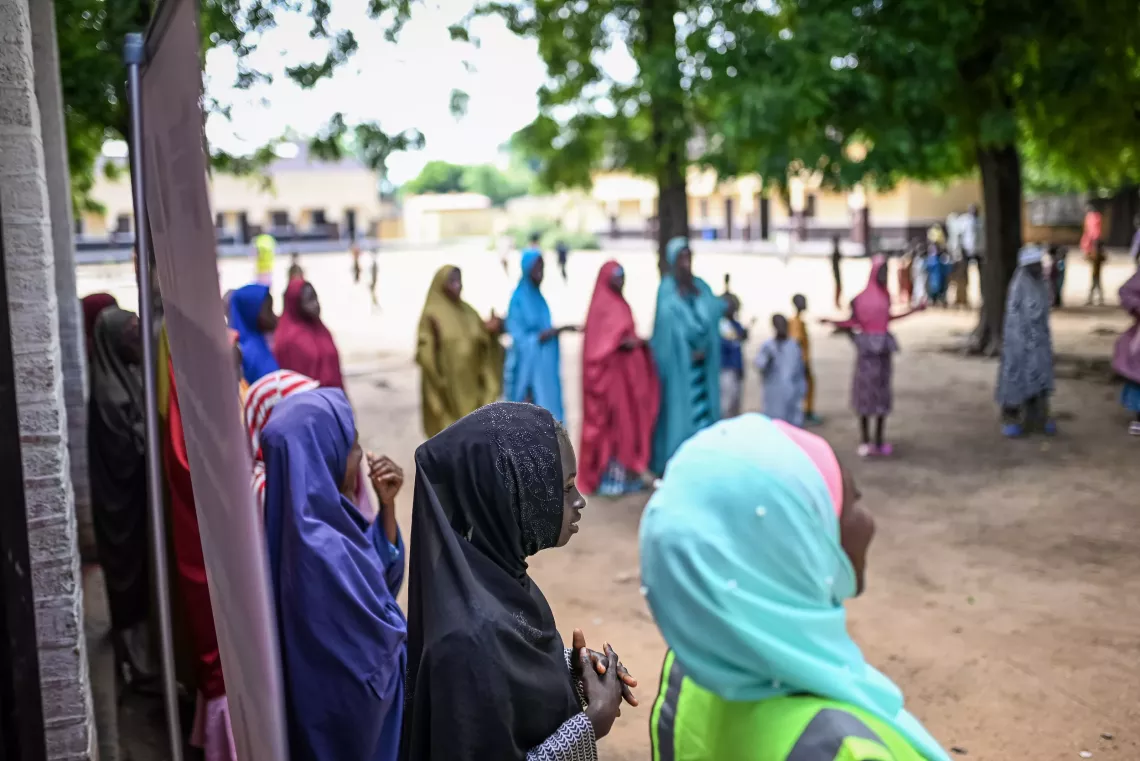
Led by trained facilitators, these sessions have given displaced children an opportunity to identify and address their trauma. Children are also learning different ways to connect with child protection structures in their communities and report any violation of their rights.
Through its project: Reinforcing the resilience and socio-economic reintegration of women and children as well as gender-based violence survivors, UNICEF is providing interim care services, including mental health support, family tracing, access to medicine, education and skill acquisition support to children like Zara.
In Bama, Zara is finding new reasons to smile every day, forging new relationships and watching her dream of having a family of her own become a reality.
I am happier now, I have new friends and would like to go back to school.