Author's Note & Context:
This blog post explores the intersection of youthful creativity, personal authenticity, and the growing digital divide in the era of Artificial Intelligence. It addresses the core question of where assistance ends and substitution begins, highlighting digital inequality and privacy as central issues for youth today.
I still remember the exact moment I typed a simple, short prompt into ChatGPT and watched – half-amazed and half-terrified – as a complete, beautifully structured article materialized on my screen in under five seconds. It was a creative task that normally would have taken me hours of staring at an empty page, typing a sentence, erasing it, and constantly second-guessing my own voice. In that instant, staring at the glowing screen, it felt like I had suddenly been handed a digital superpower.
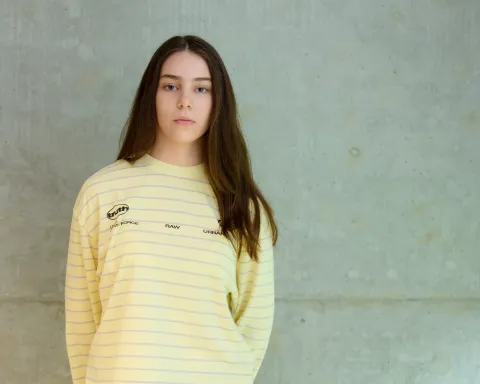
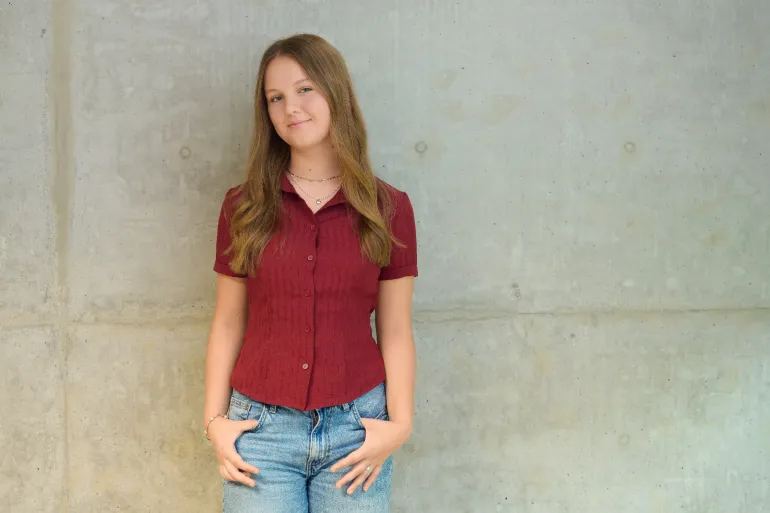
My name is Anja Vujnović. I am 16 years old, I come from Montenegro, and I have had the privilege of being a UNICEF Young Reporter for the past two years. From as far back as I can remember, raw creativity has been my anchor. Whether I am drafting a short story, sketching portraits in my charcoal notebook, trying to capture the perfect sunset light over the Bay of Kotor through my camera lens, or editing a video, expressing myself creatively is not just a hobby – it is an essential, irreplaceable part of who I am.
As a Young Reporter, I quickly learned that true creativity is an incredibly messy, often exhausting process. The best ideas rarely arrive perfectly formed on the first try. I have lost count of how many times I had to completely rewrite articles, reshoot entire scenes because the lighting was off, or throw away physical sketchbook drafts and start all over. Although it could be intensely frustrating, every single mistake taught me something. Putting real, physical and emotional effort into a project and finally seeing it finished always filled me with a deep, irreplaceable sense of pride. It was *my* effort.
So, when generative AI tools exploded in popularity, I was naturally fascinated. Like many of my peers, I started using them more and more. According to the Disrupting Harm study in Montenegro, AI is already integrated into the daily lives of youth: it is used by 45 percent of children aged 12–14 and 56 percent of young people aged 15–17. Among these young users, 64 percent use it to help with homework, 51 percent to find information, 33 percent for translation, and 32 percent to create or edit video content and images. These statistics show just how deeply embedded these algorithms have become.
However, this technological explosion brings a critical issue to light: digital inequality. While some of us have high-speed internet, premium AI tools, and the digital literacy to navigate these systems safely, many young people across Montenegro and the world are left completely in the dark. This creates a deep divide. Furthermore, when we rely on global, centralized algorithms, we run the risk of losing our unique local perspectives, cultural nuances, and personal privacy. Our individual voices get flattened into a single, homogenized global data pool. We aren't just losing access; we are losing our digital sovereignty and personal boundaries.
For me, AI made life incredibly easy at first. But slowly, without even realizing it, I began to cross a dangerous line. Instead of brainstorming original video concepts, I started asking AI to write my scripts word-for-word. Instead of writing an article from the heart, I let ChatGPT outline and draft my paragraphs. I even stopped picking up my camera, opting instead to generate polished digital images on Midjourney. It was undeniably faster and cleaner, but it felt entirely hollow. I began comparing my hand-drawn charcoal sketches to the flawless, hyper-realistic, AI-generated art on my feed. Suddenly, my own real-world drawings didn't feel good enough anymore.
Comparing myself to a machine took a heavy emotional toll. I lost the motivation to draw or take photos entirely. Why spend hours trying to capture the perfect natural lighting with my physical camera when a single prompt could generate an 'impeccable' image in seconds? I stopped creating, paralyzed by the feeling that my slow, human efforts were deeply flawed compared to the artificial, sterile perfection on my screen. This is where digital inequality becomes deeply personal: those of us who rely too heavily on these tools risk losing the very cognitive and creative skills that define us, while those without access are excluded from the digital future entirely.
That period of creative emptiness forced me to step back and ask the ultimate question: How much AI is too much? For me, the answer is clear: AI becomes too much the moment it stops helping us expand our human potential and starts replacing it. It becomes too much when it silences our unique personal voices, compromises our online privacy by turning our expressions into training data, and deepens the divide between those who control the technology and those who are merely consumed by it.
One afternoon, I decided to break the cycle. I left my phone in another room, picked up my dusty camera, and stepped outside. I took a photo of a simple, wind-blown leaf in my yard. The lighting wasn't studio-perfect, and the framing was slightly off. But it was entirely mine. It captured a real, fleeting moment in time and a genuine human feeling that no algorithm could ever experience or replicate. Looking at that imperfect shot, I felt a sudden spark of joy and satisfaction that no artificial image had ever given me. I realized that creativity is not about sterile perfection; it is about the raw emotions, unique perspectives, and beautiful mistakes we put into our work.
Today, I still use AI, but its role in my life has been strictly redefined. It is an assistant – helpful for translating texts or organizing raw data – but I no longer let it do the thinking, feeling, or imagining for me. Every young person deserves the space to struggle, make mistakes, and discover their own authentic voice. Technology should expand our horizons and bridge inequalities, not limit our imagination or divide us. As for me, I will keep writing, sketching, and shooting my own videos – proudly embracing every single beautiful imperfection along the way.