Bringing Early Learning Closer to Mongolia’s Nomadic Children
Home-based learning and digital tools helping bring preschool education to remote nomadic families.

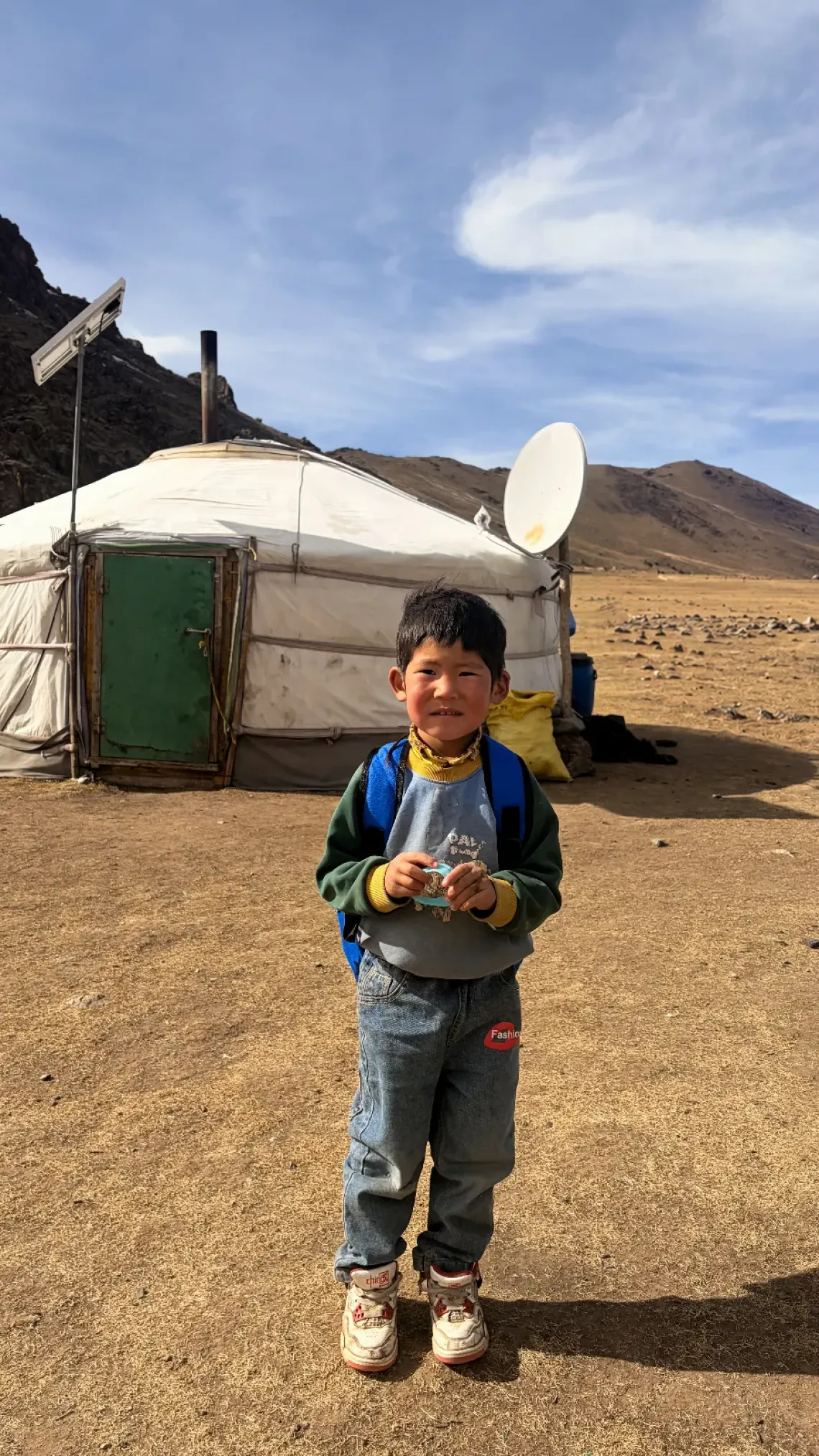
For four-year-old Buyan, learning begins at home, in Mongolia’s vast countryside. Living in a remote herding community, hundreds of kilometres from the capital, he is discovering new things with the help of a visiting teacher and a tablet — without having to leave his family behind.
Buyan lives in Senjit bagh, Erdenetsogt soum, Bayankhongor province, about 700 kilometres from Ulaanbaatar. Like many children from nomadic herding families, he faces barriers to accessing kindergarten, including long distances, harsh weather and the seasonal mobility of families.
UNICEF Mongolia and the Ministry of Education launched the Teacher with a Tablet initiative in 2023 to bring early learning opportunities to children in remote communities through home visits, digital learning resources and parental engagement.
Through the initiative, a visiting teacher from the nearest kindergarten helps Buyan develop early literacy, numeracy, communication and social-emotional skills using age-appropriate activities aligned with the national preschool curriculum. His family also takes an active role in his learning.
“I can learn at home”
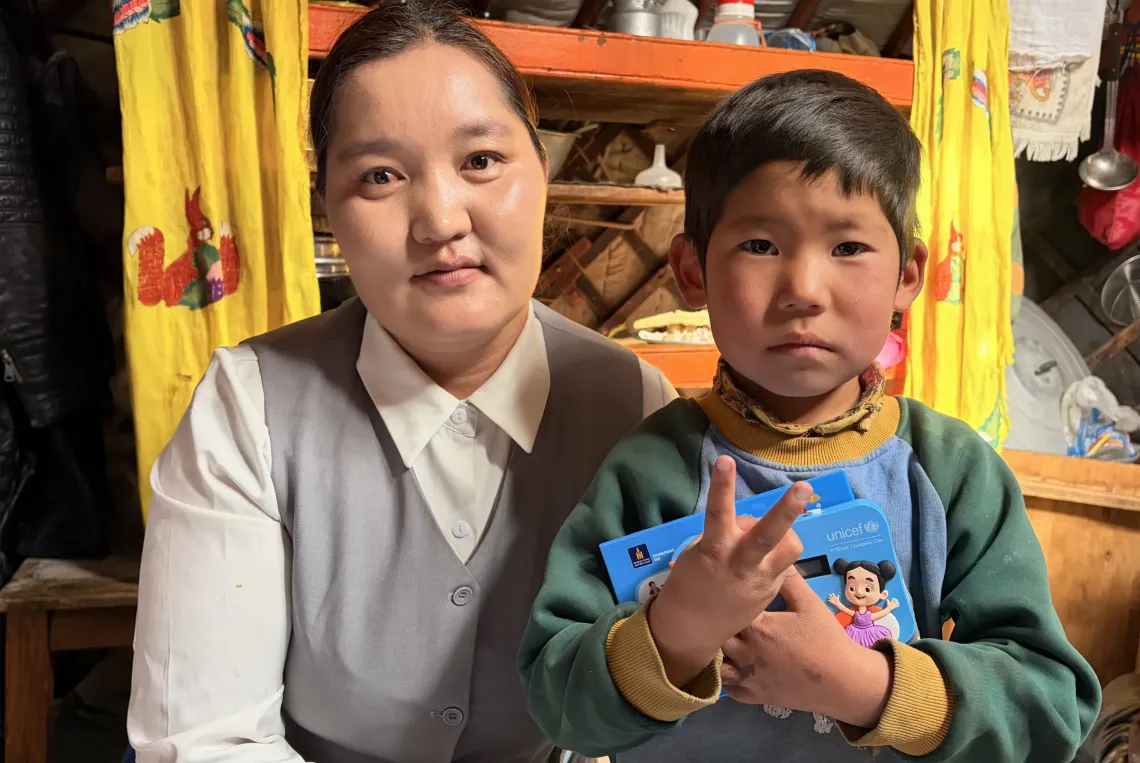
“I have an older brother and sister. I have a younger sister too. I love learning at home with my teacher. She shows me interesting things on her tablet,” Buyan says.
“Some things are difficult, but my mom, dad, and older brother help me. My older siblings go to school and stay in the school dormitory, but I can learn at home with my teacher.”
For Buyan’s mother, Ganaa, early learning is an investment in her son’s future. Concerned that missing preschool could affect his communication skills and readiness for school, she approached the visiting teacher to enrol him in the programme.
“We have learned to turn simple everyday tasks into meaningful learning opportunities for our child,” she explains.
Learning continues long after the teacher leaves. Counting household objects, telling stories and playing together help Buyan develop new skills while strengthening family bonds. These everyday interactions also give his parents practical ways to support his development and become his first teachers.
“Nomadic herding is a heritage of Mongolia”
For Buyan’s father, Ganbaatar, education is not only about preparing his children for the future. It is also about preserving Mongolia’s nomadic heritage.
“My family has been engaged in nomadic herding for over 100 years,” he says. “I am happy that we are raising our children together and contributing to a new generation of educated, modern nomadic herders. I hope at least one of our children will continue our family’s herding tradition.”
Ganbaatar recognises the challenges facing herding families, from climate change and livestock losses to increasingly harsh weather. He also sees how these pressures can encourage young people to move to cities.
Nevertheless, he believes that education can help children build brighter futures while maintaining their connection to their communities and cultural traditions.
“I am grateful to the visiting teacher for helping our family raise a healthy, educated, and capable next generation of nomadic herders,” he says.
“I love my job”
Making early learning accessible requires dedicated teachers willing to travel long distances and work closely with families.
Hajidsuren, a visiting teacher in Senjit bagh, supports children in their homes, adapting learning activities to each family’s circumstances. This year, she is working with 15 children in the community.
“Kindergarten teachers work in classrooms, but I teach in herders’ homes, together with their families,” she explains.
Last year, Hajidsuren travelled more than 2,000 kilometres to reach 21 children, visiting each at least twice a month.
“Every visit brings learning closer to children and gives families the guidance and support they need. That is why I am proud of my work,” she says.
Beyond supporting children’s development, the initiative helps parents understand the importance of early learning, nurturing care and positive, non-violent interactions within the family.
Reaching more children, wherever they live
Since its launch, the Teacher with a Tablet initiative has expanded access to early learning for children who might otherwise miss out on preschool education.
Over the past two years, more than 550 teachers have been trained in home-based learning methodologies and the use of tablet-assisted learning packages aligned with the national preschool curriculum. They have also developed skills to support parents and caregivers with different levels of literacy in facilitating children’s learning at home.
The initiative has reached more than 14,500 children through its growing network of teachers serving remote communities.
Buyan’s story shows how flexible, home-based approaches can reduce barriers to early childhood education while allowing children to learn alongside their families. By bringing learning directly to nomadic households, the initiative helps ensure that geography does not determine a child’s opportunities to learn and thrive.
“Every child, wherever they live, has the right to learn and reach their full potential. UNICEF Mongolia will keep working with the Government and partners to expand flexible, community-based early learning for nomadic herding families,” says Tsendsuren Tumee, Education Officer at UNICEF Mongolia.