Republic of Moldova becomes a hub for learning and exchange of experience on child care reform
Specialists from several countries come to the Republic of Moldova to learn from the country’s experience in deinstitutionalization and the development of services for children and families
Chișinău, 14 September 2026. The Republic of Moldova has built significant experience in reforming its child care system, which is increasingly being shared and recognized internationally. From 14 to 18 September, specialists from several countries are in Moldova to learn how the country has transitioned from residential care to family- and community-based services for children.
Over five days, participants will explore the journey of this reform and meet the people who helped shape it and continue to advance it today. The program covers the key stages of the reform – from the closure of residential institutions and the development of family-based alternatives to the prevention of family separation, early intervention, inclusive education and the expansion of community-based services.
The international visit is organized by Lumos Moldova and builds on the experience gained through the reform coordinated at national level by the Ministry of Labour and Social Protection. The visit takes place at a time when the Republic of Moldova continues to advance this transformation alongside its European integration journey.
“Preventing family separation must remain at the heart of the next phase of the reform. This means identifying risks early, supporting families before they reach a point of crisis, and making sure that quality services are available in communities. But our responsibility does not end when a child leaves residential care. Children returning to their families or moving into family-based care need continued, tailored support to help them adjust, recover and thrive. This requires strong coordination across social protection, education and health, with services that respond to each child’s individual needs. UNICEF will continue to support the Republic of Moldova in strengthening a child rights-based system that prioritizes prevention, family-based care and sustained support for every child,” said Natalia Plugaru, Minister of Labour and Social Protection.
An important part of the visit will take place in communities, where changes in the system can be seen directly in the everyday lives of children and families. In Fălești and Ialoveni districts, participants will learn about services that support families and help prevent the separation of children from their families. They will visit a multifunctional day centre and an Early Intervention Centre, meet a professional foster care family, and see how the inclusion of children is supported in a kindergarten, a school and through the district psycho-pedagogical assistance service.
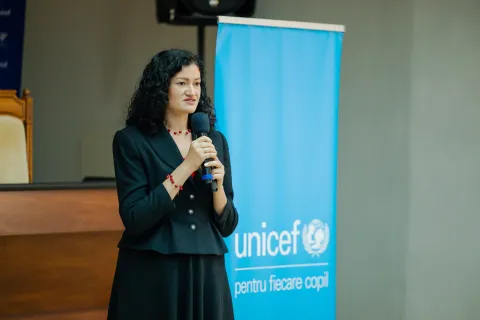
“The Republic of Moldova has made important progress in building a child protection system that is more diverse, more accessible and closer to children and families. Community-based support and protection services have been developed, while cooperation mechanisms between social protection, education and health have been strengthened, contributing to a more integrated response to the needs of children and families. The next stage of the reform should focus on improving the quality and accessibility of these services, adapting them to the individual circumstances and needs of each child, and ensuring children’s meaningful participation in decisions that affect them. Equally important is strengthening prevention – identifying risks as early as possible and intervening at the right time, before they lead to separation or become more serious. UNICEF will continue to support the Republic of Moldova in developing an inclusive, integrated and child rights-based system, so that every child can grow up in a safe, protective and family environment,” said Deyana Kostadinova, UNICEF Representative in the Republic of Moldova.
“Lumos works in the Republic of Moldova alongside authorities, professionals, organizations and communities so that more children can grow up in families. Over the years, we have built services together, tested solutions and learned both from what worked and from what proved difficult. For several days, Moldova becomes an open learning space. The specialists coming here can speak directly with the people who made this transformation possible and see how community-based services work today. We hope that what we have learned here can also be useful to other countries going through similar processes,” said Marcel Straton, Director of Lumos Moldova.
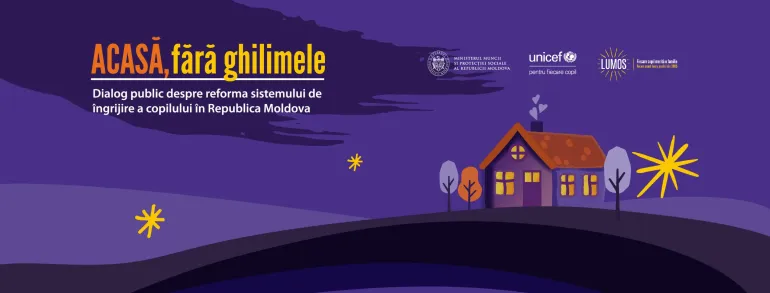
On 16 September, the experience gained through the reform process will be brought into a public discussion during the “HOME, Without Quotation Marks” event at Digital Park. Representatives of the Ministry of Labour and Social Protection, the Ministry of Education and Research, the Ministry of Health, UNICEF and the European Union will come together with civil society organizations and people who have either implemented or directly experienced the transformation.
The discussions will look at the decisions and policies that made the transformation possible, as well as the experiences of the people who turned those changes into reality for children and families. The conversation will also look ahead to the next stage of the reform and the steps needed to ensure that every child can grow up in a family and community.
The event will also introduce the Moldova Learning Hub, through which the experience gained in the Republic of Moldova will be documented and made available to professionals, organizations and institutions working to transform child care systems. This way, other countries undergoing similar reforms can further develop and apply the lessons learned in Moldova.
The international program will continue until 18 September with sessions dedicated to preventing family separation and developing services that can replace residential care. Participants will reflect on the experiences observed in Moldova and explore how some of the solutions developed here could be adapted to their own countries.
Media contacts
About UNICEF
UNICEF promotes the rights and wellbeing of every child, in everything we do. Together with our partners, we work in 190 countries and territories to translate that commitment into practical action, focusing special effort on reaching the most vulnerable and excluded children, to the benefit of all children, everywhere.
For more information about UNICEF and its work for children, visit www.unicef.org
Follow UNICEF on Twitter, Linkedin and Facebook