Syria crisis
After more than a decade of conflict, children continue to pay the heaviest price.

- English
- العربية
Crisis in Syria: What you need to know

What is happening in Syria?
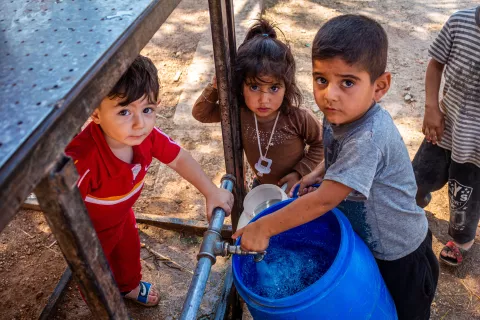
More than a decade of humanitarian crisis and hostilities have had a profound impact on the situation of children in Syria, across the region and beyond. Children of Syria has been impacted by the violence, displacement, severed family ties and lack of access to vital services caused by massive physical devastation.
The crisis continues to leave children of Syria with psychological scars. In 2021, one-third of children in Syria showed signs of psychological distress including anxiety, sadness, fatigue, or frequent trouble sleeping.
In 2022 the situation for many children and families remains precarious, with over 90 per cent of people in Syria live in poverty and 12 million people (54 per cent of the population) are food insecure. An increase of 51 per cent since 2019.
The Syria crisis remains first and foremost a protection crisis. Grave violations of children’s rights – recruitment, abductions, killing and maiming continue unabated.
Hyperinflation is having a devastating impact on families, with negative coping mechanisms on the rise. Parents are eating less so they can feed their children, sending them to work instead of to school, and girls and boys face the risk of early or forced marriage.
Syrian Fast Facts

Eleven years of conflict has had a staggering impact on the children of Syria:
-
85 per cent of internally displaced households have taken on more debt to cope with poor living conditions.
-
The price of the average food basket increased by 97 per cent in December 2021 compared to December 2020.
-
The value of Syrian currency dropped by 36 per cent since September 2020.
-
Only 2 per cent of heads of households confirmed their ability to meet the basic needs of all members.
-
Deteriorating living conditions are forcing families to adopt harmful coping mechanisms across Syria. Families are sending their children to work instead of school. Girls and boys face the risk of early or forced marriage.
-
17 per cent of internally displaced households report one or more out-of-school children in their household.
-
One-third of the households report that children show signs of psychological distress.
-
In Jordan, the COVID-19 crisis increased poverty by around 38 percentage points among Jordanians, and by 18 percentage points among Syrian refugees who were already in a worse situation.
-
The region’s GDP recovery in 2021 has been at a slow rate, with Lebanon still suffering a loss of 8.5 per cent of its GDP.
Working with partners, UNICEF continues to deliver assistance including hygiene kits, safe drinking water, and screening and treatment of malnutrition. To help prevent the spread of COVID-19, UNICEF and partners have been sharing prevention and risk awareness messages and materials. Read more about UNICEF’s work and results in the country.
Check here for the latest Situation Reports.
Voices of Syrian Children
Songs from children to children
What UNICEF is doing in Syria
UNICEF and partners are on the ground in Syria and across the region working to protect children, to help them cope with the impact of conflict and to resume their childhoods. This includes improving access to education and psychosocial support services to help children and caregivers to recover from trauma and to restore a sense of normalcy.
UNICEF delivers critical humanitarian assistance, such as vaccines and other health and nutrition items across the country, including accessing hard-to-reach areas. Meanwhile, UNICEF and partners are improving school facilities, training teachers and repairing water and sanitation facilities.
Read UNICEF’s 2022 Humanitarian Action for Children Syrian appeal