UNICEF Tunisia supports the rehabilitation of sanitary blocks in schools
Helping to prevent students from dropping out of school in Tunisia's most vulnerable regions
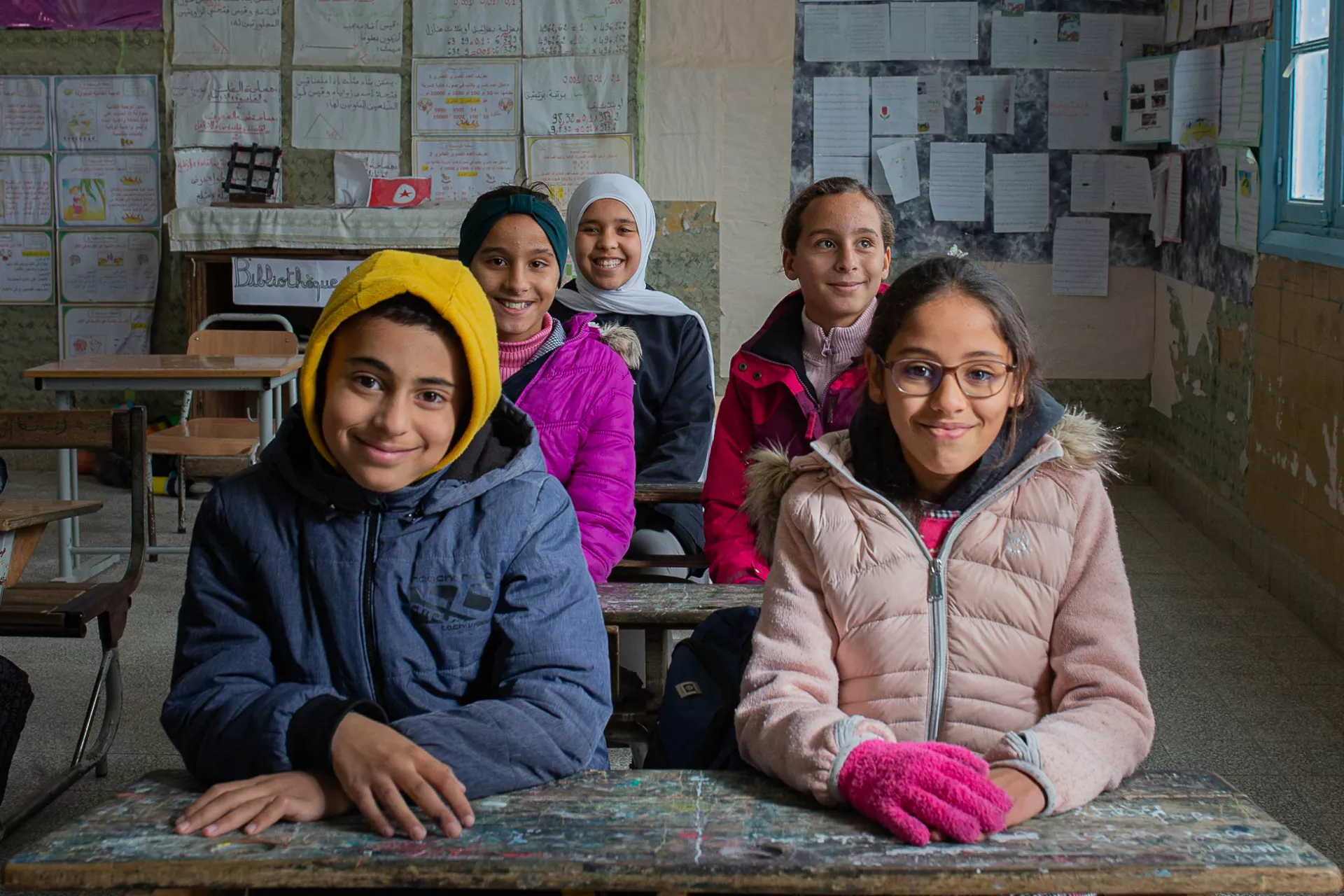
In the old sanitary block. We had to flush the toilets with buckets. Before, in the morning, I used to think twice about eating anything because I worried that I might have to use the toilet. I was afraid I would get sick there,”
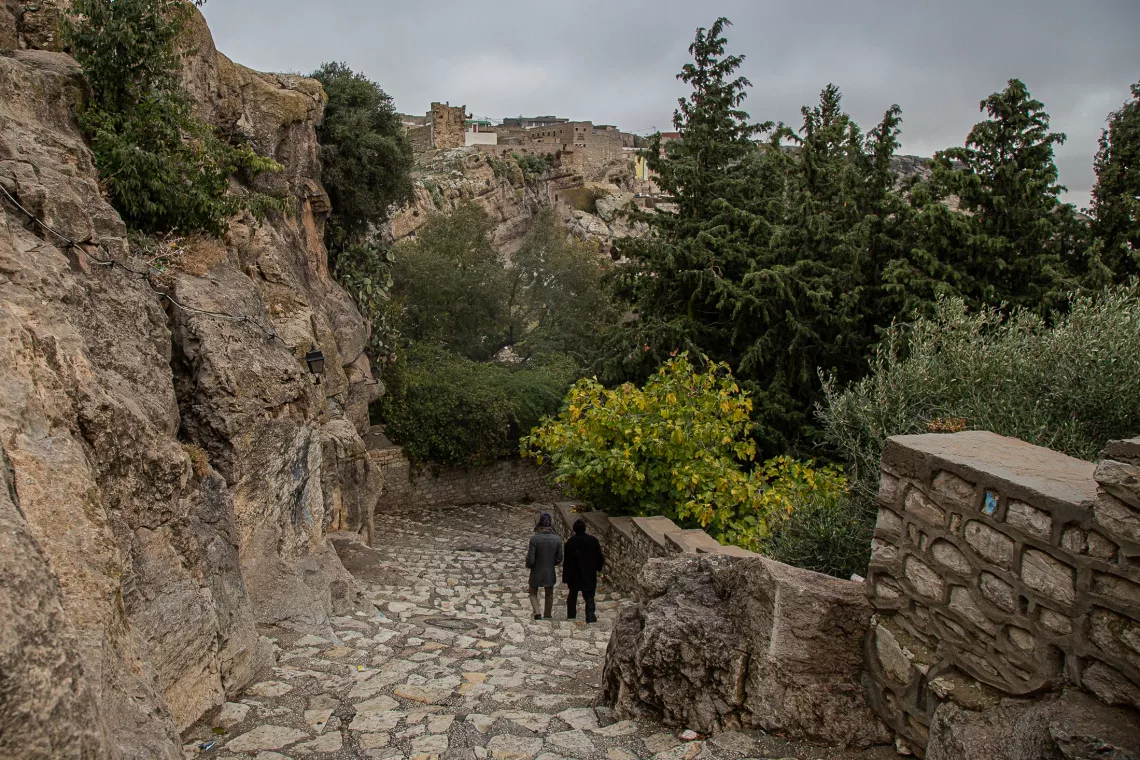
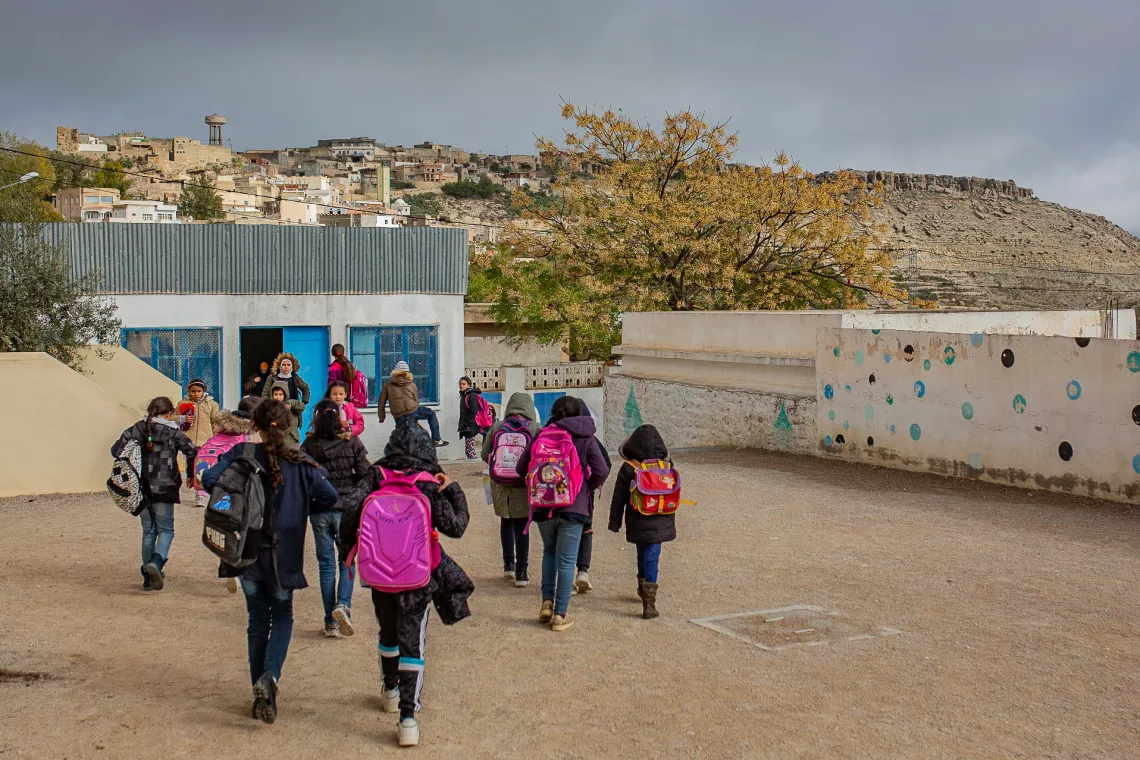
High up in the verdant, misty mountains of Siliana, a governorate in central Tunisia, a rocky road leads up a mountainside to the town of Kessra. A cold wind blows powerfully over the town’s regal stone houses, perched high over a vast valley vista below them. On the main road winding up through the town, the open gates of Kessra’s 2 Mars 1934 primary school lead to old stone schoolhouse buildings, some dating to the French colonial era in the early 20th century.
In the middle of the courtyard inside the school, a freshly renovated sanitary block for students gleams in bright colors among the khaki-colored stone school buildings. The block is full of durable and state-of-the-art toilets and sinks, all decorated with tiles in blue, pink and mustard colors. A separate building just beside it is a sanitary block just for the teachers.
Inside one of the stone school buildings off of the courtyard, student Yahya Zgaia, 11, piped up: “In the old sanitary block. We had to flush the toilets with buckets. Before, in the morning, I used to think twice about eating anything because I worried that I might have to use the toilet. I was afraid I would get sick there,” keeping him from focusing on school, he said.
But then he smiled sheepishly, saying, “But this new sanitary block is better. The sinks are new. The tiles are bright and new. Now I’m comfortable there. I eat when I want, and I can focus on my lessons.”
Fayza Gayed, the director of the 2 Mars 1934 school, has served in the position for the past 14 years.
“Before, we had blocks for boys and girls, but no block for teachers! But this work that UNICEF has undertaken for the school, particularly the sanitary blocks, should be considered a great success in our school.”
Gayed added that as part of the sanitary block works, school staff were invited to numerous training courses on good hygiene practices and how to best make use of the new sanitary blocks.
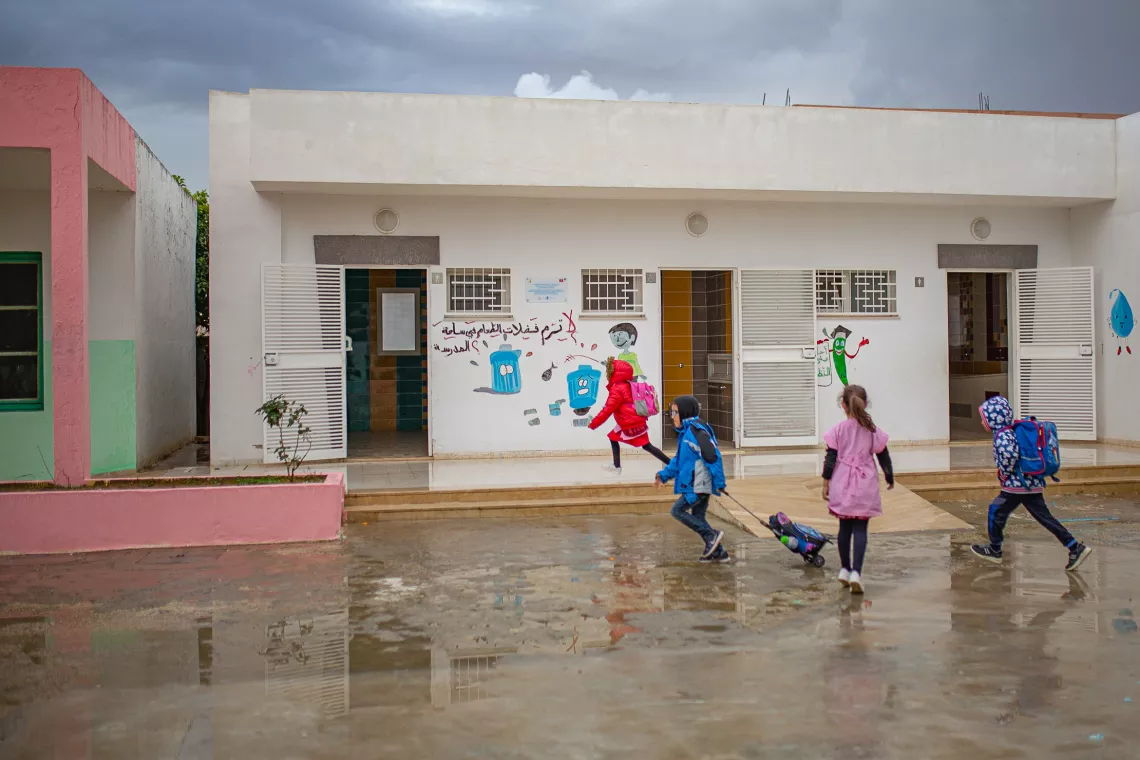
Far away from Kessra, in the coastal province of Bizerte, the bright white new sanitary block adjoining the colonial-era primary school makes the school look fresh and lively. The school sits among a nest of houses in a village called Zouaouine.
Sitting at a wooden desk in one of the Zouaouine primary school classrooms, Ali Lawafi, 11, talked intensely, even emotionally, about what the sanitary block had become after renovation.
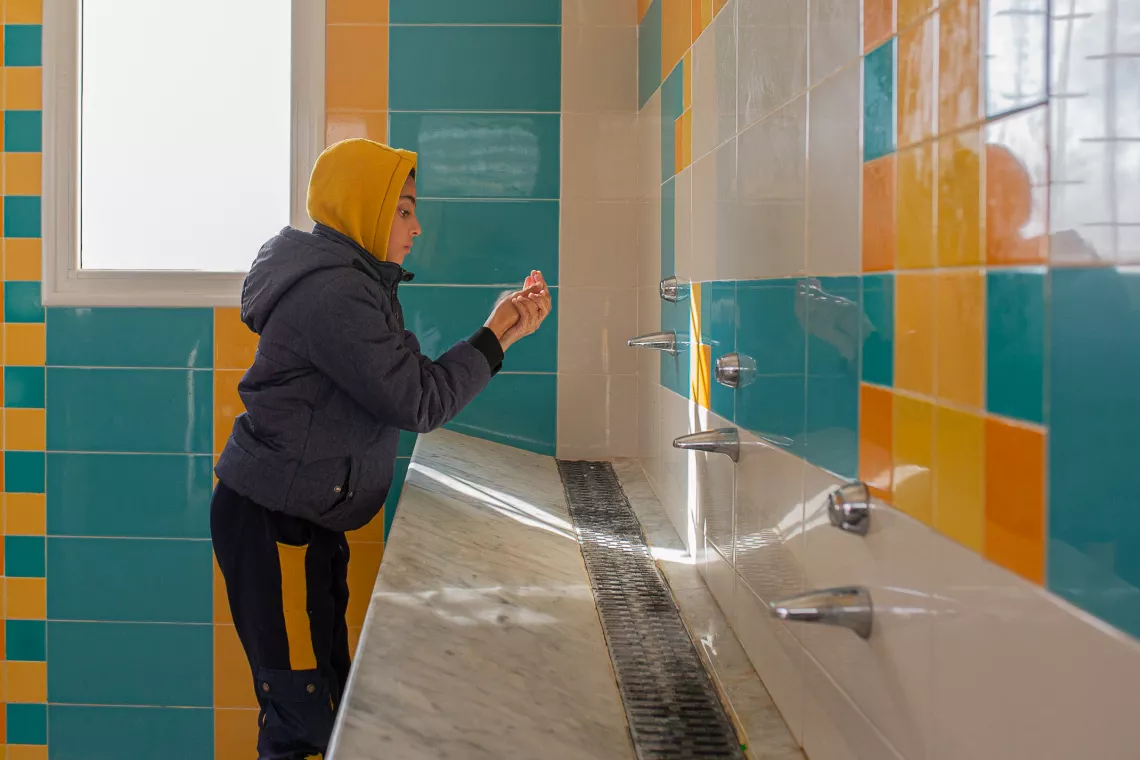
“The new block has the things we need: hand disinfectant gel, soap, regular access to water, more sinks, and the doors lock with a key.”
UNICEF had been addressing the need for the rehabilitation of water, sanitation and hygiene (WASH) infrastructure in schools in Tunisia’s most vulnerable regions since 2016 to ensure adequate water and sanitation services, which help to prevent students from dropping out of school. Sanitary blocks are a key ingredient of this infrastructure.
Around 6% of public schools in Tunisia, over 400 schools, are confronted with continued water shortages that may last for more than one month and only 53% of primary schools have improved, single-sex and usable toilets. As part of UNICEF’s initiative, with the financial support from the Government of Italy through the Italian Agency for Development Cooperation (AICS), the Ministry of Education, together with UNICEF, has worked to develop new quality standard plans for sanitary infrastructure in schools, including an increased ratio of separate toilets of boys and girls, improved water run-off and innovative solutions to ensure the accessibility of sinks for children of all ages.
A total of 34 schools across Tunisia were supported with full-scale rehabilitation and construction of sanitation and hygiene infrastructure as well as hygiene trainings, benefitting a total of over 12,500 children (including 5,525 girls).
Further, in 2021, a training manual about Children’s Hygiene and Sanitation Training (CHAST manual) was developed and distributed by the Ministry of Education to over 4,500 primary schools nationwide.
In the Zaouaouine primary school, student Rimesse Beya, 11, spoke about how the sanitary block used to look and feel before it was rebuilt.
“In the old sanitary block, where one sink worked, the next one was broken. There were doors that didn’t close and didn’t have locks.”
Rimesse added that, “The girls and boys at school wanted to go home to use the toilet because the sanitary block here didn’t have what we needed.”
Back in Kessra, Yahya Zgaia’s classmate, Oumayma Bouzid, 11, sitting attentively and reading aloud a paper letter from the school thanking the Ministry of Education and UNICEF for the new sanitary infrastructure. She described how the sanitary block was before UNICEF completely renovated it.
“We weren’t very comfortable there,” Oumayma said. “Sometimes the sinks didn’t work. There wasn’t a lot of water. The building was very old—so old that some of the students that once used it are now teachers! Every year it got more broken.”
But she said that coming to school with the new sanitary blocks, “Made my heart soar. It made our school look really nice. And my little brother and little sister are going to study here soon, so this is a gift not just for me, but for everybody.”
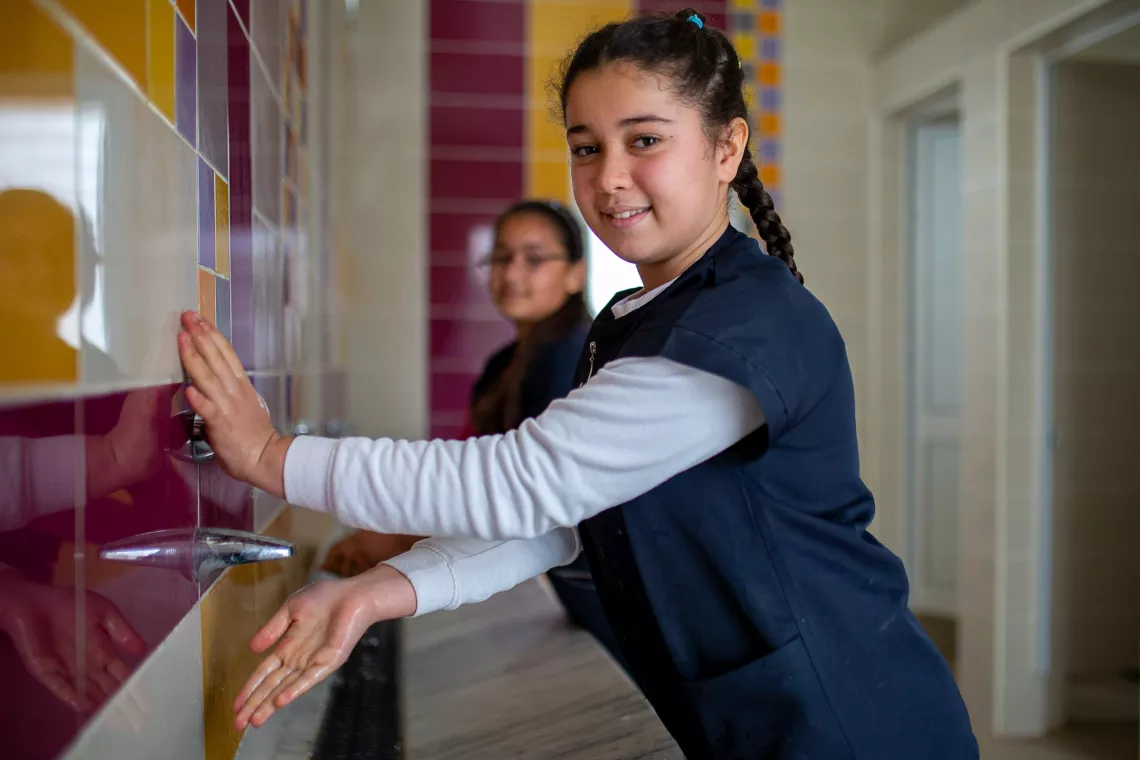
School is such a positive place now, she said, “I love my teachers. And I want to become a teacher too.”
Anissa Amara, who has been teaching for nine years at the Zouaouine school, said about UNICEF’s intervention, “They brought us more disinfectant gel and soap. We are so grateful to them for that.”
And she added that consciousness around good hygiene practices as a way to fight Covid-19—or any other infectious disease—is something that she and her colleagues are trying to spread among their students.
“We’ve worked to make them aware, telling them to bring soap with them and wash their hands before they come into class. Even at home we encourage them to wash their hands. Even though the pandemic is now reduced, we are trying to carry on the culture of hygiene among our students.”
As part of UNICEF’s intervention targeting girls’ hygiene, 625 adolescent girls received training on menstrual hygiene, based on the developed menstrual hygiene guide. Both manuals were developed previously in close collaboration with the Ministry of Education and the Ministry of Health. Clean, up-to-date sanitary blocks give girls an opportunity to attend to their menstrual needs with appropriate privacy and cleanliness, allowing them to not have to worry about being stigmatized for experiencing menstruation at school.
Indeed, hygiene and comfortable WASH infrastructure are essential to keeping children in school, said Andrea Senatori, Director of the Tunis Regional Office of the Italian Agency for Development Cooperation (AICS). The organization was a key funder of UNICEF’S sanitary block project.
“Up-to-standard sanitary infrastructure positively affects the hygiene and, consequently, the wellbeing of kids at school, and contributes to creating a favourable environment to overall child development.”
He went on, saying, “WASH facilities may also encourage girls to go to school more regularly. As a matter of fact, in many countries the absence of adequate WASH facilities may prevent girls from attending schools during their [menstruation] period, thus contributing indirectly in girls lagging in their possibilities to get the future they deserve and can achieve through a proper education.”
Hygiene was also an essential element of staying safe during the Covid-19 pandemic. Which is why supplying soap and disinfectant hand gel was critical in reducing transmission of the virus. With financial support from USAID, in 2020 and throughout 2021 UNICEF supported all 6,102 schools with cleaning and disinfection kits.
Watch the video to learn more about UNICEF's efforts in providing clean and safe sanitary infrastructure for children in schools.