Malak in the Resource Room
How a UNICEF-supported resource room is helping Malak overcome learning challenges and thrive in school
- English
- العربية
A few weeks before her birth, Sharbat knew that her daughter would be born with some health problems.
Doctors reassured her that these problems could be resolved over time, but unfortunately, they affected more than just little Malak’s health - they also impacted her education.
Due to multiple surgeries, long recovery periods, and doctors' instructions to avoid exposing her to any intense physical or mental strain, Malak started school later than her peers and faced learning difficulties from the time she entered first grade.
However, her mother believed that Malak only needed additional support to make up for what she had missed. She spoke with the administration of her school in Aswan, which suggested that Malak undergo an academic inclusion assessment ahead of the next school year.
In Aswan Governorate in Southern Egypt, there are 714 schools, all of which are inclusive schools, meaning they cater to the needs of children with learning difficulties and various disabilities according to specific criteria.
UNICEF has collaborated with the Ministry of Education and Technical Education to support these children through the Comprehensive Inclusion Programme by developing curricula, assessing needs, training teachers, equipping schools, and raising awareness among parents. These children are more vulnerable to academic delay and may not fulfil their potential if parents lack sufficient awareness and the surrounding learning environment is not adequately prepared to accept and include them alongside their peers.
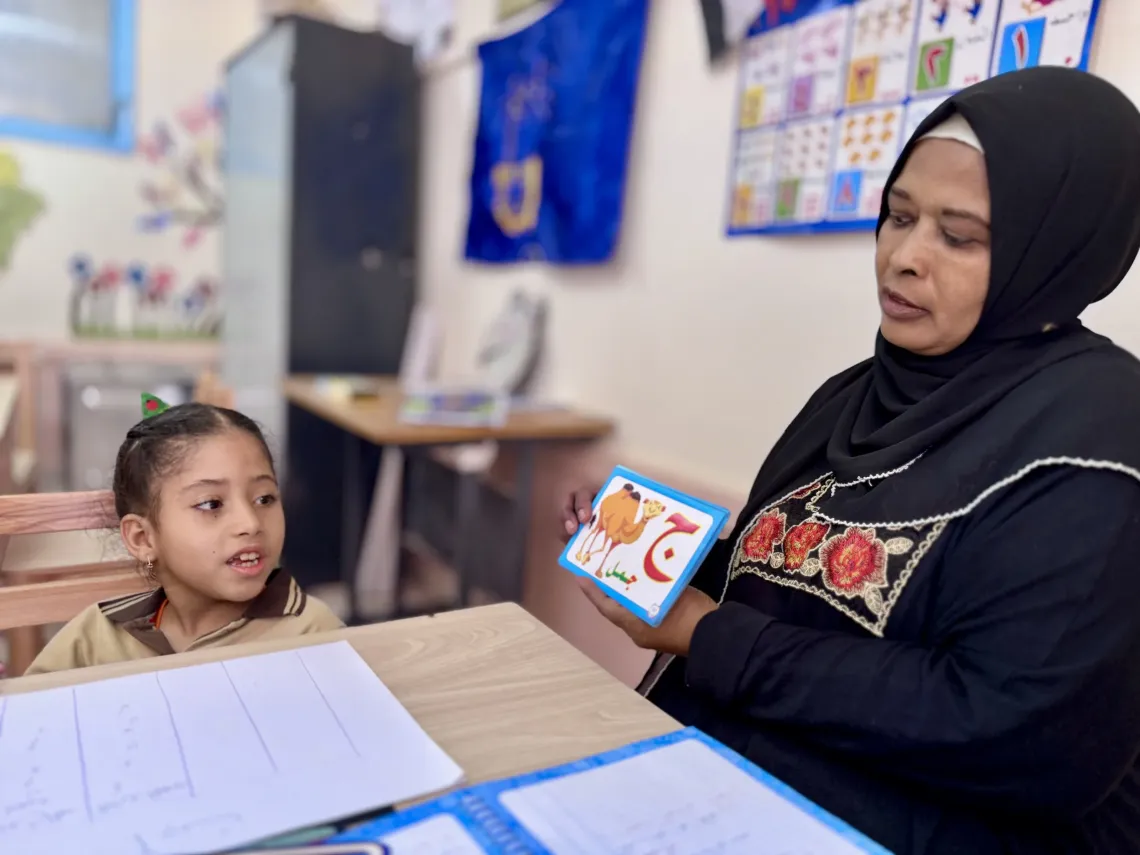
When teachers or parents believe a child may require additional academic support, they can request an official assessment by the relevant authorities. If the assessment confirms that the child needs support, their needs should be taken into consideration, including accommodations such as shadow teaching, adapted or simplified examinations, and improved school accessibility.
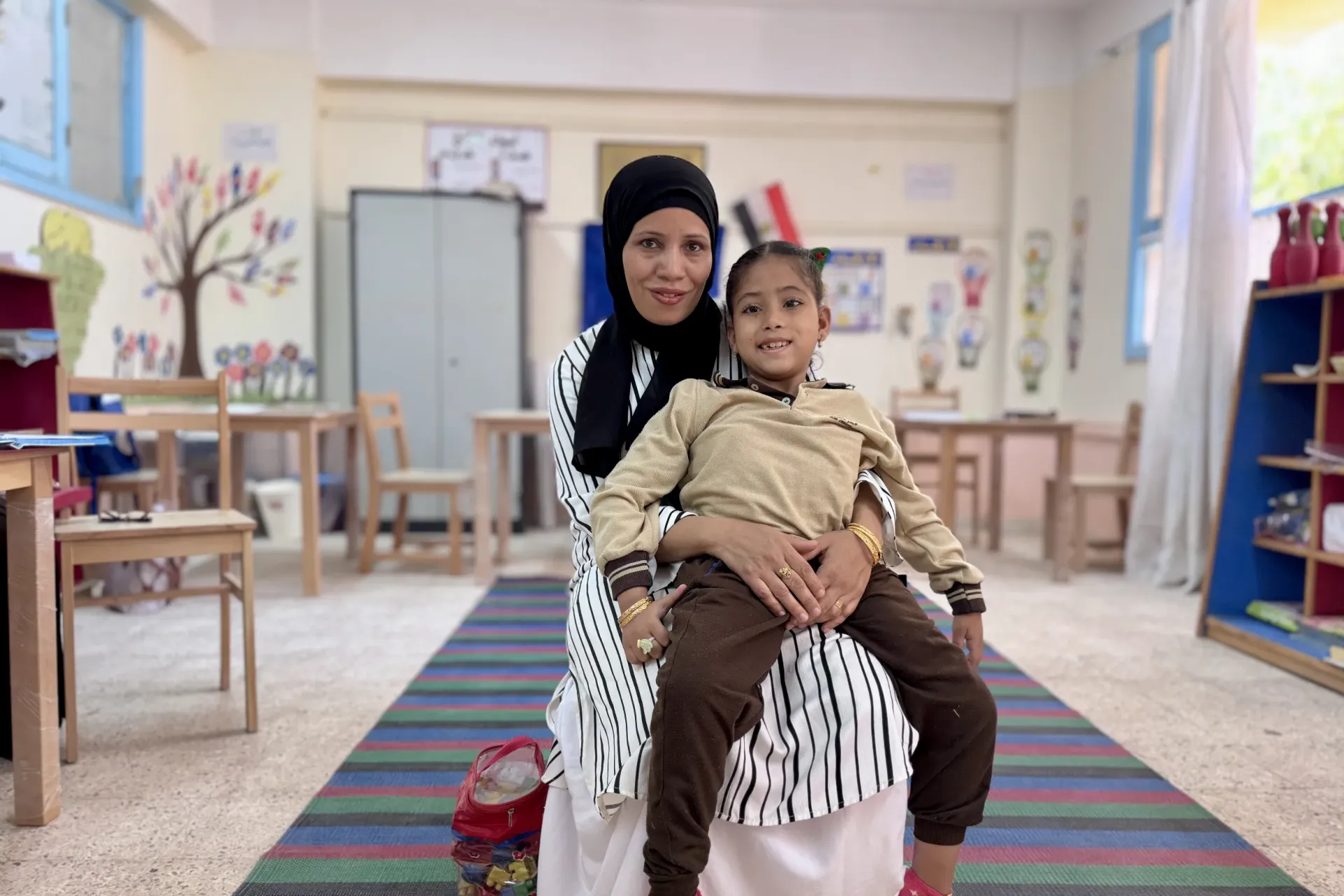
Malak goes to her class as usual with her peers, then she goes to the resource room, which was equipped by UNICEF with the support of the Italian Agency for Development Cooperation, to receive further academic support.
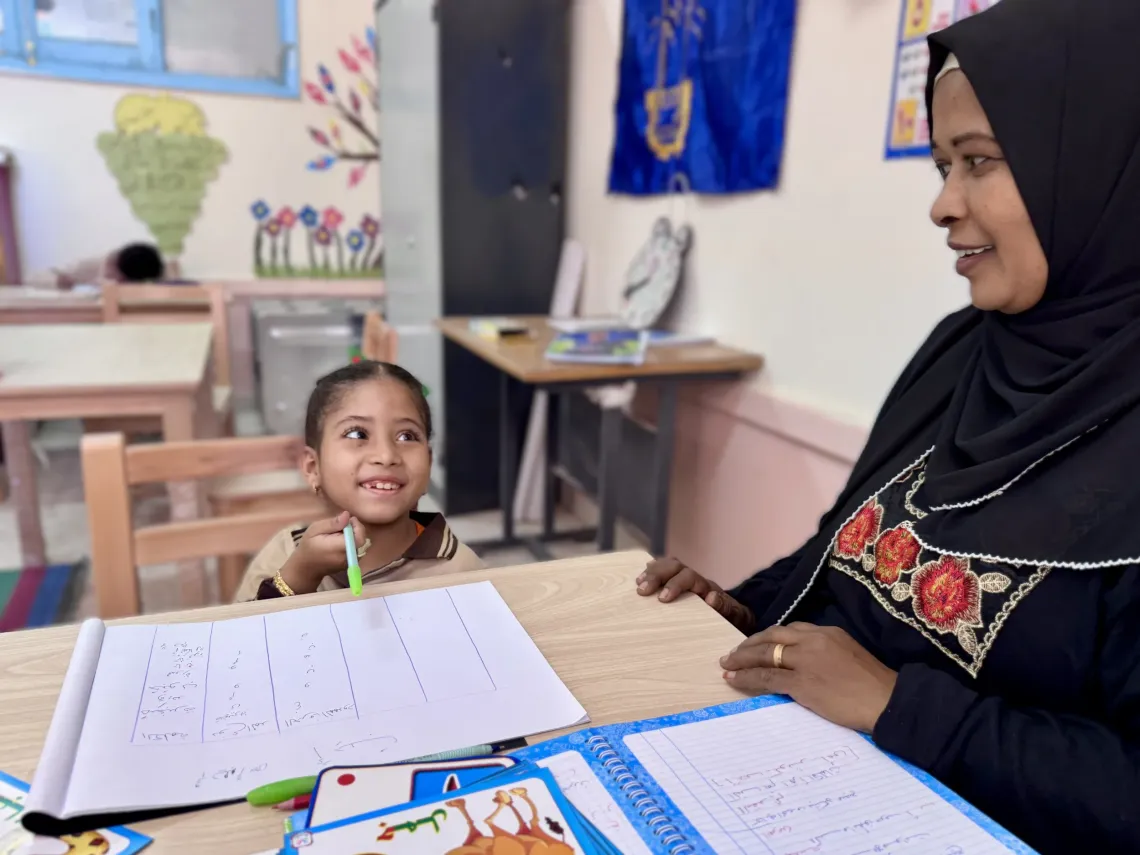
In this room, Malak finds educational tools and games that help her with reading, basic maths and other skills. She is supported by teachers, trained through the UNICEF supported programme, who are equipped to address different learning challenges, such as Ms. Kawthar (in the picture), the Arabic language teacher trained by MOETE with UNICEF support within the Aswan Teachers Education and Rehabilitation Programme to deal with inclusion cases as part of the Comprehensive Inclusion Programme interventions.
Malak's mother, Sharbat, says: "I can see her improving and she’s quickly picking up skills from those around her. I feel proud of her when we are walking somewhere and I find her reading words around."
Malak's teachers appreciate Sharbat's efforts and the positive development witnessed in Malak's condition. Due to Malak’s difficulty walking, her mother used to carry her to school every day and sit with her in the resource room to follow up on what she learned so she could continue supporting her at home.

Sharbat hopes that no parent of a child with a disability or learning difficulty loses hope in their child's improvement, saying: "I have other children who were born without disabilities, but I feel Malak is the one who is diligent and wants to learn more than them, so I wish no one loses hope in their son or daughter."
The Comprehensive Inclusion Programme is implemented by the Ministry of Education and Technical Education in partnership with the United Nations Children's Fund (UNICEF). It aims to promote quality and inclusive education for all children, including children facing greater challenges than their peers.
With the support of many partners such as the Italian Agency for Development Cooperation, the German Federal Foreign Office, the European Union, the Joint Platform for Migrants and Refugees, and the PROSPECTS programme, the programme is currently being implemented in 1,000 schools, and aims to reach 2,000 schools by 2027.