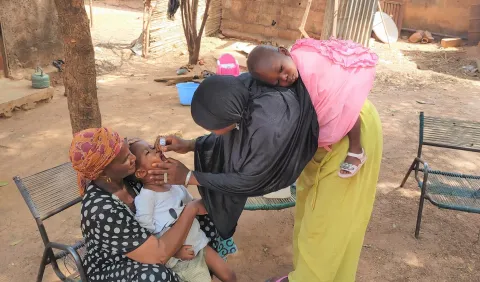
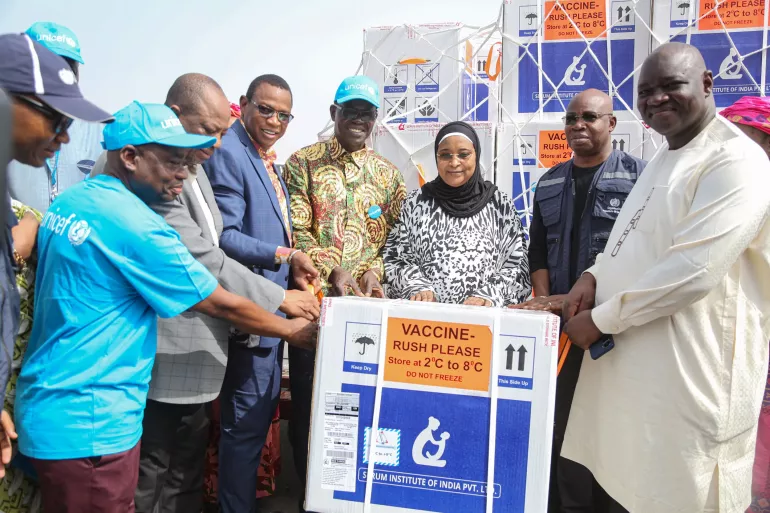
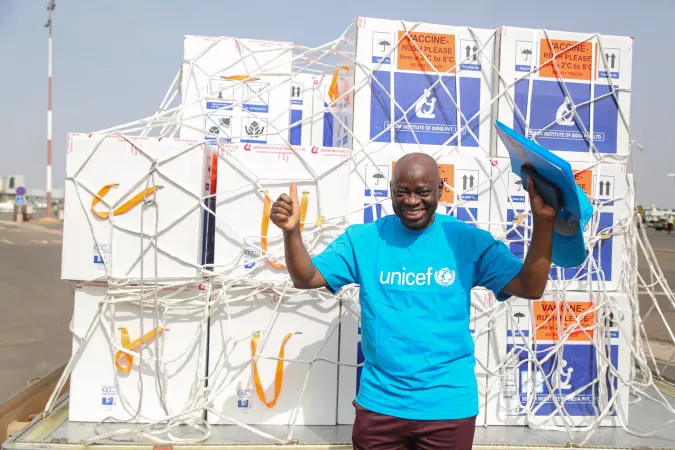
Almost one million doses of Malaria vaccine shipped to Mali for the first time: A joint effort by the Ministry of Health, UNICEF, WHO, and GAVI.
- Français
- English
Bamako, Mali – 11 March 2025 – In a historic milestone for public and child health in Mali, nearly one million doses of the first-ever malaria vaccine have arrived in the country, marking a significant step forward in the fight against this deadly disease. The shipment, facilitated by UNICEF with financial support from GAVI, aims to protect children and reduce the burden of malaria, which remains one of the leading causes of infant and child mortality in the region.
Malaria continues to pose a major public health threat in Mali, ranking the country among the 11 nations with the highest malaria burden. According to the 2021 Malaria Indicators Survey, the national malaria prevalence was 19 percent, with alarming rates in the regions of Mopti (27%), Sikasso (26%), Ségou (26%), Koulikoro (23%), and Kayes (12%). In 2024 alone, malaria accounted for 38% of morbidity, with over 3.4 million confirmed cases, including 1.1 million severe cases and nearly 1,500 deaths among children and adults.
“This vaccine comes at a crucial time and once again demonstrates the efforts of the highest authorities in Mali in the fight against malaria, which is one of the leading causes of mortality and morbidity among children in our country,” stated the Minister of Health and Social Development, Colonel Assa Badiallo TOURE. “I would like to thank our partners, particularly GAVI, UNICEF, and the WHO, for their efforts alongside the Malian government.”
The malaria vaccine introduction is set to begin in April 2025, with an initial rollout in 19 priority districts across five regions: Kayes, Koulikoro, Sikasso, Ségou, and Mopti. Targeting children aged 5 to 36 months, the vaccine will be administered in five doses: the first three at intervals of at least four weeks, followed by two additional doses ideally given annually in May or June, before the malaria intensive transmission season.
“The arrival of this vaccine is a critical milestone for the children and people of Mali,” said Dr. Pierre Ngom, UNICEF Representative in Mali. “We have been eagerly awaiting this day. The malaria vaccine is the result of 35 years of dedicated research and development, finally providing an opportunity to protect our children from this life-threatening disease.”
UNICEF emphasizes that while the vaccine is a major breakthrough, it is not a standalone solution. It complements existing malaria prevention measures already implemented by the Government of Mali, including the use of insecticide-treated nets, seasonal malaria chemoprevention, intermittent preventive treatment during pregnancy, and indoor insecticide spraying.
“Vaccines are a crucial tool in our collective efforts to save children's lives,” stated Dr. Kabore Patrick, WHO Representative in Mali. “However, we must continue to use all available prevention and treatment methods to effectively combat malaria.”
UNICEF plays a leading role in vaccine distribution, serving as the world's largest single buyer of vaccines. As part of its mission, UNICEF collaborates with suppliers to ensure a steady supply of vaccines for children in need. With mass malaria vaccine rollouts already underway across Africa, UNICEF is committed to ensuring that every child living in malaria-endemic regions receives this essential vaccine.
As Mali prepares for this groundbreaking initiative, UNICEF and WHO reaffirm their commitment to support the country towards the successful introduction of the malaria vaccine, ensuring that every child, especially those in the most remote areas, receives this life-saving intervention.
#####
Media contacts
Additional resources
About UNICEF
UNICEF, the United Nations agency for children, works to protect the rights of every child, everywhere, especially the most disadvantaged children and in the toughest places to reach. Across more than 190 countries and territories, we do whatever it takes to help children survive, thrive, and fulfil their potential.
Follow UNICEF Mali on X (Twitter), Facebook, Instagram and YouTube.
About WHO
Dedicated to the well-being of all people and guided by science, the World Health Organization leads and champions global efforts to give everyone, everywhere an equal chance at a safe and healthy life. We are the UN agency for health that connects nations, partners and people on the front lines in 150+ locations – leading the world’s response to health emergencies, preventing disease, addressing the root causes of health issues and expanding access to medicines and health care. Our mission is to promote health, keep the world safe and serve the vulnerable.