Youth engagement
Maldives fit for young people and young people fit for Maldives

Context
Climate threats. Emotional well-being. Access to decent work, wages and housing. The struggle to maintain a healthy lifestyle.
These are the challenges that young people face in their daily lives – challenges that will shape their futures and the future of Maldives.
Sadly, when it comes to addressing these issues, young people’s voices and talents are far too often not heard or valued. They are left out of the decisions about policies and actions that impact their lives and future.
Young people have the right to be heard in the matters that affect their lives. That is why UNICEF Maldives is committed to consulting young people. And it is why we provide young people with platforms to engage in conversations and decisions about the future – their futures and the future of the country.
Challenges
Young people aged 15–24 make up about 10 per cent of the population in Maldives.
When asked, they are clear about their concerns. There are many, of course. But three stand out: the climate crisis; mental health and well-being; and education, employment and training opportunities.
Climate crisis
For most young people in Maldives, the climate crisis is not theoretical. It is a fact of daily life and an existential threat to their lives. It means stepping over sandbags on the way to work, watching the ocean creep up the shoreline to the school grounds and watching the destruction of marine habitats threatening a treasured way of life.
Mental health and well-being
Increasingly the stresses of keeping up in a global, digital and fast-paced world are taking a toll on the mental health of young people. Fundamental shifts to traditional social and family structures; exposure to gangs, crime and violent extremism; substance use including smoking and drugs. All these factors play a role.
Education, employment and training
Two remarkable figures illustrate why education, employment and training is a serious concern for young people:
- 19% of young people are not in education, employment or training
- 55% of young people aged 16 – 19 do not attend upper secondary school [i]
[i] Maldives Common Country Analysis, p.18

UNICEF in action
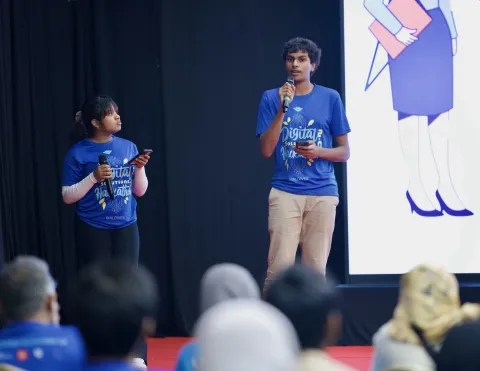
UNICEF recognizes the talents and potential of young people in Maldives. We know that working for young people means working with them. It means encouraging them to speak up, seek solutions and empower change. It means providing support so young people can fulfil their internationally recognized right to be heard.
Our goal is to equip young people with knowledge, skills and tools and provide them with spaces to be seen, heard and engaged. We aim to create a sense of belonging that encourages young people to become competitive, compassionate and caring. A sense of belonging that drives them to build fulfilling lives and able to contribute to the future of Maldives.
We do this through workshops and consultations. One of our main efforts to engage young people is through the Youth Reference Group.
This group of young people aged 16–25 are volunteers who passionate about contributing to progress in their communities and country. They serve as guides to UNICEF Maldives on the issues that affect their lives. In return, UNICEF offers platforms and opportunities for them to build their skills and influence.
Other opportunities for young people to get involved include: