A ripple that became a wave
Young people in Maldives are turning climate concern into action

When 16-year-old Maal returned to Maldives after studying abroad, he carried with him a growing concern for something he loved deeply: the environment.
Like many young Maldivians, he spent his childhood in the ocean, exploring beaches, swimming with friends, and enjoying the natural beauty that surrounds the island nation.
But over time, he noticed a troubling change. Instead of appreciating and cherishing the environment, people were treating it like it was expendable. Plastic waste and litter were becoming an increasingly familiar sight.
One evening in Hulhumalé, after finishing a run, Maal and his friend Ayaadh stopped by the beach. The shoreline was scattered with discarded plastic bottles and soda cans.
“I turned to Ayaadh and said, ‘Hey, let's do something about this,'’” Maal recalls.
That same night, they went out for their very first beach cleanup.
“At the beginning, it was just the three of us; me, Ayaadh, and a friend named Hussain. We decided to record the process and post it online to raise awareness about the issue. That simple act sparked something bigger. People started noticing, and before long, Ripple was born,” says Maal.
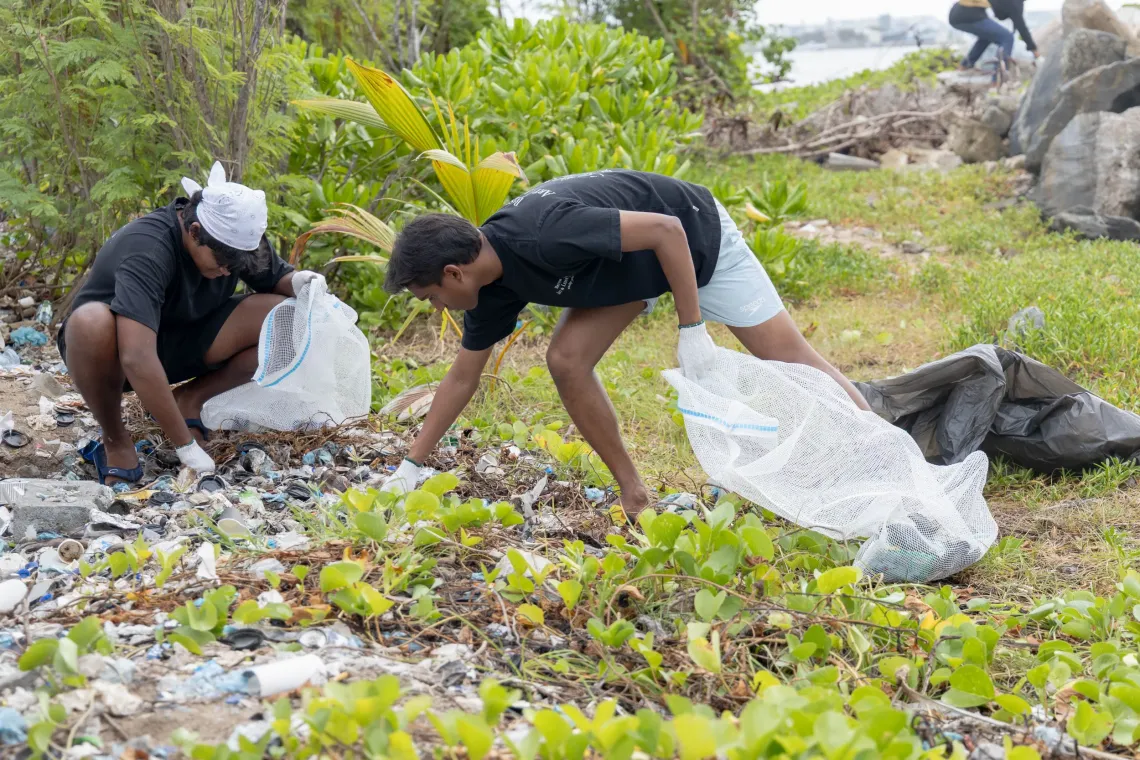
What began as a simple response to a problem they could no longer ignore soon became Ripple: a youth-led environmental movement driven by the belief that small actions can create lasting change. The initiative was co-founded by Maal, Ayaadh and Maasha.
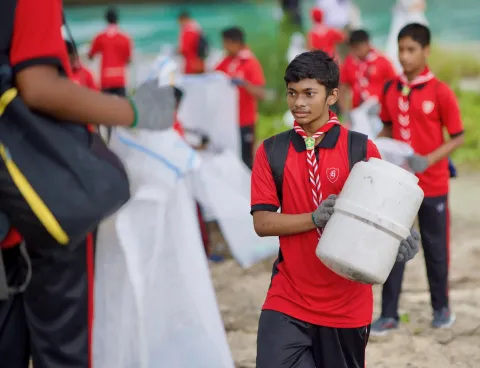
Today, Ripple has now grown to a network of around 120 volunteers, most of them young people between the ages of 12 and 28 years. The group, whose average volunteer age is just 17, conducts various cleanups, cleaning beaches, roadsides and public spaces. Over the past year, they have conducted cleanups and activities in Greater Male’ Area, as well as in Addu City, K. Maafushi and K. Dhiffushi.
Yet for the young people involved, the cleanups reveal something deeper than the amount of rubbish collected.
“We've realized that the problem goes much deeper than what we see on the surface,” says Maal. “Sometimes you can actually hear plastic bottles crunching beneath your feet as you walk. It's a harsh reminder of how embedded waste has become in our environment.”
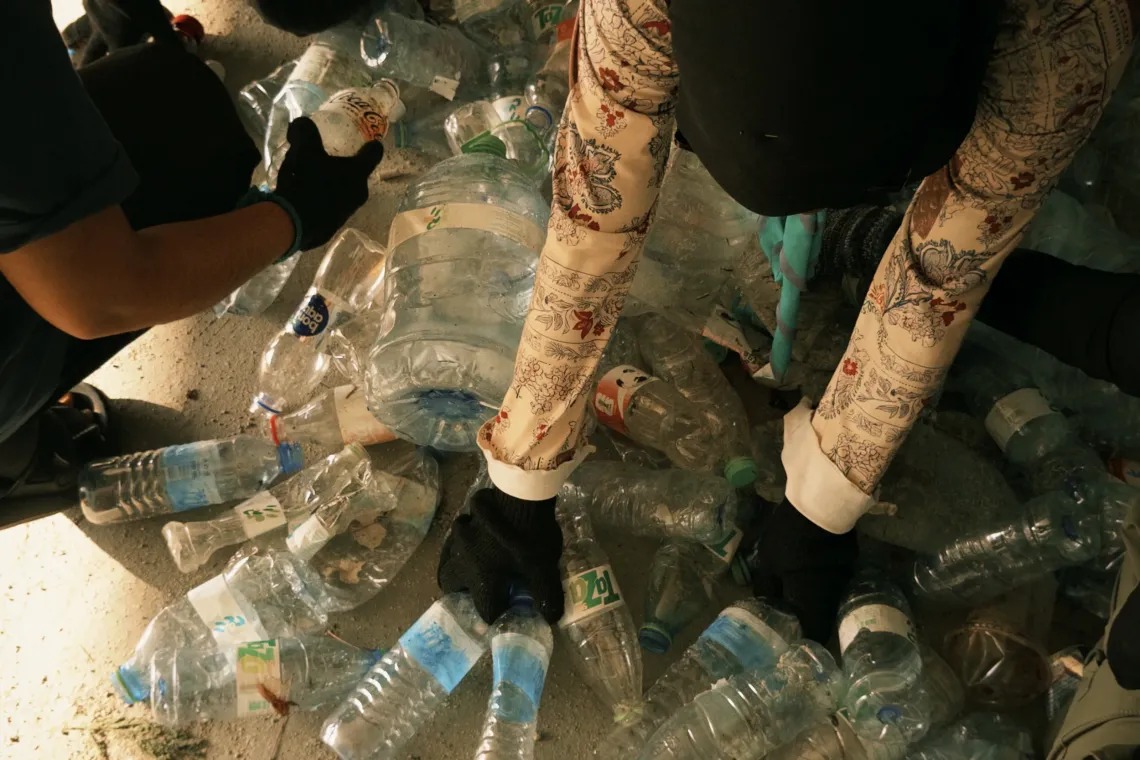
The team has also noticed how quickly waste returns to the same locations. Areas that are cleared during one cleanup are often littered again within days.
These experiences have strengthened Ripple's commitment not only to removing waste, but also to encouraging behaviour change and advocating for long-term solutions. As the movement has continues to evolve, Ripple has also started to raise awareness about plastic pollution through social media and community engagement activities.
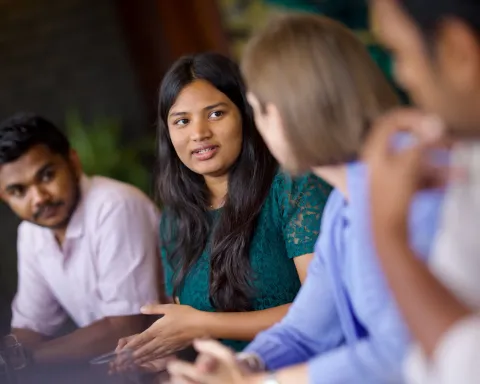
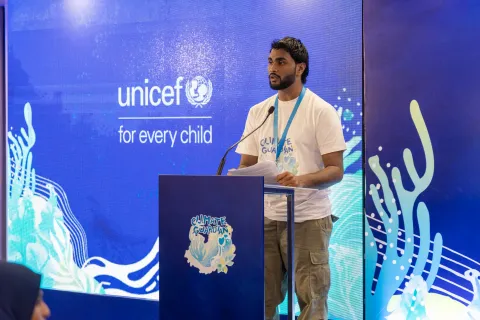
For many members, that journey has expanded through their participation in Climate Guardians, UNICEF Maldives' youth climate engagement initiative. Through the programme, young activists have gained new opportunities to connect with peers, strengthen their knowledge, and amplify their voices on environmental issues that matter to them.
But turning that knowledge and motivation into sustained action also comes with its own hurdles.
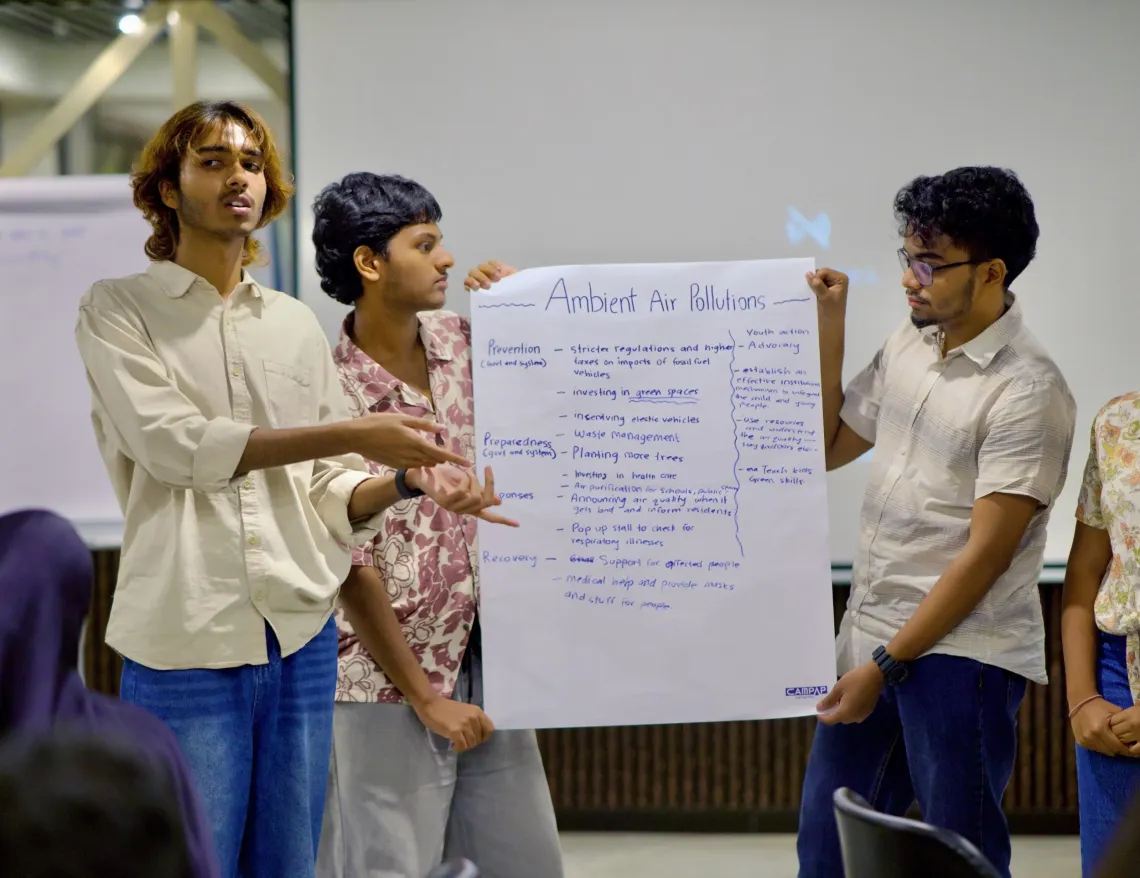
One of the group’s biggest challenges is having enough resources to continue their work. Most cleanups are currently supported by volunteers themselves, who use their own allowances and earnings from other jobs and personal contributions to buy supplies and cover costs. With more resources and support, youth-led efforts like this could sustain our efforts and make an even bigger impact on communities across Maldives.
“With proper support, we could do so much more," says Maal. "Just one hour of action can make a huge difference.”
Despite these challenges, the volunteers remain committed to their mission and hopeful for the future.
Their message to other young people is simple.
“Be the change you want to see. It doesn't always have to be something big. It can start with something as small as holding onto a candy wrapper until you find a bin. Small actions add up.”
As Ripple celebrates their first year, their journey offers a powerful reminder that meaningful climate action often begins with ordinary young people deciding they will no longer wait for someone else to act.
Sometimes, all it takes is one small ripple to start a wave.