The Power of Youth in Co-Creating Education
Statement attributable to Dr. Edward Addai, Representative, UNICEF Maldives to commemorate International Day of Education 2025

Adolescence is a defining stage in the life course – one where the foundations laid in childhood either translate into opportunity or give way to exclusion. In the Maldives, this stage has become a critical crossroad. Gaps in learning, protection, well-being, and skills are converging during this stage, creating barriers to the successful transition of several young people from school to decent work and active citizenship.
In 2025, only 49 per cent of learners transitioned to upper secondary education, while 19 per cent of youth between 15 to 24 years were not in education, employment, or training (NEET). These education challenges are compounded by significant protection and mental health risks. From January 2024 to September 2025 alone, 2045 cases of violence against children were reported, over 15 per cent of adolescent girls experienced physical or sexual violence, and 18.8 per cent of young people reported symptoms of depression. At the same time, cases of children in conflict with the law increased sharply, underscoring weaknesses in systems required to support adolescents through key transitions. The urgency is clear.
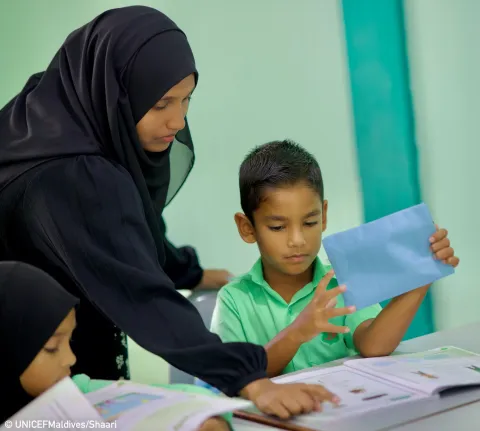
On this International Day of Education, UNICEF highlights a simple truth: all children and adolescents have a right to be in school and education systems are strongest when adolescents help shape them to respond their realities, particularly across key transition points. When learning and development pathways are fragmented, adolescents disengage. But when they are well aligned, inclusive, and youth-informed, education becomes transformational, and more relevant, effective and equitable.
A Clear Vision
We envision a Maldives where every adolescent learns well, feels safe and supported, and gains the skills to thrive – from primary through upper secondary and into further education, decent work and civic life. Achieving this requires investment, coordination and meaningful youth partnership at every step.
Priority Actions
1) Strengthen foundational learning
Address the country’s 4.32-year learning gap and improve learning outcomes through sustained investment in teaching quality and inclusion. This includes stronger school-level quality assurance, better national learning assessments, and embedded inclusive education practices so that every learner, regardless of need or location, is prepared for the academic, social, and emotional demands of adolescence.
2) Make schools safe, healthy, and climate-resilient
Schools are central to mental health and well-being. Expanding social and emotional learning, physical education, and healthy lifestyle promotion, alongside robust safe school protocols, can protect learners and keep them engaged. Integrating climate-resilient infrastructure and systems will safeguard the continuity of learning during emergencies and prepare youth to navigate a changing environment.
3) Bridge the transition to upper secondary education and future skills.
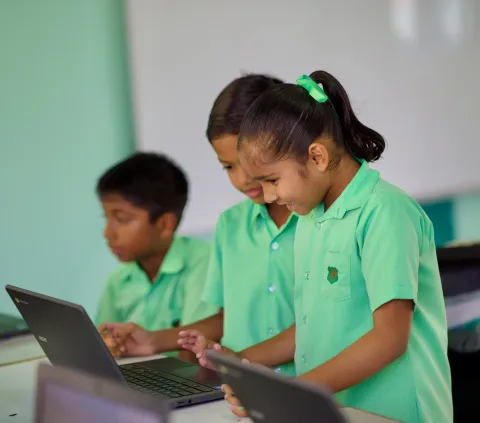
Expanding access particularly across geographically dispersed islands through blended and digital learning including initiatives such as TechPath will promote learning continuity and help reduce drop-out and exclusion. At the same time, linking education to green and 21st-century skills prepares young people for further education, decent work, entrepreneurship, and active citizenship.
4) Put adolescents at the center of co-creation
Youth engagement is not optional; it is essential. Listening to adolescents, incorporating their feedback into school improvement and policy processes, and co-designing solutions with them makes systems more responsive. Establishing and strengthening youth advisory mechanisms at school, community, and national levels can ensure smoother transitions that reflect young people’s aspirations and realities.
A Call to Collective Action
Transforming education for adolescents requires all of us:
- Government and education authorities: Prioritize early learning recovery, quality assurance, inclusive education, and climate‑resilient investments; enable youth participation in policy and budgeting.
- Schools & educators: Embed social and emotional learning, safe school protocols, and inclusive practices; use assessment data to tailor support; champion student voice in school governance.
- Health, protection & social sectors: Coordinate services to address violence, mental health, and vulnerability to ensure no adolescent falls through the cracks.
- Private sector & civil society: Expand digital access, apprenticeships, mentorships, and pathways to green jobs; support innovation at scale.
- Parents, communities & youth: Partner in co‑creating solutions, sustaining attendance and well‑being, and shaping a system that works for every learner.
On this International Day of Education, UNICEF reaffirms its commitment to working with and for adolescents by partnering with young people to strengthen education pathways, supporting successful transitions, and ensuring every young person in the Maldives has the opportunity to learn, thrive, and contribute to a sustainable future.
Media contacts
About UNICEF
UNICEF promotes the rights and wellbeing of every child, in everything we do. Together with our partners, we work in 190 countries and territories to translate that commitment into practical action, focusing special effort on reaching the most vulnerable and excluded children, to the benefit of all children, everywhere.
For more information about UNICEF and the work it supports in the Maldives, visit www.unicef.org/maldives