Sabah’s children deserve more than progress
An Opinion Editorial

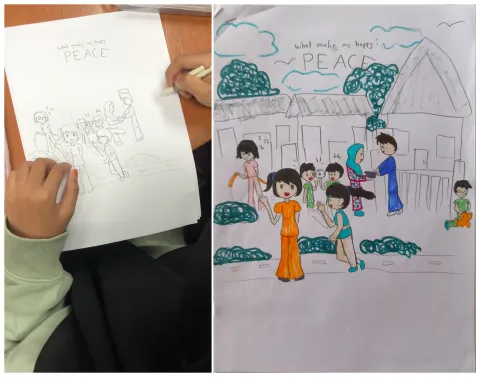
What does it mean for a child in Sabah to thrive? Two years ago, I remember asking this question during one of our first workshops. And instead of statistics or indicators, we asked children to draw.
Some drew rivers and the sea; others drew their homes and safe spaces. Many drew pictures of their families, friends, and neighbors. But one drawing that stayed with me until today showed a simple house, with children playing outside. At the top were the words, written carefully: “What makes me happy: Peace.”
There was no mention of income or infrastructure. Instead, it was just a sense of safety, belonging, and people around them.
The drawings reminded us that child wellbeing is not only about income or access to services. It is about whether a child is healthy, able to learn, safe, connected, able to play, and genuinely heard.
These participatory engagements became the starting point for the Sabah Child Wellbeing Index (SCWI). Through surveys and fieldwork, we collected more than 4,400 stories from children and caregivers across Sabah to understand how children are growing up.
The goal was to move beyond income alone by listening to what children and their caregivers had to say, so that decisions are shaped by what children experience in their daily lives.
Progress is real, but uneven
From our findings, most children in Sabah can access healthcare, schools, and basic services. Across communities, there is strong evidence of family and social support. In fact, one of the most consistent findings from the Index is the strong feeling of connectedness — the relationships children have with their families and communities.
These are not small achievements. They reflect sustained efforts by the Government, civil society, frontline workers, local communities, and caregivers themselves. Sabah has made real progress, but progress alone does not mean that every child is thriving.
Across Sabah, many children are still growing up with gaps that impact their everyday lives such as not having enough nutritious food, living in homes that are not fully adequate, experiencing bullying or unsafe environments, and struggling to access reliable internet or learning tools.
These challenges do not sit neatly apart. They overlap, reinforce each other and become harder to overcome over time. For some children, the gaps are even deeper.
Who is still being missed
To reach children who are often missed in national surveys, UNICEF worked with active civil society organizations in Sabah to deliberately include children with disabilities, as well as undocumented or stateless children in the study.
These groups of children consistently face the greatest disadvantages. They are more likely to be excluded from education, have limited access to services, and experience barriers that are not only structural, but also social.
I was reminded of this during our fieldwork in Sandakan, working with Cahaya Society.
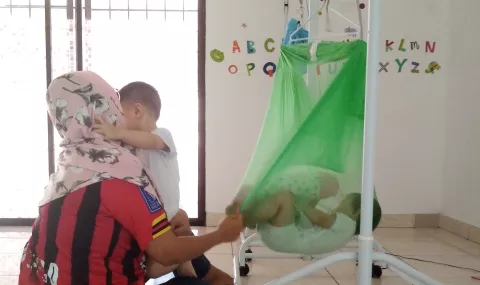
At an Alternative Learning Centre, we interviewed thirteen children. There was a sense of familiarity in the room where some were shy, others more confident – but each child shared something of their daily lives and what they hoped for.
When the last interview finished, the group of children and their caregivers slowly left.
I remember turning around and noticing one more child standing outside the classroom, near the kitchen, waiting. He was a boy with a disability. He had not come in with the others and instead waited until they were done before stepping forward.
It was a small moment that could have easily been missed.
At the time, I could not fully process it. It was only later when we began analyzing the data that the moment stayed with me.
Exclusion is not always obvious. Sometimes it appears quietly through patterns of who is seen, who is included, and who gets to participate.
And for some children, these barriers are layered, shaped by disability, by documentation status, and sometimes by both at the same time. This is what the Sabah Child Wellbeing Index is trying to make visible.
What the data tells us
For a long time in Malaysia, we have measured children’s lives through individual indicators. We often count progress in separate ways: whether a child is in school, has seen a doctor, or receives support. These indicators matter, but they do not show the full picture.
But children do not experience their lives in compartments.
The SCWI shows this clearly: children may be in school but lack digital access to information; attend health check-ups but not have enough nutritious food at home; live in families balancing daily needs in unsafe environments; or enter adolescences without safe spaces to play and be heard.
The data makes this difficult to ignore. More than 90 per cent of children in Sabah experience overlapping deprivations at the same time, falling short in at least two dimensions of wellbeing.
If children’s challenges are connected, our responses must be connected too.
We cannot improve education without addressing hungry and malnourished children; We cannot strengthen health outcomes without improving living conditions and sanitation. We cannot meaningfully support children’s participation or mental health if they do not feel safe or included.
Turning evidence into action
The SCWI findings call for more connected responses across government, local authorities, civil society, businesses and communities
Sabah's strong sense of family and community offers a solid foundation to build on. With the right support, local communities and local authorities can help connect children to health, education, welfare, and other support services. As discussions on the Federal Budget get underway, the SCWI findings offer a timely opportunity to align public resources with areas where children face the greatest needs. Over time, the findings can also help track whether these investments are making a real difference in children’s lives.
The Sabah Child Wellbeing Index also reminds us why inclusive data matters. Too often, children with disabilities and undocumented or stateless children remain invisible in the data and evidence that informs decision-making. When children are not counted, their needs can be overlooked.
Every child in Sabah deserves what that drawing captured so simply: a home that feels safe, a community that supports them, and the chance not only to grow, but to thrive.