On the Ground Update - Disaster Risk Reduction
Empowering children with knowledge to face climate disasters
What comes to mind when you think of rain?
For some, it symbolizes fresh beginnings and renewal. But for children living in vulnerable communities, it often signals danger and uncertainty.
My name is Sufyan Aslam, and I serve as a Disaster Risk Reduction (DRR) Consultant with UNICEF Malaysia.
In flood-prone areas across Malaysia, every rainfall carries the threat of floods and landslides—disasters that uproot lives, destroy homes, and, tragically, sometimes take away loved ones.
On behalf of UNICEF Malaysia, I would like to personally thank YOU for your generous support, which has made it possible to assist children and families affected by disasters.
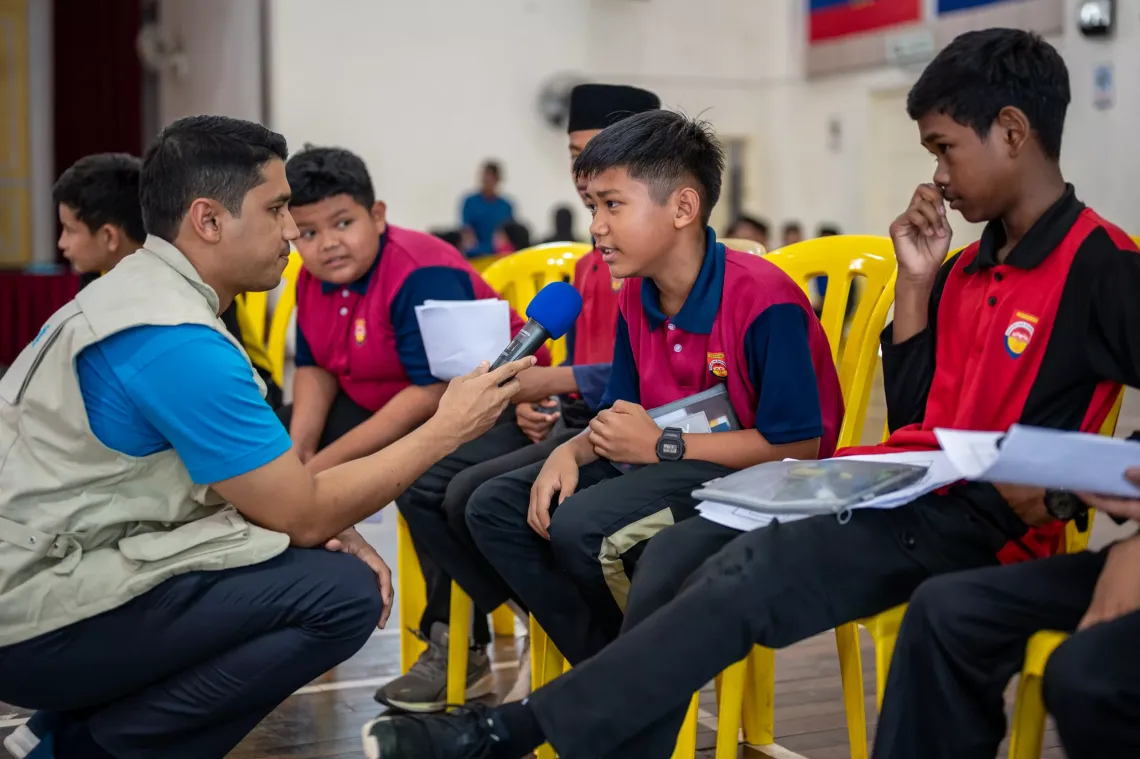
Over the past few months, I visited several schools across Malaysia—in Kelantan, Terengganu, Pahang, and Sabah. Most of the children I met have experienced floods and landslides on a yearly basis, and some multiple times a year.
Sadly, climate change is increasing the frequency and intensity of these events, worsening their impact. Each time a disaster strikes, the life of children is turned upside down; together with textbooks, school uniforms, cherished toys, learning and play spaces, these children lose their chance to receive a consistent education, affecting both their chances at life and childhood joy.
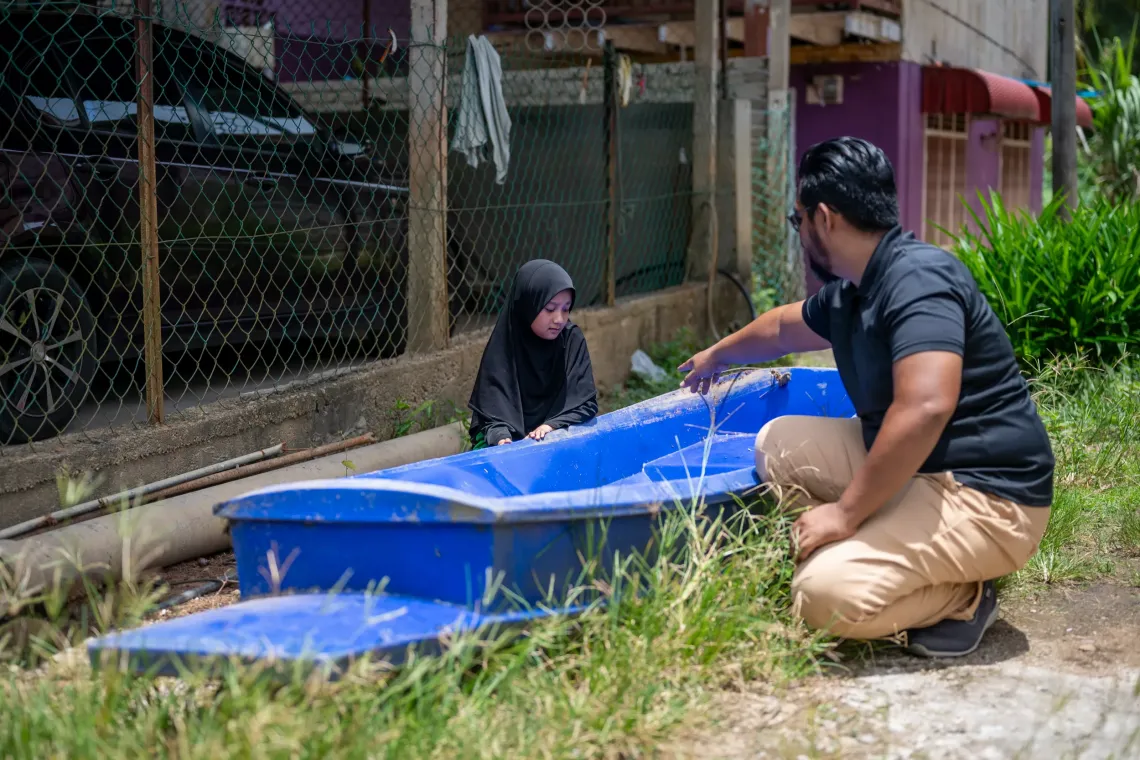
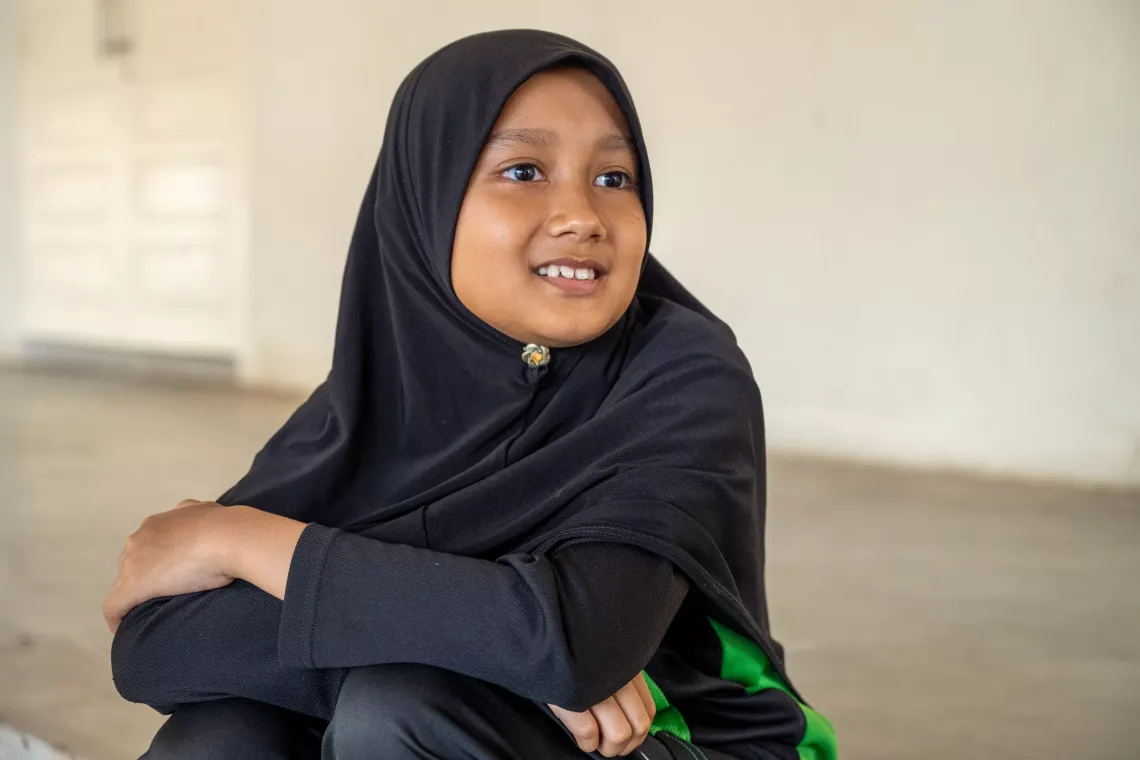
One story that deeply resonated with me is that of 10-year-old Ameera from Rantau Panjang, Kelantan. Her parents woke her up at midnight, urging her to leave as the water quickly filled their house.
With no time to spare, they climbed into a small boat they kept at their home to use during floods and paddled through the dark waters to reach the nearest evacuation centre.
“The evacuation centre gets very crowded. We have to fight to use the toilet. It is not a fun experience. And after the floods subside, we have to clean the house before we can return home.” - Ameera
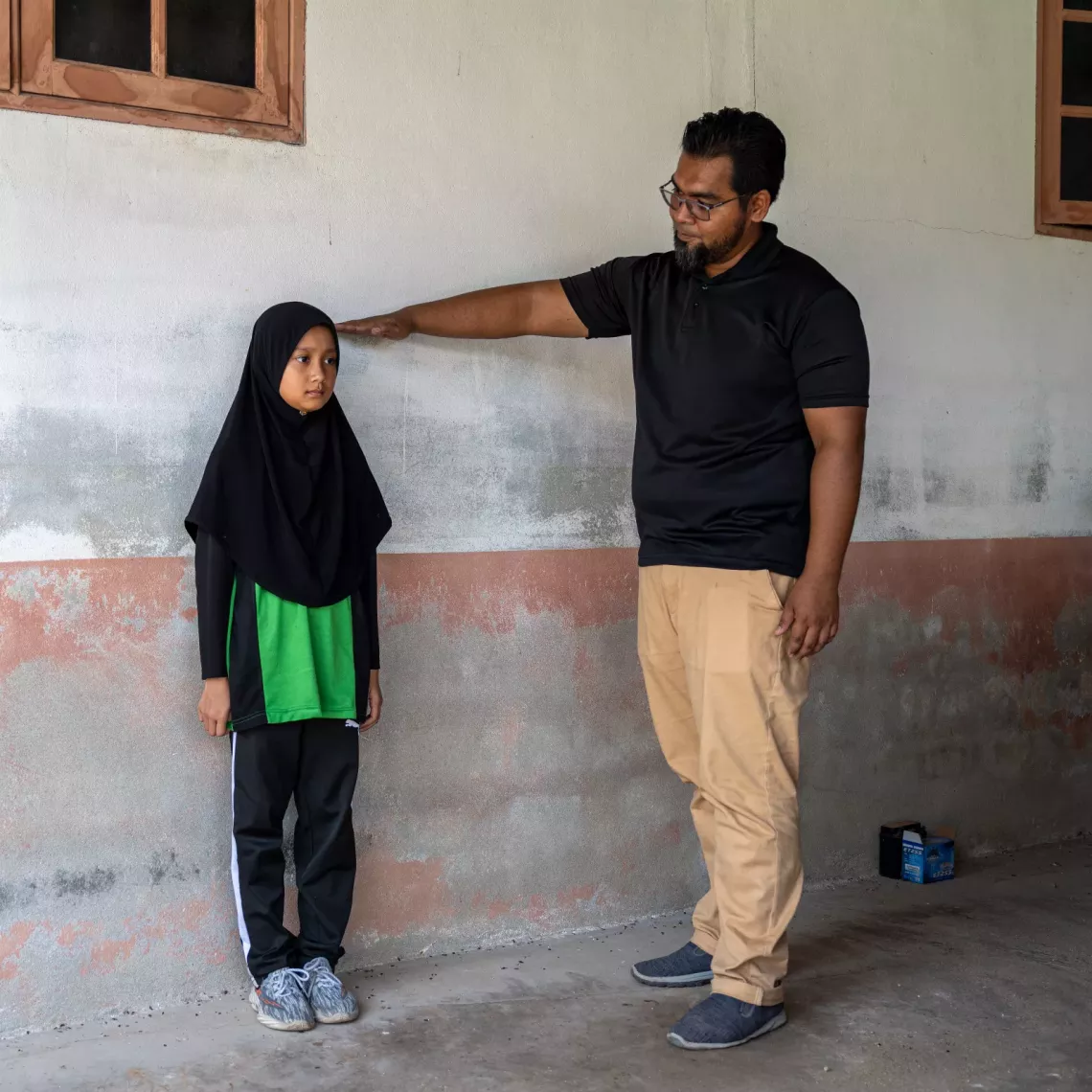
“As a father, it breaks my heart to see my daughter and her friends so scared. I want to protect them, but when the floods come, all I can do is hold them tight and pray for safety.” - Abe Ha, Ameera's father
When I asked if she was scared, Ameera smiled and said, "Tok naling, papa ado" (I wasn’t scared because my dad was there).
This story is just one of countless others where children are forced to leave everything behind as extreme weather becomes more common.
It's moments like this that make me wonder. If we could provide children with more knowledge, awareness and skills, they might be able to do so much more. I've seen how, in countries like Indonesia and Japan, children are taught about disasters and what they can do to prepare before disaster strikes, during disasters to reduce impact, and after disasters to help families recover.
I believe we can do the same here and really make a difference in children's lives, teaching them how to respond and mitigating the fear and trauma that come every time disaster strikes.
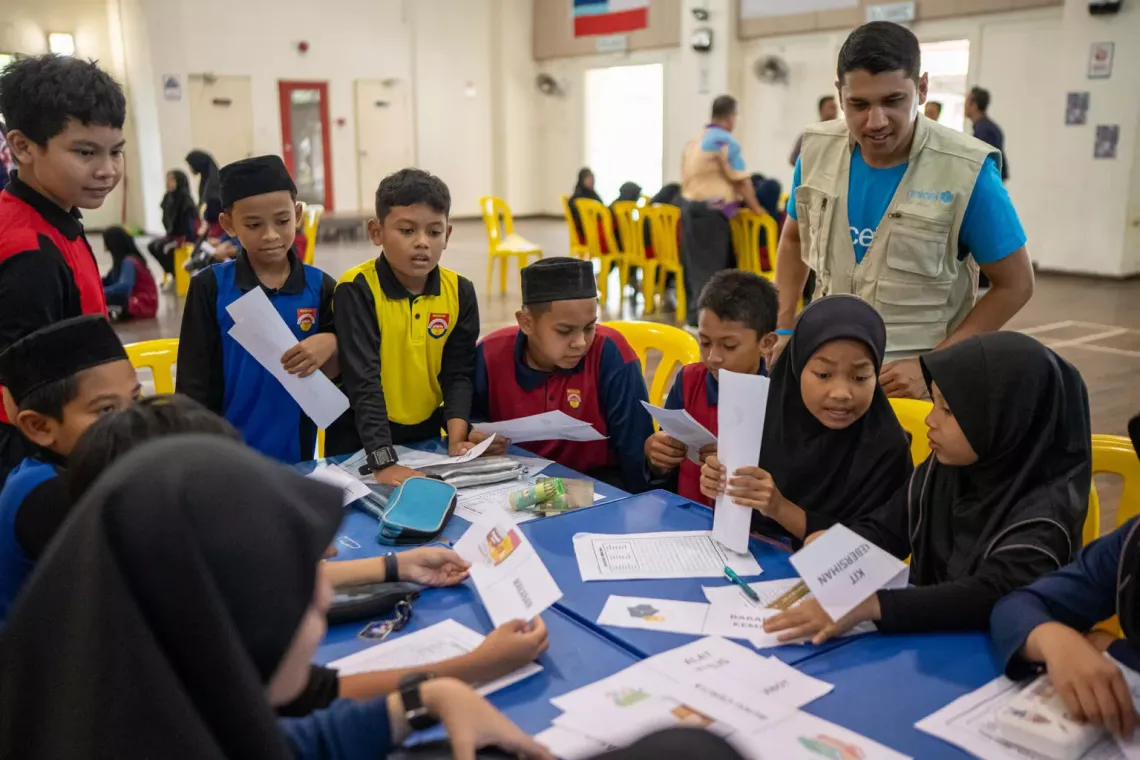
Since 2022, UNICEF has been working with the Ministry of Education (MOE) to strengthen and coordinate Disaster Risk Reduction (DRR) education in schools, ensuring a structured system is in place to reach children, particularly those in vulnerable communities.
This effort aims to provide teachers, who are closest to the students, with the skills and knowledge to empower children to respond when disaster hits.
In a recent DRR education programme in Sekolah Kebangsaan Sri Rantau Panjang 2, Kelantan, we engaged children through a variety of fun and educational activities—ranging from colouring and word puzzles to interactive ones like the emergency backpack game, a fun activity with a serious message about being prepared before a disaster strikes.
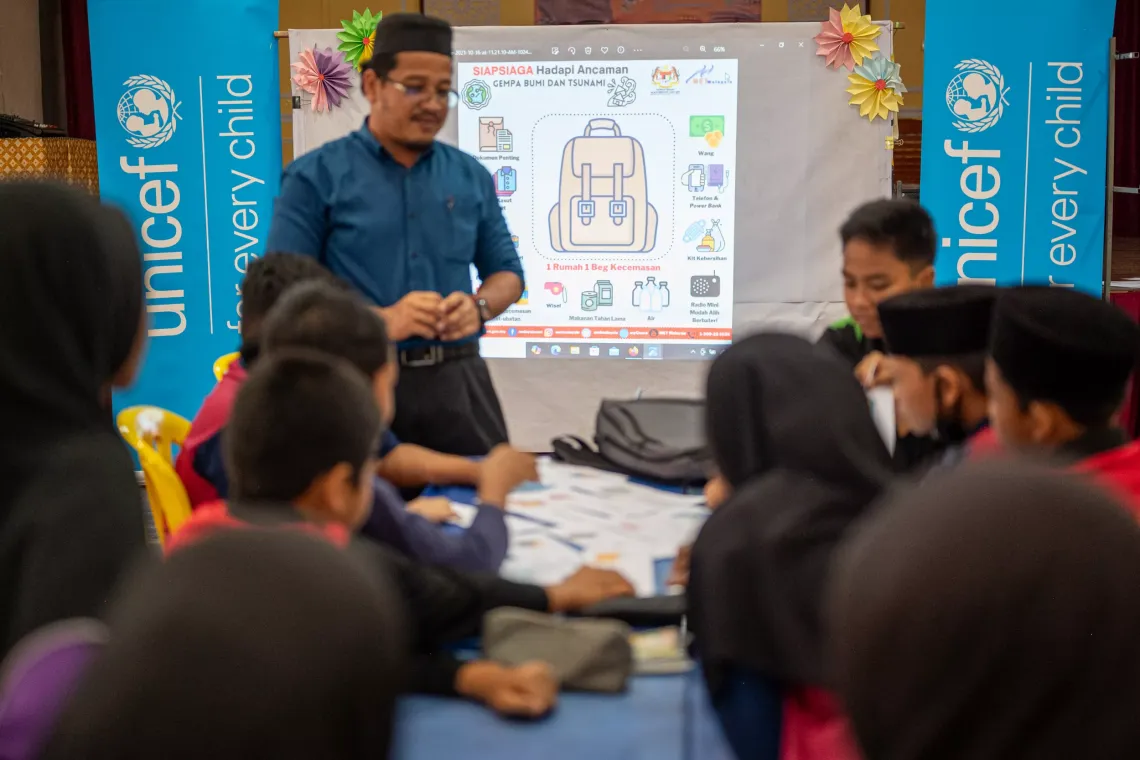
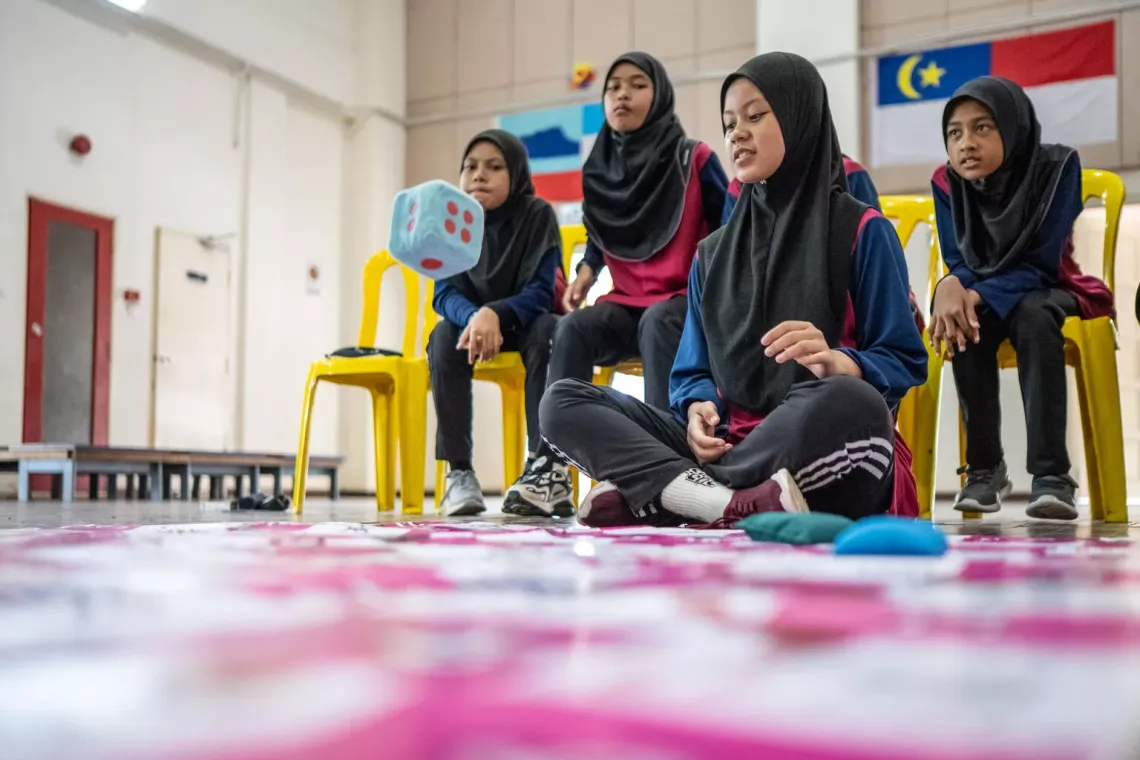
To date, our DRR programme with the MOE has reached around 1,500 students and teachers across Malaysia.
The most inspiring feedback has come from children who feel empowered by learning what to do before, during, and after a disaster to help themselves, their families, and their communities.
Children are amazing advocates. When they learn something new at school, they are eager to tell their parents, their families and neighbours about it. They are not shy about sharing valuable information with others. And they are also good at making sure people listen to them.
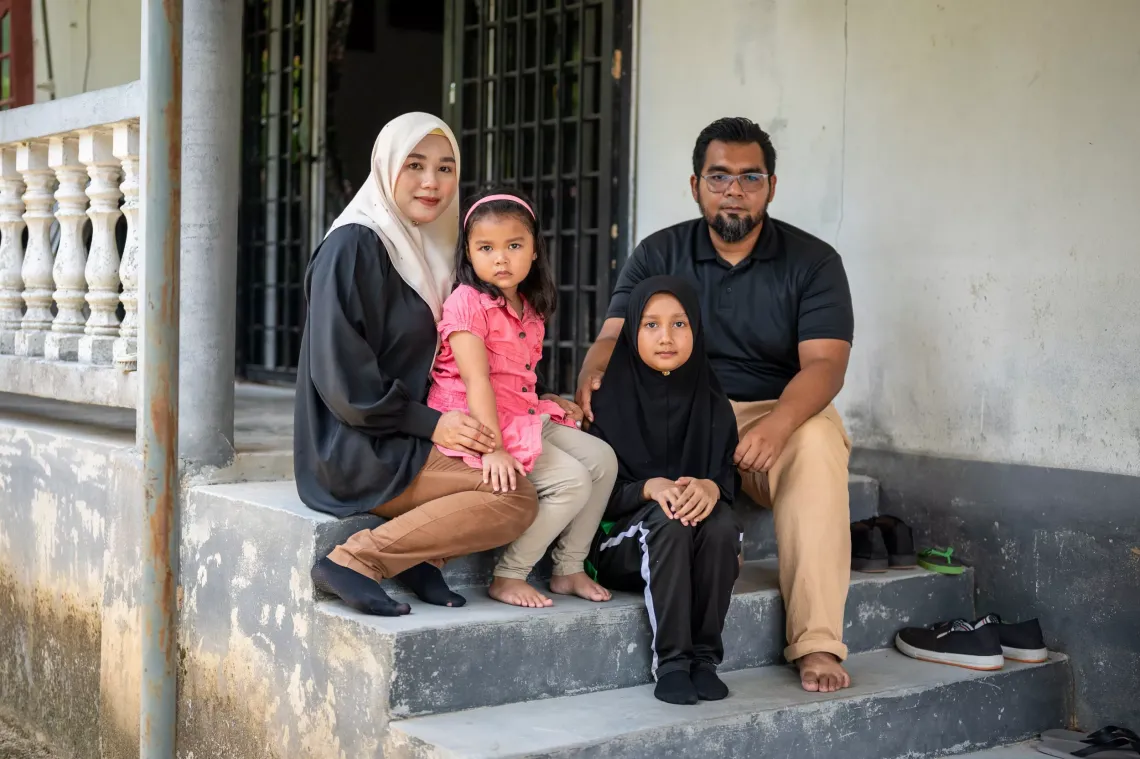
All children just want to live their lives—play games with their friends, go to school, and learn. But climate change and climate-induced disasters are disrupting their ability to do so.
We need to equip children to become more empowered and resilient in the face of these challenges.
Today, you can be the difference that empowers children to face tomorrow's challenges.
See how your support helps children like Ameera stay safe during floods and empowers communities with vital disaster preparedness skills.