Social cash transfer helps children’s education
Improving School Enrolment

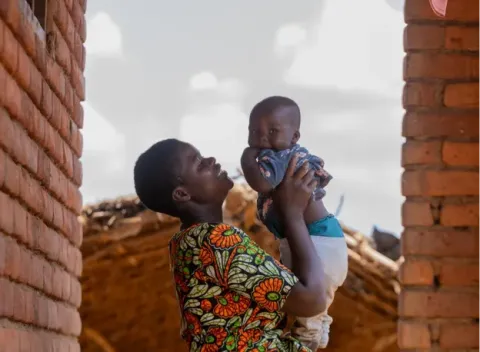
Following her divorce in 2012, the 42-year-old Mercy Makina and her four children from Kadwala Village, Traditional Authority (T/A) Ganya in Ntcheu, lived miserably as she had no stable source of income to keep them all afloat.
"We did not have a house, and we were sleeping in a kitchen. It was also difficult to find food, and my children could not excel in school because they were going on empty stomachs," she explains.
Since 2021, Makina receives K9 500 monthly under the Social Cash Transfer Programme (SCTP) also known as Mtukula Pakhomo—the government social protection initiative supporting ultra-poor households through monthly cash allocations.
Now, she is relieved that with these funds, she can afford to send her children to school so that they can build a better future.
She is confident that education will not only unlock a better future for the children but for her, too.
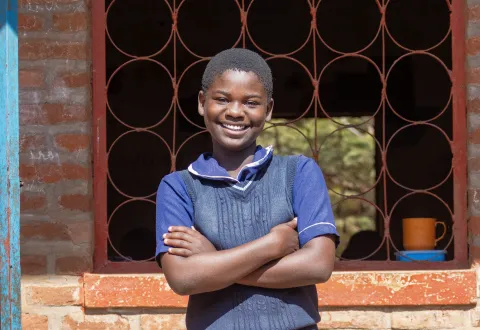
One of her daughters, 15-year-old Eunice Makina, who relishes the dream of one day becoming a doctor, is now performing better in form two at Kapalamula Community Day Secondary School (CDSS) within the district.
"I can now support my children with everything they need in school, including the learning and writing materials and fees. I also ensure that they eat before going to school. This helps them to concentrate better in class and improve their grades," says Makina, who has also built a better house from the Mtukula Pakhomo proceeds.
Mercy Makina
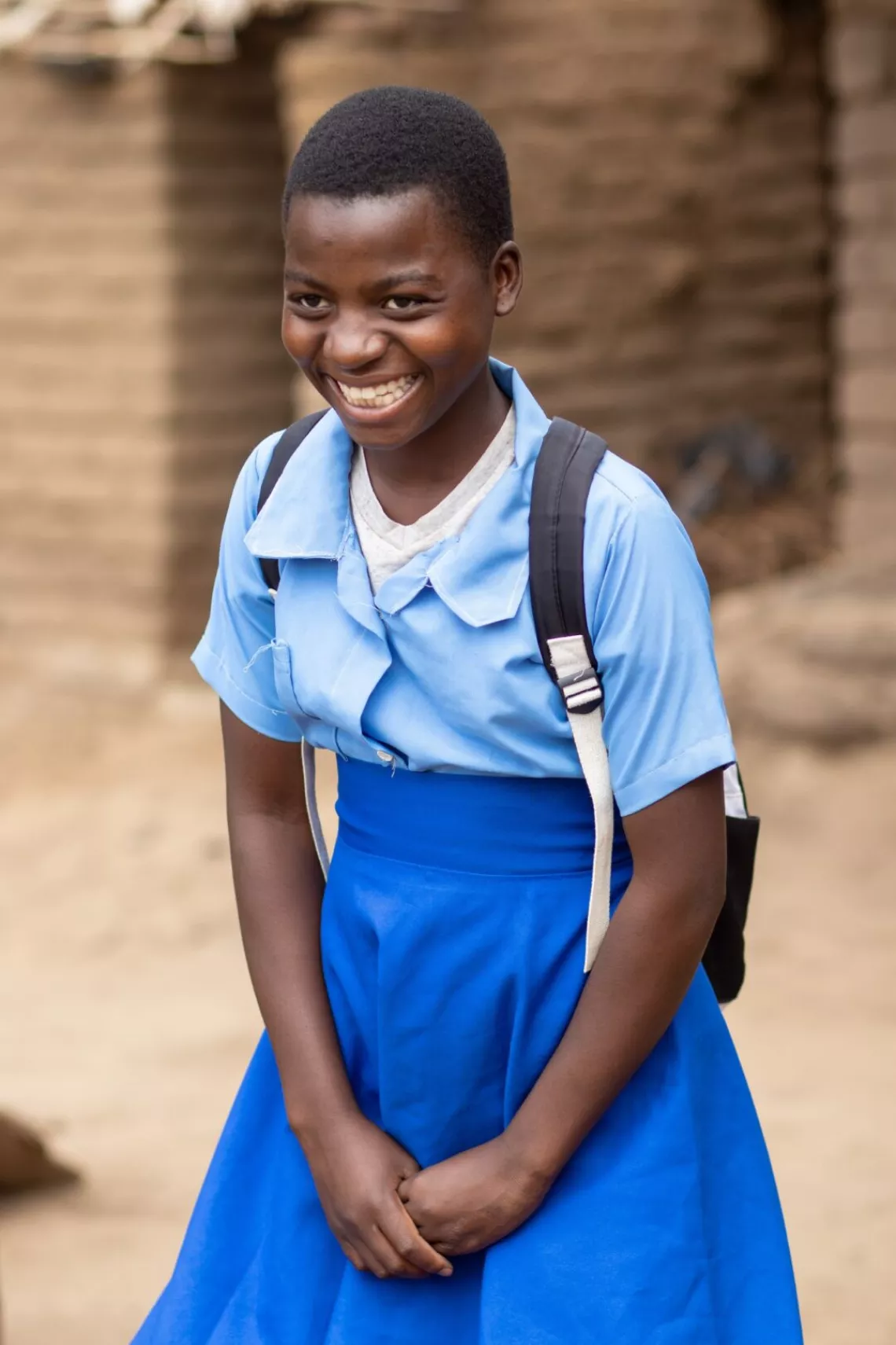
Similarly, in Balaka, Joyce Mkwalula, 43, from Kachikuni Village, T/A Matola, explains that she no longer counts as one of the ultra-poor people in her area as she can equally afford all the basic needs and educate her children.
"My children were constantly being turned back from school for lack of fees, but now, all five of them are learning without any problems and have school uniforms. My daughter repeated standard eight three times because of fees problems.
"There were times when she missed classes as she struggled with swollen legs for walking four kilometres to school and back. With funds from Mtukula Pakhomo, I got her a second-hand bicycle, which she now rides to school," she says.
There are many others like Mkwalula and Makina whose lives have taken a better turn because the government and its partners, including the World Bank, the German Government (through Kfw and GIZ), the European Union (EU), the Government of Ireland, and the United Nations Children's Fund (UNICEF) among others—has held their hand in their times of need through the SCTP.
The Government of Ireland is supporting 24 377 beneficiaries in the two districts of
Balaka and Ntcheu, through the SCTP, are aimed at alleviating poverty, reducing malnutrition, and increasing school enrolment of children in ultra-poor and labour-constrained households.
A community volunteer and committee member for Umodzi Zone in Balaka, Evance Makombe, attests to the transformation in education efforts, citing that many children are now enrolled in schools, both primary and secondary.
"Many children had dropped out of school because of lack of educational support. They lacked writing and learning materials and had no uniforms, but now their parents can easily afford them through the SCTP. So, enrolment in both primary and secondary schools has improved," says Makombe.

In a separate interview, Balaka District social welfare officer Mphatso Chiseka agrees that the beneficiaries can now afford to send their children to school, leading to improved school enrolment.
"For each household that has children, there is an incentive that is given as a way of keeping children in school—K1 000 for primary school-going children and K2 000 for those in secondary schools. So at least that motivates them to keep children in school," she says.
Her Ntcheu district counterpart, the principal social welfare officer Gift Kambadya, substantiates her sentiments that most of the children in the beneficiary households are now in school, which aligns with the SCTP objectives.
"A bonus is attached to their monthly transfers when they send learners to school. Mostly, lack of money to buy exercise books, uniforms, and other school-related materials was the biggest challenge, and these were solved when SCTP was launched," he said.
From his side, the deputy director for social welfare responsible for social cash transfers in the Ministry of Gender, Community Development, and Social Welfare, Laurent Kansinjiro, equally agrees about increased school enrolment.
"The 2016 impact evaluation of the programme showed that it is contributing to increased school enrolment and retention rates in both primary and secondary schools, as parents/guardians can now afford to pay for school-related expenses," he says.
Overall, he is glad that the programme, currently covering all districts, is largely making good progress in around 300,000 ultra-poor and labour-constrained households, which are very vulnerable, and contributing towards reducing poverty in the country.
Additionally, UNICEF social protection specialist George Juwawo equally underscores that the programme has strong effects on children's education outcomes, including increased school enrolment and participation across all age ranges, as well as a safe transition to adulthood for adolescent boys and girls.
He explains: "The results of the 2016 impact evaluation of the programme showed that respondents in SCTP households were more likely to delay their first sexual encounter at midline; reduce experience of forced sex and decrease poor mental health. In addition, among females in the poorest households, there was a significant reduction in first pregnancy."
Concluding, Juwawo observes that Integrated Social Protection programmes have demonstrated effectiveness in reducing deprivation and support, putting households on graduation pathways.