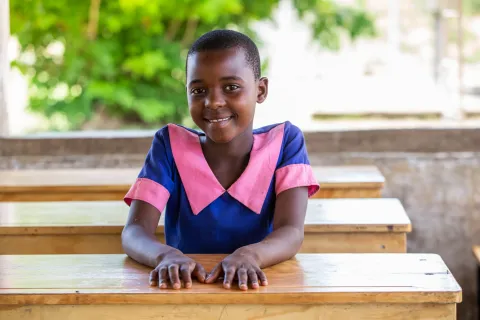
“Now I can raise my hand”
How 500 new desks are restoring confidence and learning at Ngumbe Primary School

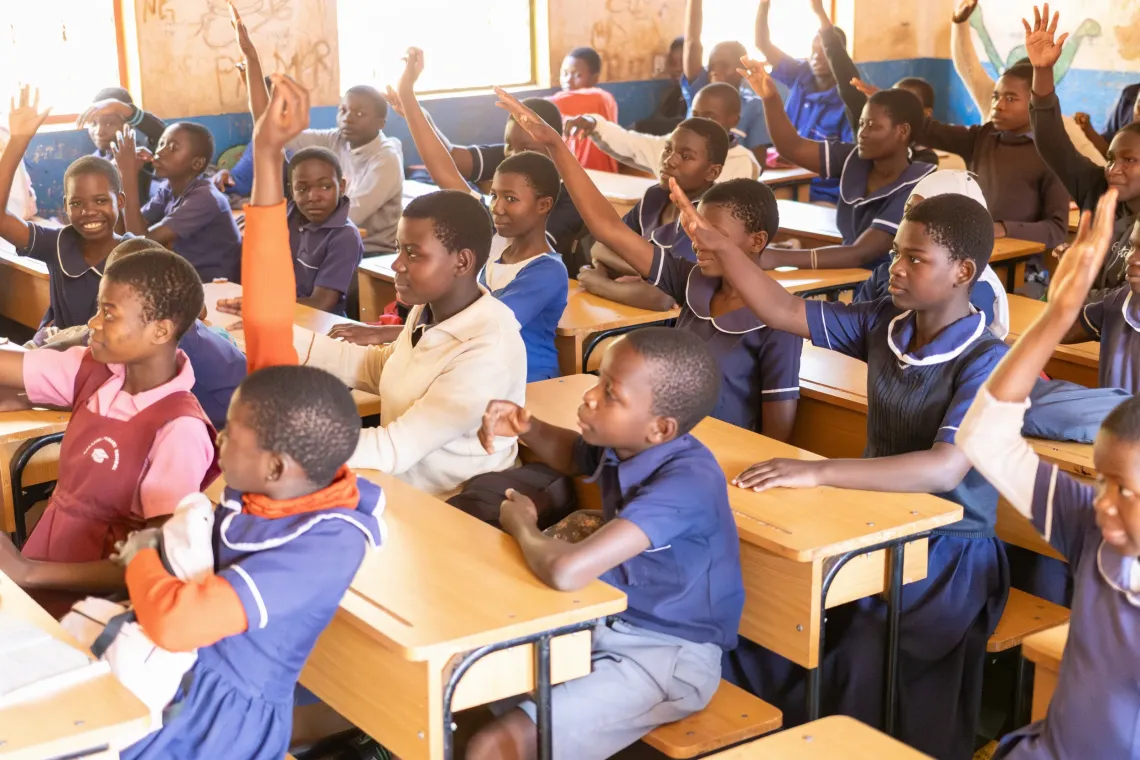
When 13-year-old Joyce Kamkwamba’s teacher asks a question in class, her hand shoots up without hesitation. Just a year ago, that moment would have filled her with anxiety.
“When most of us girls stood up from the floor to answer questions, our uniforms would sometimes rise a little, and the boys would laugh,” says the Standard 7 learner from Ngumbe Primary School at Chileka in Blantyre District.
“Most girls preferred to stay quiet, even when they knew the answer.”
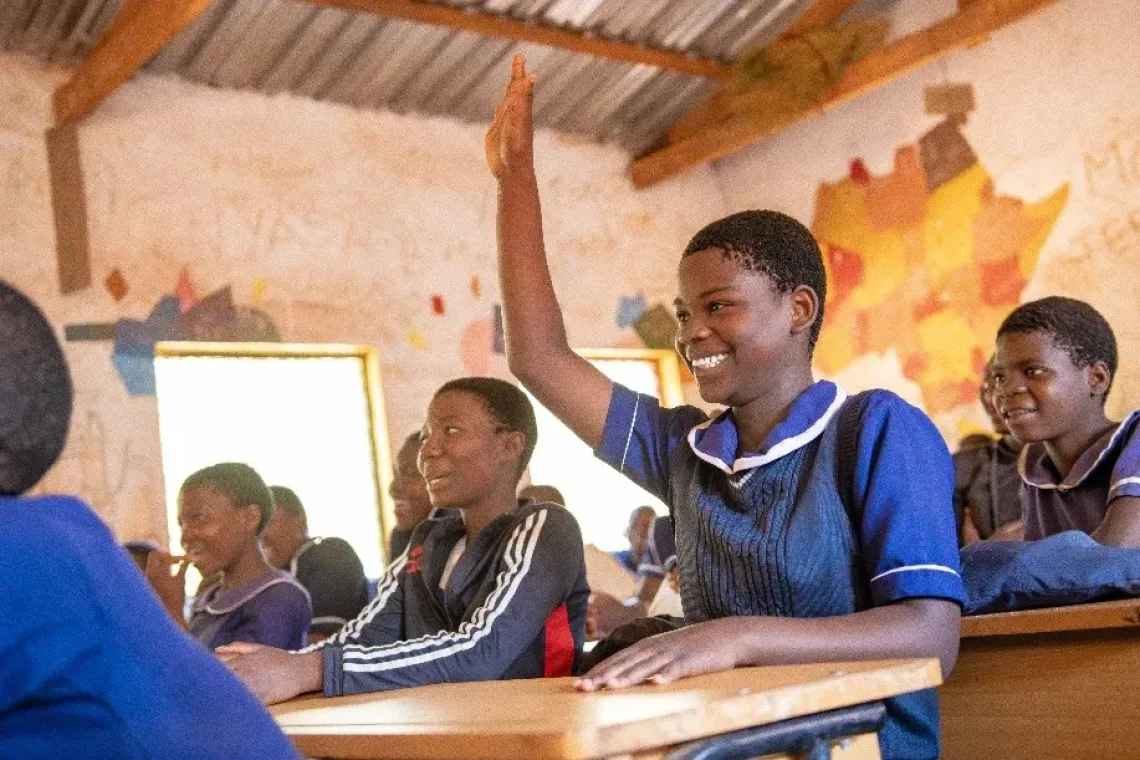
Today, Joyce sits comfortably at one of the new desks provided by the Kids in Need of Desks (K.I.N.D.) Fund, a partnership between UNICEF and MS Now in the United States established to improve educational outcomes for children in Malawi.
“It has given us back our confidence,” she says. “We now have our own desks. We can focus on lessons without worrying about embarrassing moments.”
Ngumbe Primary School serves close to 2,400 learners from 17 villages under Traditional Authority (T/A) Kapeni. The school had not received a significant desk donation since the 1990s, and many of its old desks had become unusable despite repeated repairs.
That changed in June 2025 when the school received 500 new desks through the K.I.N.D. initiative.
Among the beneficiaries is eight-year-old Chimwemwe Chulu, a Standard 4 learner from Mlenga Village.
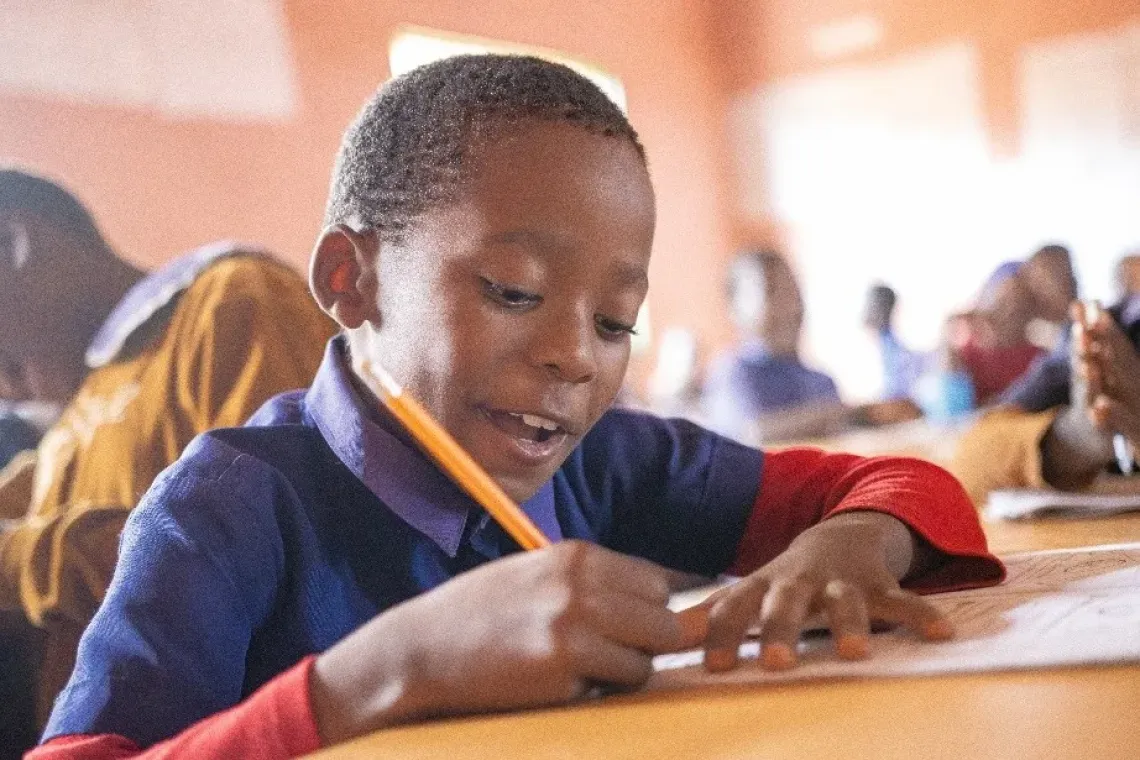
“When they told us we would start using the new desks, I was very happy because I knew I would no longer get sick from sitting on the dusty classroom floor,” he says.
Before the desks arrived, many learners sat on the ground for hours, balancing exercise books on their laps or school bags while trying to write.
“I used to put my school bag on my lap because there was nowhere else to put it,” Chimwemwe recalls. “Then I would put my exercise book on top of the bag to write, and my handwriting was not good.”
Now, he stores his belongings in the compartment beneath his desk.
“I love my handwriting now,” he says with a grin. “I can write properly because the desk is stable. My uniform stays clean, so I remain neat throughout the school day.”
Teachers say the changes go beyond comfort.
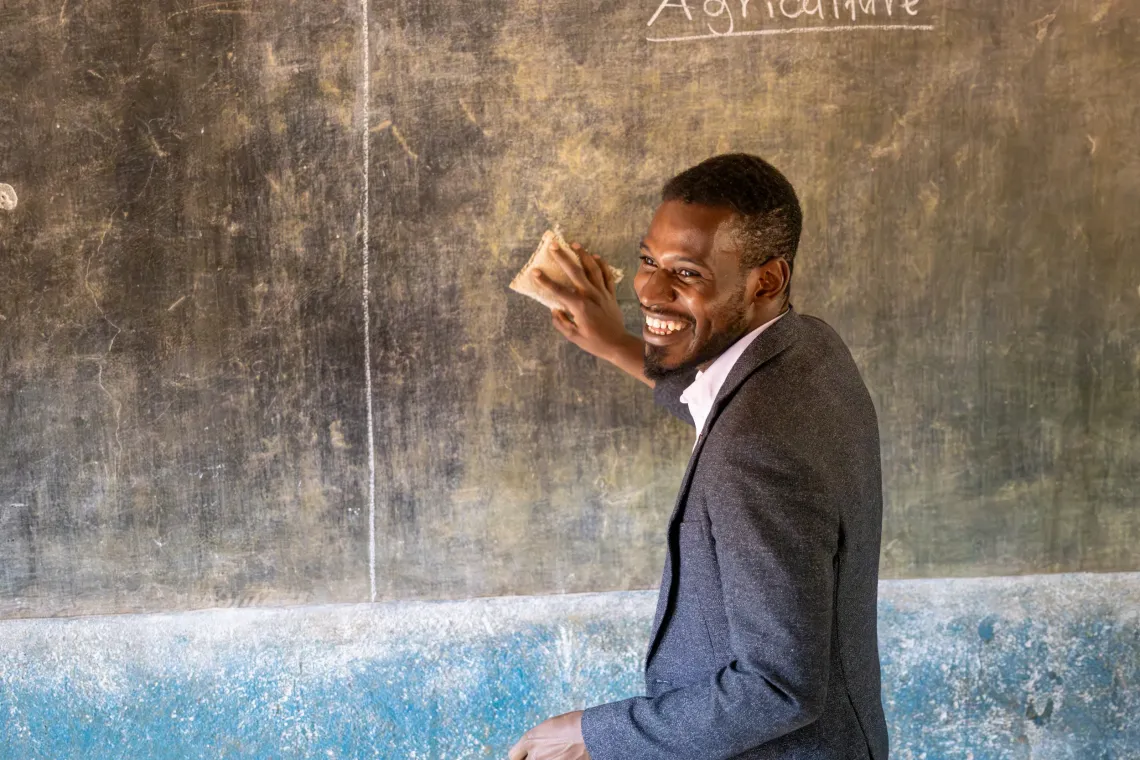
Standard 8 teacher Nellie Binali says classroom management has improved significantly.
“With learners seated properly, it is much easier to identify who is paying attention and who is disturbing others,” she explains. “Previously, many learners sat on the floor, while only a few used the available desks.”
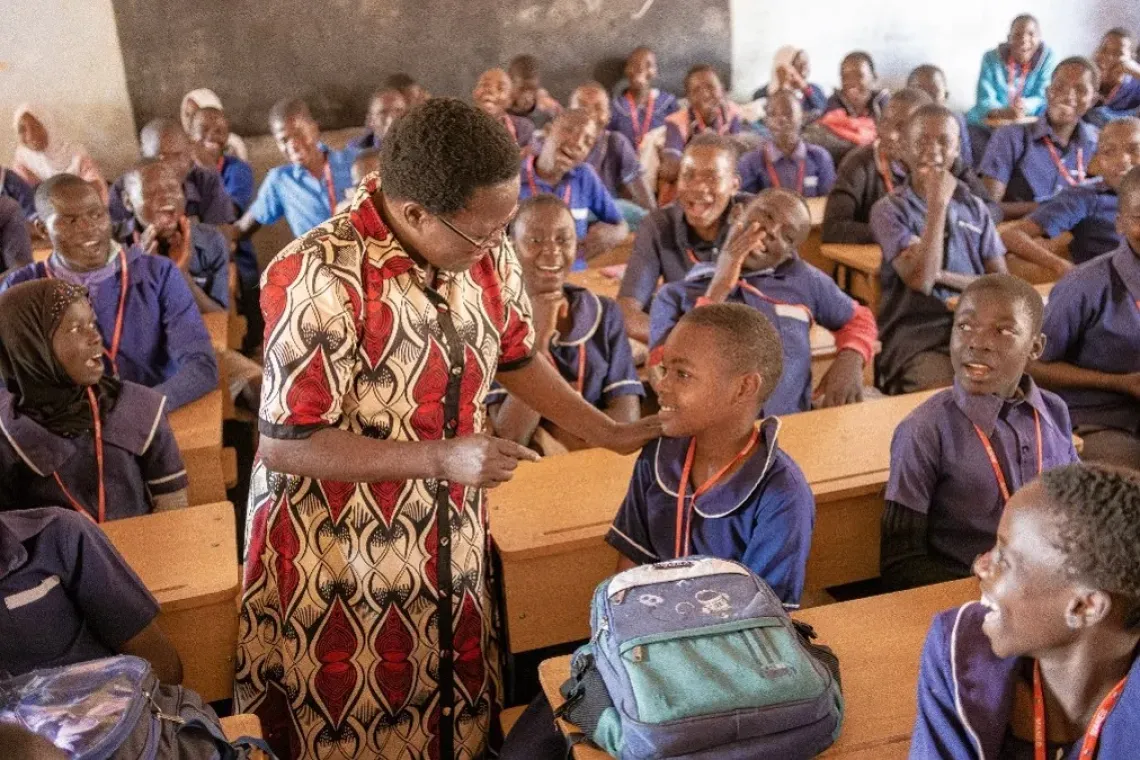
She believes the new desks are particularly benefiting girls.
“Dirty classroom floors were a concern for many female learners,” she says. “Combined with the discomfort of standing to answer questions in front of male teachers and classmates, some girls did not participate fully in class, which affected their academic performance.”
Standard 7 teacher Jonathan Jere has observed similar changes.
“Some girls used to miss classes because they were uncomfortable with the seating arrangements,” he says. “The desks have improved the learning environment and motivated children to stay in school and focus on learning.”
The impact is also being felt beyond the classroom.
Head teacher Samson Solomoni says the improved environment has attracted new learners and encouraged former dropouts to return.
“Since receiving the desks, we have already registered 10 transfer-ins in 2026, and five girls have re-enrolled,” he says. “With support from mother groups, three girls have even returned after leaving school due to child marriage. One of them already has two children but is determined to sit for her Standard 8 examinations.”
To safeguard the desks, the school, student leaders and the Parent-Teacher Association (PTA) have introduced measures to protect the furniture.
“We do not allow desks to be taken outside classrooms under any circumstances,” Solomoni explains.
PTA Chairperson George Zuze says community ownership has been key.
“We regularly hold sensitization meetings with parents and learners to emphasize that these desks belong to the entire community,” he says.
Parents are already noticing practical benefits.
“The uniforms are lasting longer because children are no longer sitting on dusty floors,” Zuze says. “Most importantly, they are excited to go to school.”
Parents are already noticing practical benefits.
“The uniforms are lasting longer because children are no longer sitting on dusty floors,” Zuze says. “Most importantly, they are excited to go to school.”
Back in Joyce’s classroom, the impact is perhaps best measured through confidence.
She no longer worries about being laughed at when she stands to answer a question. Instead, she participates fully in lessons as she pursues her dream of becoming a nurse.
For Chimwemwe, who hopes to become a police officer or soldier, the desk means cleaner uniforms, improved handwriting and a healthier place to learn.
At Ngumbe Primary School, 500 new desks have become much more than pieces of furniture. They are helping create a learning environment where children can participate, concentrate and pursue their future with dignity, confidence, and hope.