From ruins to recovery: Rebuilding care and restoring dignity in Chikwawa
Rebuilding a lifeline for mothers and children after Cyclone Chido

When Cyclone Chido tore through southern Malawi in December 2024, it left more than flooded homes and damaged roads in its wake.
For communities in Chikwawa District, already living on the frontlines of climate-induced emergencies, the cyclone further disrupted access to essential health services at a time when they were needed most.
Among the facilities affected was Mapelera Health Centre, one of the oldest health centres in the district.
Long before the cyclone, years of limited maintenance had already weakened its infrastructure. Cyclone Chido pushed it to the brink, blowing off the roof, destroying furniture, widening cracks in the walls, disrupting water and sanitation systems, and increasing the risk of disease outbreaks such as cholera.
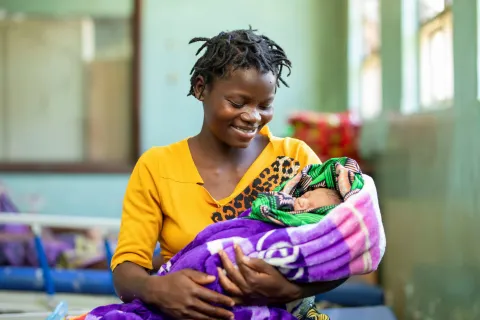
Esnart Wiseman, from Mapelera catchment area in Kasokoneza Village under Traditional Authority Makhwira, recalls the state of the maternity ward when she arrived at the facility to give birth to her daughter on October 3, 2022.
“The ward was full. I was lucky to have found a bed, as more women slept on the floor. I was being attended to in the present of other patients which make me uncomfortable,” Esnart said.
“The delivery room smelled bad, the walls had cracks, the ceiling was falling, and it was very hot without a fan. I kept praying that it would not rain, because the roof leaked,” Esnart said.
When Cyclone Chido struck two years later, Esnart, felt its impact immediately.
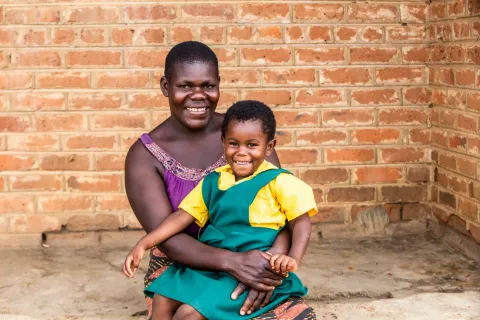
“My daughter was two years old. I was worried every time she fell sick.
“The facility became even worse. Sometimes you would come for care and feel unsafe or be referred to another facility which is very far.”
Like many women in Chikwawa, Esnart depends entirely on Mapelera Health Centre for maternal and child health services. During emergencies, damaged infrastructure meant longer waiting times, overcrowding, and fear that services could be interrupted at any moment.
“When you are pregnant or have a sick child, you want a place where you feel protected,” she explained.
Hope was restored for Esnart when UNICEF, with MWK 336 million in support from the UK’s Foreign, Commonwealth & Development Office (FCDO), rebuilt and strengthened Mapelera Health Centre to ensure continuity of essential health services even during future shocks.
“Now, when I come here, I feel confident,” Esnart said with a smile. “The rooms are better, services are organized, and we are treated with dignity. It has made a big difference for us as mothers.”
According to Hope Moyo, Principal Hospital Administrator for Chikwawa District, Cyclone Chido affected six health facilities across the district, with Mapelera among the worst hit.

Chikwawa has 24 health facilities, and those on the East Bank, including Mapelera, Mvela and Makuwira, serve very large catchment areas with limited capacity.
Mapelera cathment area population is more than 17,000 people, but hospital data shows that more than 30,000 patients receive treated at the facility.
Damaged infrastructure further reduced already limited service capacity, forcing referrals to distant facilities and disrupting continuity of care.
“The infrastructure was too small to accommodate the number of patients we receive,” said Hope.
“The wards were congested, OPD space was inadequate, and drug storage conditions compromised the quality of care.”
According to Group Village Headman Mafumbi, resilient health facilities are not a luxury, they are a necessity.
“This area suffers whenever disasters strike. When Mapelera Health Centre was damaged, people suffered because services were disrupted,” he said.
The rehabilitation of the facility has helped restore trust in the health system and improved access to quality care at community level.
The community leader added that people are no longer afraid to come for care.
“We are grateful because this support has brought hope back to our community,” Mafumbi said.
Beyond physical repairs, the rehabilitation of Mapelera Health Centre represents an investment in long-term resilience.
Improved water and sanitation facilities reduce the risk of waterborne diseases, while safer infrastructure ensures continued access to maternal, newborn, and child health services, especially during emergencies.
For communities like Mapelera, where climate shocks are becoming more frequent and severe, such investments are critical to protecting lives and safeguarding the future.
“We thank UNICEF and FCDO for listening to our needs. This health centre is the heart of our community. By restoring it, they have restored our confidence and our hope.” Russell Mzomera Ngwira, Medical Assistant and Facility In-Charge at Mapelera said.
As Malawi continues to face the growing impacts of climate change, strengthening and climate-proofing health facilities remains essential, so that even when the next storm comes, mothers, children, and entire communities are not left without care.