Meet the community champions who debunked COVID-19 vaccine myths
Community leaders and health workers dispel myths to improve vaccine update

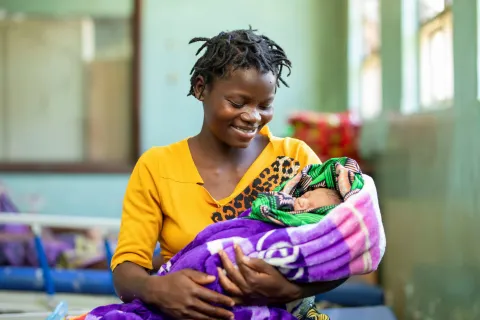
At the peak of COVID-19, many communities in Mzimba, northern Malawi were in a panic due to myths and misconceptions surrounding the COVID-19 vaccine. As the 31-year-old mother of two Mphatso Thawi explains, rumours were rife throughout the community, in religious institutions and on social media.
However, Thawi says following the support that UNICEF with funding from United States (U.S.) Centre for Disease Control and Prevention (CDC) provided to orient local leaders, health workers, community mobilizers and drama groups, these sentiments of mistrust were dispelled, and more members of the community agreed to be vaccinated against the fatal disease.
“At first, I did not want to receive the vaccine because people threatened me, saying that once I got the vaccine, I would not be able to have children again,” said Thawi. “But one day, a community mobilizer visited my home and answered all the questions I had about the vaccine. I immediately changed my mind and got the jab.”

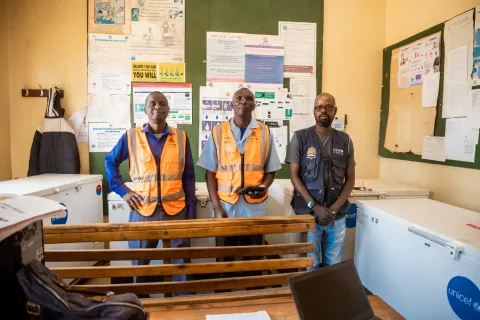
Chairperson for Health Advisory Committee for Enukweni Health Centre, a local facility that covers Inkosana area, Ellington Chunga recounted how shortly after attending the orientation on the vaccine, the Health Advisory Committee mobilized local leaders, health workers, community and faith leaders as well as youth to support demand creation for the vaccine.
Families across the communities received harmonized and accurate information from many quarters, including with advocates stopping at each household in the community.
Ellington Chunga explains: “The door-to-door approach helped more households to receive trusted information about COVID-19 vaccine.”
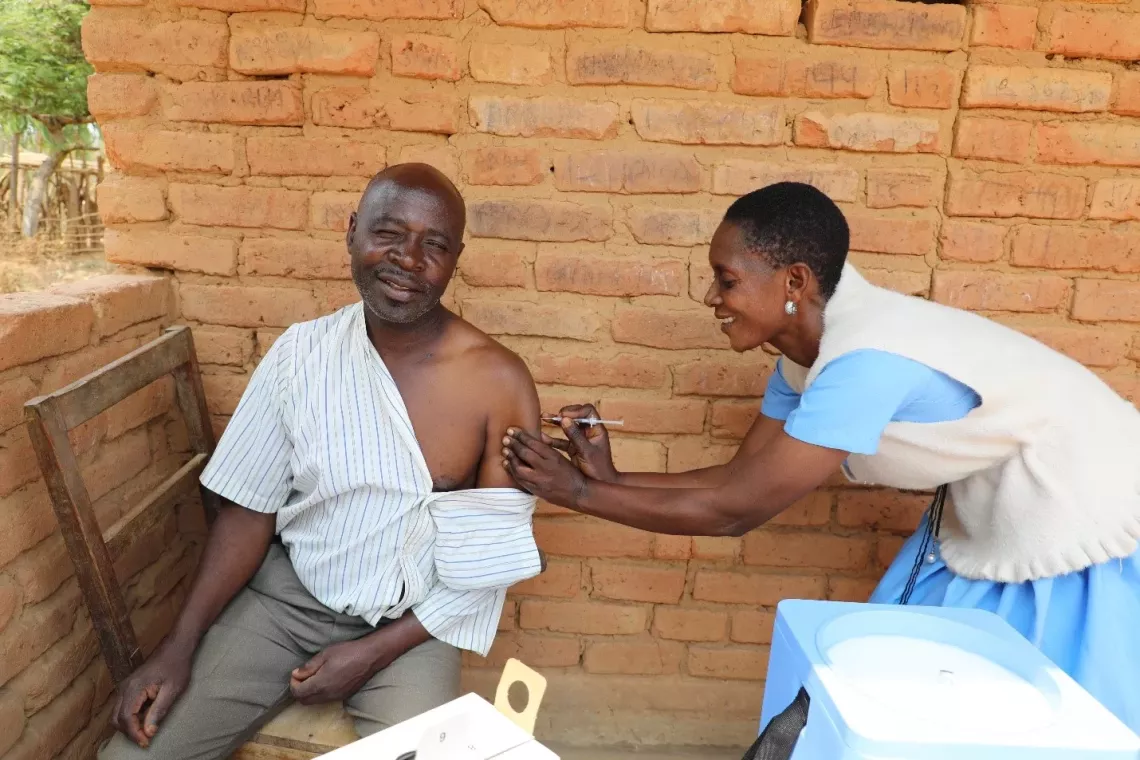
Senior Health Surveillance Assistant (SHSA) for Enukweni health centre, Mamie Moyo says, “we were able to vaccinate over 14,000 people out of targeted 15,000 who fall under the Enukweni health Centre. We achieved this through well-coordinated community structures.”
Moyo added that this campaign was further strengthened following the recruitment of health workers and trainings facilitated by UNICEF with funding from U.S. CDC. “UNICEF supported us with the orientations of the mobilisers and health workers. They allocated a vehicle that was restocking vaccines when low and overall, they provided technical expertise to us that improved our capacity in the vaccine delivery.”
The change of behaviour and practice which yielded positive results for the coverage of the COVID-19 vaccine can be largely attributed to the implementation of the COVID-19 ‘Vaccinate my Village’ campaign which was established by UNICEF with funding from U.S. CDC in collaboration with the Ministry of Health and Mzimba district local council. This campaign increased the rate of COVID-19 vaccination coverage from 40 per cent to 51 per cent of the targeted population in the district.
Commenting on the successes of the Vaccinate My Village Campaign, Group Village Head (GVH) Inkosana Sondwani Nhlema hails the existing collaboration between UNICEF and U.S. CDC, the Ministry of Health of Malawi, community structures and other partners which enabled for accurate information to be shared about the disease and the vaccine. GVH Sondwani also told how he facilitated the formulation of by laws that influenced the adoption of positive preventative COVID-19 practices.
“I instructed all my fellow chiefs to make sure that they create demand for the COVID-19 vaccine. Anyone sharing misleading information was questioned by the chief’s council - that put a stop to false information about the vaccine. I also made sure that markets and other large gatherings have adequate handwashing facilities to prevent further spread of the disease.”