Enhancing early childhood development for children
The fruits of early education

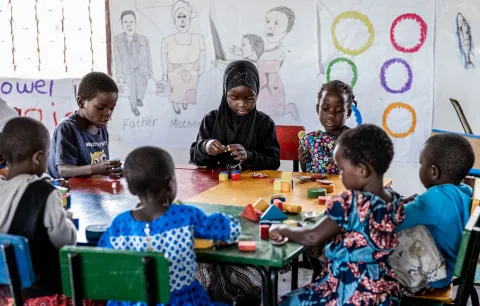
Dunia Kazalira , 32, is one of five caregivers at Makankhula Community-based Childcare Centre (CBCC)in Chimbiya Education zone in Dedza District. About 230 children access early childhood development (ECD) services at this CBCC from Monday to Friday.
“I never had the solid foundation these children are getting here, but it is my responsibility to ensure that each one of them grows well to survive and thrive and develop their families in future, our community and our country,” she says. “My mother tells me that when I was in Standard One, I struggled to cope with classwork because I was shy and not interested.”
Dunia volunteers as a caregiver at Makankhula to ensure that children in her community do not struggle like she did when they join primary school .
The caregivers usually interact with teachers at Chimbiya Primary School in the vicinity to facilitate smooth transition for the children coming from the CBCC.
“When I started volunteering here, I didn’t know much about caring and stimulation of children or how children develop and learn. However, I now know how to handle children after receiving training in care, support and child development from the Association of Early Childhood Development in Malawi [AECDM] and UNICEF Malawi with support from Finnish National Committee for UNICEF. We also learnt how to prepare nutritious meals for children,” she explains.

Dunia and her colleagues from different districts attended the training at AECDM in southern city of Blantyre.
“It was my first time to see Malawi’s commercial capital city. We learnt a lot of things. I even made some toys for my daughter. The training helped me understand what I am supposed to do in caring for children of particular ages so they develop properly in their different aspects of life,
The caregiver also participated in nutrition classes that UNICEF and its partners offer care groups within her community to safeguard children from malnutrition. She learnt best practices of cooking fortified foods for children at her CBCC and at home.
Now she coaches CBCC committee members how to preparation nutritious porridge for children at the CBCC, enriching it with vegetables and groundnuts flour.
Dunia also acquired basic first aid skills for the benefit of the children seen learning, playing and singing at Makankhula CBCC.
“When children are sick or injured, I give them basic first aid and refer them to the hospital or call their parents to assist them accordingly,” she explains.
The caregivers get no pay, but find joy in giving children a stepping stone to excel in school and other spheres of life when they grow up.
“I have been a caregiver since 2019. I was motivated by the rising numbers of parents realising the importance of sending their children to CBCCs. I want to be part of the shift to ensure every child gets a good start in life. When children win, I smile,” Dunia says.
She joined the team of five to replace caregivers who quit because they have to choose between doing voluntary work and fending for their families.
The number of caregivers may have dwindled due to lack of incentives, but enrollment has grown from 179 to 230 since the CBCC moved from a village courtroom “with crumbling walls and a leaky roof hanging on rotten poles”.

Tifere John, 25, one of the parents says she sends her three-year-old son, Savior, to the CBCC because she feels the environment is safe for children. She trusts trained caregivers like Dunia.
“I want him to learn and that is why I always send my son to this CBCC. For years, I have realised that children who go through CBCCs know more and become more confident and eager to learn than those who don’t,” she says.
Apart from playing indoor and outdoor games, the children at Makankhula CBCC eat porridge made of foodstuffs contributed by community members.
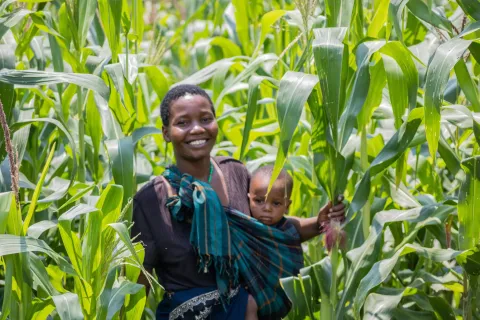
The community has opened a communal field where they grow a diversity of crops so the children’s meals contain all six food groups.
“The goal is to give our children a shot at a healthy life and better chances in life. Diversified diets safeguard children from malnutrition manifested by stunting, which negatively affects their growth, learning ability and productivity later in life,” says Aluba Bokola, a member of a community and a CBCC committee chairperson.
Quality ECD has become a rallying point for families who meet every month to teach each other how to prepare balanced diets for their families, especially children.
Violet Masina, a nutrition promoter in the area explains that: “Nutrition cluster leaders visit households with children aged below five and hold monthly meetings to share food preparation skills so that the children get diversified diets with all six food groups.
“As a result, our children get a healthy start in life. They are no longer weak, sickly and stunted. This is part of the early childhood programme,”
Cecilia Kapalamula, the AECDM programmes coordinator, salutes the caregivers and nutrition promoters for giving the children a launchpad for a brighter future.
She states: “Following the training that they received with support from UNICEF with financial support from Finnish National Committee for UNICEF, the caregivers now provide developmentally-appropriate activities to enhance children's development in all the six developmental domains.
“In terms of nutrition classes, households are equipped with nutrition skills through household visits made by the cluster leaders. This includes how to prepare age-appropriate food using locally-available food resources. In addition, the cluster leaders equip parents with positive parenting skills which help the children to survive and thrive.”
For instance, Dunia says nutrition cluster leaders urge parents to stimulate their children by playing, talking, singing with them. The guardians are further encouraged to make play items for their children using locally-available resources such as clay, wood and wires.
She explains: “These skills are helping us improve the way we handle children both at the CBCC and at home, so there is only one winner—the child. I was 14 when I quit school in form two due to early pregnancy, but I am sure that my daughter will stay longer and keep excelling until her dream to become a nurse comes true.”