Empowered community leads the fight against malnutrition
“Now, parents can check their child’s nutritional status on their own," Mkwela

In the heart of Lilongwe’s Traditional Authority Kalumbu in central Malawi, communities are celebrating a drop in child malnutrition, thanks to a community led approach that empowers families with knowledge and tools to protect children’s health from malnutrition.
For years, the seven villages that make up this area battled widespread cases of child malnutrition. With little understanding of how to manage the condition, caregivers struggled to act before it was too late.
“In the past, parents didn’t know how to recognize the signs of malnutrition. By the time help arrived, children were already in danger,” explained Senior Group Mkwela, a traditional leader and passionate advocate for child health.

That situation began to improve when UNICEF, working with the Government of Malawi and with support from the UK’s Foreign, Commonwealth and Development Office (FCDO), introduced initiatives to empower caregivers and communities to take an active role in child nutrition, starting at household level.
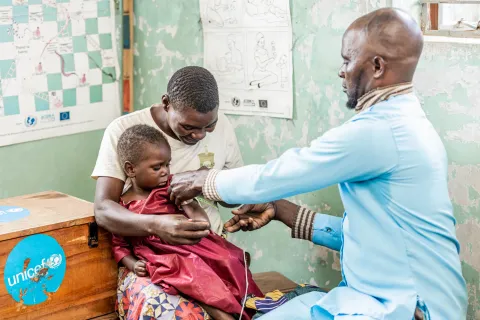
The programme trains families on how to use the Mid-Upper Arm Circumference (MUAC) tape to identify early signs of wasting in children aged six months to five years. It also promotes improved hygiene, backyard gardening, and preparation of meals using the six recommended food groups.
“Now, parents can check their child’s nutritional status on their own. This has made a big difference,” said Mkwela. “Before, only health workers could tell if a child was malnourished. Today, even before visiting a health facility, parents already know their child’s condition.”
One of the programme’s participants, 41-year-old Iness Gwaza from Muonda Village, shared how the initiative transformed her approach to childcare. After learning about MUAC tape use and nutrition in November last year, Iness gained confidence in managing her daughter’s health.
“Before the health worker arrives, I already know if my child is doing well,” she said. “This gives me peace of mind and a sense of control.”
Iness’s daughter, Hannah, now 20 months old, has remained healthy through early detection and consistent application of what her mother learned, from exclusive breastfeeding to diverse meals and improved sanitation.
“We were taught how to prepare meals using six food groups, grow vegetables at home, and maintain cleanliness. It’s made a big difference,” Iness added.
UNICEF supports the Government of Malawi’s broader goal of strengthening the health system and reducing child mortality. It aims to increase cost-effectiveness, expand access to nutrition services, and generate evidence for national policy, especially in regions made more vulnerable by climate change.

Implemented in five districts, Lilongwe, Mzimba North, Mzimba South, Nkhata Bay, and Nsanje, the programme has already screened over 920,000 children. Among them, 3,157 children with severe wasting and 11,591 with moderate wasting have been referred for treatment.
Health promoters like Lydia Chikumba are seeing the change firsthand.
“Malnutrition cases have gone down, and people are taking ownership. You’ll even find nutrition messages painted on houses,” said Lydia, who supports community mobilization and caregiver training.
At Mtenthela Health Centre, Patricia Kadam'manja, a frontline health worker, also noted a reduced caseload.
“This time last year, we had more than four cases of malnutrition. Now, we have just two,” she said. “Caregivers are more proactive, and many households now have backyard gardens despite water challenges.”