From data to delivery: Malawi’s path to an HIV‑free generation
Supporting young mothers to access HIV care services

When 37-year-old health service provider Alinafe Tsitsi met a 20-year-old Chikondi born with HIV, she quickly realized Chikondi was struggling to accept her status. *
Although Chikondi was taking other prescribed medications, she consistently avoided her antiretroviral (ARV) treatment. A routine pill count revealed her ARVs were piling up—a clear sign of non-adherence. She feared being judged at the clinic and was overwhelmed by the idea of taking lifelong medication at such a young age.
Rather than reprimanding her, Alinafe drew on patient-centered counseling skills gained through UNICEF-supported mentorship to listen, build trust, and Chikondi’s fears. Through repeated conversations and follow up, Chikondi made the decision to restart treatment and stay on it.
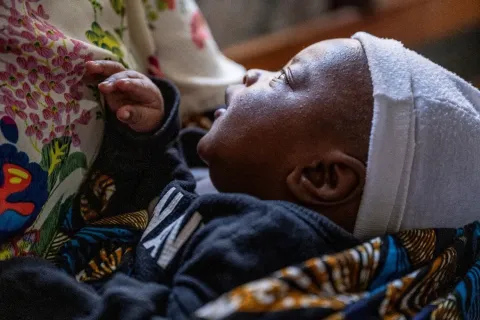
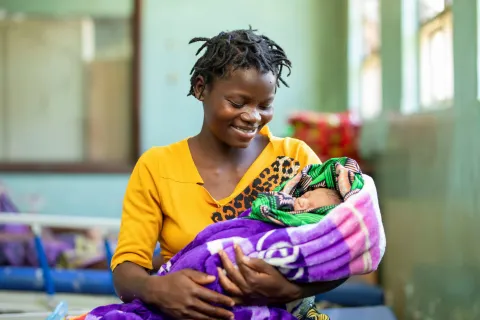
The results were life-changing: the young woman safely gave birth to a healthy, HIV-free baby, now one month old.
“I learned how to listen without judgment. Once she trusted me, everything changed. Through the grandmother, we are now following up on the father of the child so that he can also come for voluntary testing.” says Alinafe.
Alinafe is one of many frontline health workers across Malawi whose day-to-day work has changed through the UNICEF-supported prevention of vertical transmission data mentorship and training programme. Health workers are now better equipped to support adherence, follow up mothers and infants and prevent new cases of HIV, Syphilis and Hepatitis B.
Male Champions Leading Change
Male involvement is helping shift long‑standing norms that often leave women to navigate pregnancy, testing and treatment alone.

At Nchalo Health Centre in Chikwawa, 22-year-old farmer Isaac Josephy is proving how men can support their partners through pregnancy. Isaac and his wife Agnes, 20, expecting their third child, travelled across the Shire River from Lundu Village to attend antenatal care together.
“I came with my wife because I love her,” Isaac says. At first, I was nervous about being tested, but I knew it was the right thing to do for my family. I will support her throughout the pregnancy. It is my responsibility.”
Isaac now encourages other men in his community to attend antenatal care clinics with their wives, challenging cultural expectations that discourage male participation.
“It’s important to get tested together and protect the unborn baby,” he says as Agnes agrees:
“This is very helpful. With my husband by my side, I feel supported and confident that we are protecting our baby.
Building Stronger Health Systems
Behind these individual stories lies a broader effort to strengthen routine health systems and make quality prevention of vertical transmission services more consistent and sustainable. UNICEF has partnered with Malawi’s Ministry of Health to provide mentorship to health workers like Alinafe Tsitsi in counseling, data analysis, and district level operational planning for the prevention of vertical transmission of HIV, Syphilis and Hepatitis B (popularly known as triple elimination).
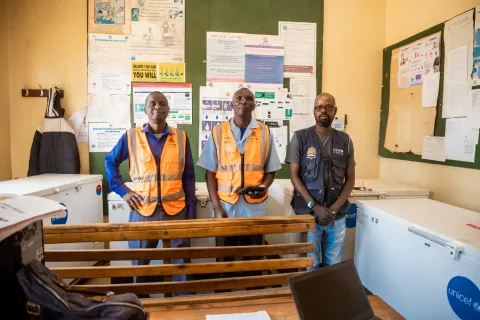
Kassim Issah, Nursing Officer and PMTCT Coordinator in Chikwawa, explains: “Through UNICEF’s mentorship, we learned how to use routine data to identify gaps and develop district-level operational plans for the triple elimination.
“For example, in 2023, Syphilis screening in the district was only 60 per cent—the lowest in the country. Hepatitis B testing coverage was 15 per cent. After targeted actions informed by data and mentorship, coverage has now improved to 97 per cent for Syphilis, surpassing the national target and to 90 per cent coverage for Hepatitis B,” Issah says.

These changes have improved early detection of HIV, Syphillis and Hepatitis B among pregnant women, improved documentation, and strengthened follow-up on mothers and infants.
The results of these system improvements are evident at service and community level. Mothers like Chikondi, supported by Alinafe, are now giving birth to HIV-free babies. Frontline health workers have the confidence and skills to provide compassionate care that encourages adherence to treatment and protects children.
In the community, male champions like Isaac are changing the narrative, showing that male involvement is not only possible but vital. His decision to accompany his wife, get tested and encourage other men to do the same is inspiring a cultural shift where women no longer face pregnancy and testing alone — reinforcing retention in care and shared responsibility for maternal and child health.
At the system level, districts like Chikwawa are now registering multiple improvements: increased screening coverage, stronger follow-up of mothers and infants, more mothers are being reached, more babies are being protected, and more families are empowered with knowledge of their health.
Together, these gains show how sustained investment in people, data and partnerships can accelerate Malawi’s progress towards an HIV-free generation.
* In this story, Chikondi is not the actual name of the subject.