Care group activities protect children from malnutrition and COVID-19
A community's effort

During my three-month internship with the Nutrition Section at UNICEF Malawi, I was privileged to visit one of the target communities of a stunting reduction programme in TA Kabudula, Lilongwe. The project focuses on the first 1,000 days of life to tackle the high level of malnutrition - about 37 per cent of children are stunted, and 12 per cent are underweight in Malawi. With the generous support of 9 million Euros from the KfW Development Bank, UNICEF has been providing technical support to the Government of Malawi for nutrition interventions in Lilongwe and four other districts. Accompanied by UNICEF’s implementing partner, World Relief Malawi (WRM), I explored the benefits and progress of the COVID-19 component in the stunting reduction programme implemented from 2019 to 2023.

Daisi is a mother of four children, including her six-month-old daughter, and grows maize and groundnuts for a living. Over the three years of participation in a care group, she has learned how to keep her children healthy by feeding diversified diets from six food groups, handwashing with soap at critical times, keeping her house clean, and wearing face masks to prevent the spread of COVID-19.
“Though it’s financially difficult to buy foods to meet all the recommended six food groups, I do my best to at least include three to four food groups in a day. For example, in the morning, I give my child porridge (nsima) made of maize and soya and add some groundnut flour. At around 11 am, I give a banana. In the afternoon, I will feed nsima with some vegetables like amaranthus (bonongwe) and Chinese rape. On the next day, I prepare the meals similarly but might give some fish to complement the food groups.”
She confidently explained her handwashing practices. “I wash my hands with soap often, including after going to the toilet, after changing my child’s napkin, before preparing food for my child, and before and after eating.”

Antony, a care group promoter (community volunteer), explained that the high number of under-five deaths resulting from malnutrition in his community motivated him to start volunteering in care groups four years ago. “Ever since I started giving out nutrition messages, I noticed the number of children dying and children suffering from malnutrition has reduced. Now, people can divert their little money into buying foods and farming materials instead of treatment for sick children and funerals. This change is what excites me most.”
Since the onset of the pandemic, Antony trains cluster leaders (community volunteers) on COVID-19 symptoms and about vaccination, and these messages are further shared in care group forums of 8-12 households. He also ensures that any gatherings for nutrition activities are reduced in the number of participants to observe social distancing. For example, the ongoing cooking demonstrations have been carried out with about 15 people, though it used to be 50 people before the pandemic. Besides project activities, he also explained that he manages gatherings for funerals to reduce the number of mourners and ensure they follow COVID-19 prevention measures.

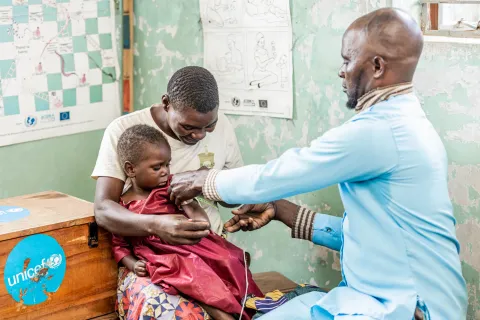
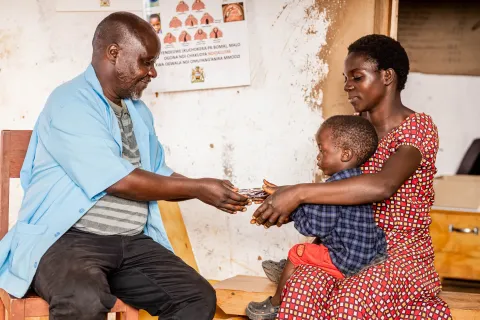
As part of the COVID-19 response component of the project, UNICEF piloted a family mid-upper arm circumference (MUAC) approach, where caregivers of children under five obtain skills to assess the nutritional status of children under five using simple tools like MUAC tapes. In contrast to the traditional practice where health workers conduct the MUAC assessment, this innovative approach has been shown to improve early identification and referral of children with wasting in several neighboring African countries and has the potential of being more cost-effective and sustainable in the long term[1].
Daisi has been pleased with the family MUAC intervention. “If my child is identified as wasted (yellow or red on the MUAC tape), then I can take the child to the local health worker to make sure my child receives the necessary support. When the MUAC tape shows that my child is not wasted, that also assures me of her health, and I continue taking good care of her.”
[1] UNICEF (2020). Rapid Review: Screening of Acute Malnutrition by the Family at community level. Retrieved from https://www.unicef.org/wca/reports/screening-acute-malnutrition-family-community-level

The project in Lilongwe has been operated by implementing partner World Relief Malawi since 2017. They orient care group volunteers and community leaders on COVID-19. Additionally, they sensitize the community on COVID-19 by disseminating messages through radio jingles and a public address system. Thembie, the Nutrition Facilitator at World Relief, explains they have put further emphasis on the promotion of optimal breastfeeding and complementary feeding practices. “Caregivers are encouraged to continue breastfeeding and giving their children nutritious meals to keep their children well-nourished to enable to fight diseases like COVID-19. We have been promoting increased frequency on handwashing and mainstreaming messages on how to prevent getting COVID-19 in the pre-existing nutrition-related messages.”

The knowledge and practices observed during the field visit and interviews exhibited how UNICEF and its partners contribute to improving the nutritional status and health of children and women amid the COVID-19 pandemic. As the virus continues to spread worldwide, I hope the project continues to protect Malawian children’s safety, well-being and future.