Afikepo brings hope for reconstruction
Loss of crops and food pose a risk to child nutrition

Mulanje was one of the worst affected districts when Cyclone Freddy caused havoc throughout southern Malawi. Thousands of people within the district were displaced to camps for internally displaced persons.
There was also massive property destruction and loss of crops and livestock. The disaster set back some of the gains achieved in addressing the district's malnutrition problems through the European Union-funded Afikepo project.
James Banda, Chief Agricultural Officer for Mulanje District, says the cyclone occurred at the worst possible time in the growing season, just when some crops were ready for harvesting.
"We had what we would call a normal growing season. But we got hit by the cyclone at the very end, when the harvest was still in the field. So, most of the foodstuffs which people depend for various recipes and other food items were lost," he says.
FAO District Manager for Mulanje, Misheck Mwambakulu, adds that the disaster destroyed the little food people had left in their homes.
"Even worse is the sanitation infrastructure like toilets were completely demolished with rising water levels. So this impacted safe water and hygiene facilities in the various villages," Mwambakulu says.
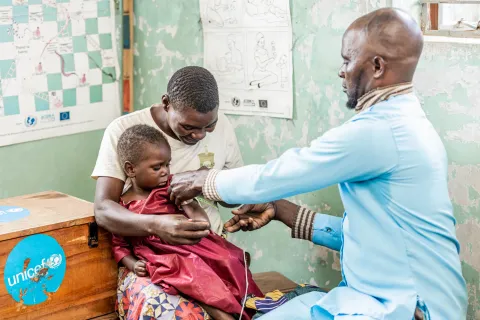
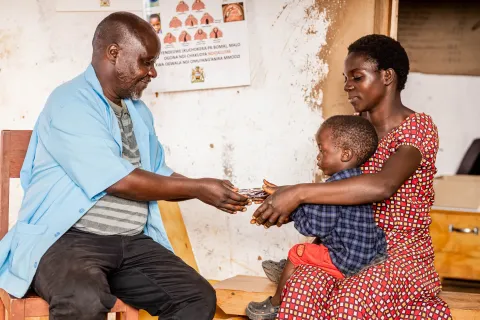
The Afikepo Nutrition Programme aims to address the problem of undernutrition, particularly in under-five children. UNICEF and the Food and Agriculture Organisation are implementing the programme.
Afikepo implements its activities under the care group structure, which has community structures such as promoters, village nutrition coordination committees (VNCC), and area nutrition coordination committees (ANCC).
Despite the disruptions brought about by the cyclone, Banda prefers to look on the positive side of Afikepo, noting that it has built people's resilience through such structures, ensuring its benefits would be sustainable.
"By design, the Afikepo project is more sustainable because we have been using existing local structures. We have built the capacity of these structures, and they are now better placed to deliver the service they were meant to be delivering all along," Banda says.
Violet Ngulube, the Agriculture Extension Development Officer for Thanguzi Section in the district, observes that Afikepo imparted impactful knowledge to beneficiaries who served them during the worst period of the disaster.
"Afikepo taught families about mixed cropping. The heavy rains that came with Cyclone Freddy washed away most of their crops, particularly maize. But due to that type of cropping, they could harvest orange-fleshed sweet potatoes [OFSP], on which they are subsisting," she explains.
The vines for OFSP, she adds, can be replanted for sustainability.
Ngulube also observes that people need assistance now more than ever with so much that went on.
For now, Afikepo intends to continue screening children and embark on community mobilisation campaigns that will focus on regaining water, sanitation, and hygiene facilities lost in the disaster and encouraging communities to use the available foods.
"The indicators which were going on well in terms of nutrition, sanitation, and exclusive feeding have all been disturbed by the cyclone; we need to regain them within the shortest period possible, and life continues as normal," Mwambakulu says.