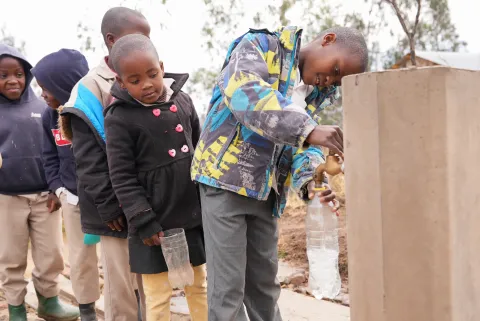
Safe water, restored dignity for elderly and families in Quthing
A nearby tap reduces physical strain and safety risks for a community’s most vulnerable members

For years, accessing water was one of the greatest daily struggles for Malimakatso Khoathane, an elderly woman living alone in Quthing. With painful knees, poor health and hearing difficulties, the simple task of collecting water became physically exhausting and dangerous.
Before a water tap was installed near her home, Khoathane had to walk long distances and cross a busy road just to fetch water for daily use. The journey was especially risky because she is hard of hearing, making it difficult for her to detect approaching vehicles.
“I live alone, and because of my health and painful knees, I struggled to walk long distances,” says Khoathane. “Sometimes I would fall.”
Concerned for her safety, her neighbour Ts’eliso Mahapa began helping her collect water each day. Before fetching water for his own household, he would first make the difficult journey on her behalf to ensure she had enough water for drinking, cooking and washing.
“Nkhono Malimakatso Khoathane is my neighbour,” explains Mahapa. “Before we had this tap, she used to fetch water from very far away, across the road. It was a real struggle for her because she is very old and hard of hearing.”
Mahapa says the community constantly worried about her safety, especially as she continued crossing the road despite her physical condition.
“I volunteered to help her collect water because the distance was too much for her, and it was not safe,” he says. “Since she is hard of hearing, crossing the road put her at great risk, and this worried us a lot.”
Today, the situation has changed significantly. Through Ntlafatsa Bana, a collaborative initiative of the Government of Lesotho with financial support from the European Union and technical support from UNICEF, a water tap was installed closer to Khoathane’s home, helping ease the burden she faced daily.
“The installation of a tap near my home is a great help,” says Khoathane. “I am forever grateful. My neighbours also now draw water nearer.”
Similar changes are being experienced in other communities across Quthing. In Ha Mohloli, three taps were installed to improve access to safe water for households that previously struggled with long distances and limited water supply. One of the taps was installed specifically to support an elderly woman caring for her two adult sons with disabilities, as the family was unable to collect water independently due to age and disability related challenges.
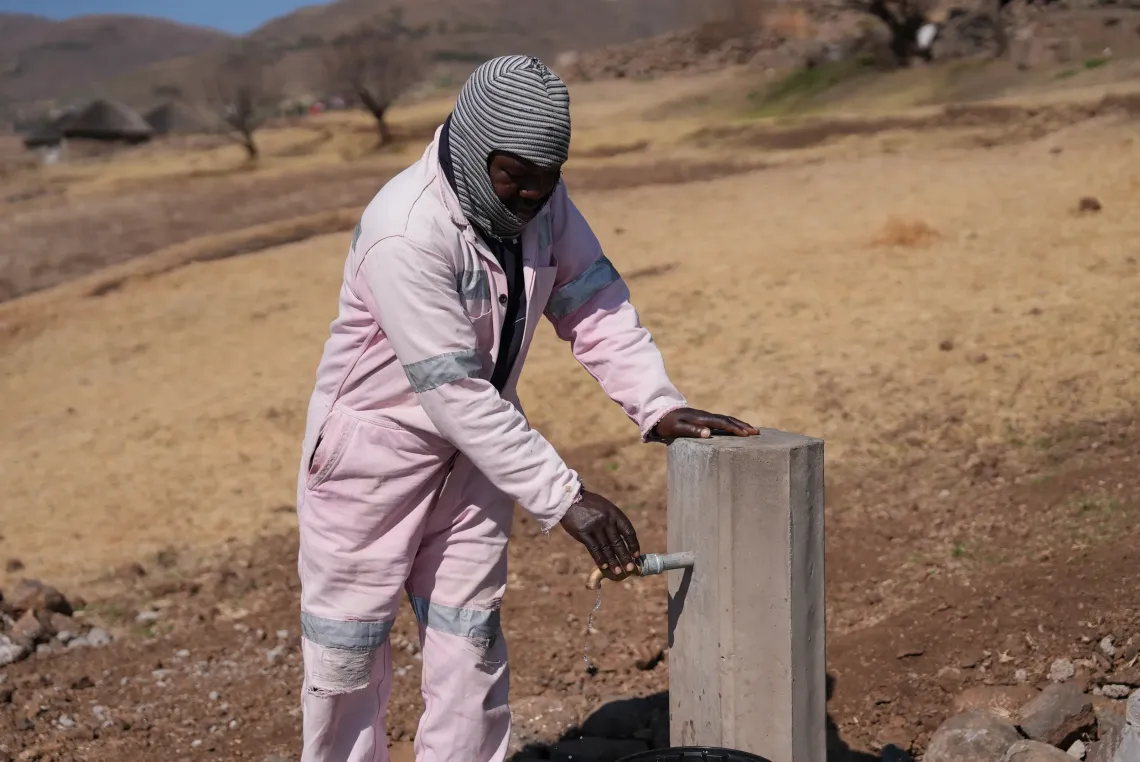
For the wider community, improved water access is helping restore time, dignity and safety for families.
“The three taps in my village have changed everything,” says the Chief of Ha Mohloli. “We no longer walk long distances to fetch water. Now, children can spend more time in school studying, while families use the extra time for work and caring for our homes.”
In communities where elderly people, children and persons with disabilities often face additional barriers to accessing basic services, bringing water closer to households is helping reduce physical strain and safety risks while improving quality of life.
Ntlafatsa Bana aims to improve the wellbeing of children and families supported through the Child Grants Programme by strengthening access to integrated services including water, nutrition, birth registration, social protection and sustainable energy solutions.
Through the programme, 9,227 people now have reliable access to safe water across supported communities in the Quthing District.
For families like that of Malimakatso Khoathane, access to water is no longer defined by danger, distance and physical hardship. Instead, a nearby tap now represents safety, dignity and the reassurance that even the most vulnerable members of the community are not left behind.