Children gain back lost hours of learning after gaining quicker access to water
A water point close to Qhalasi Primary School improves learning outcomes and wellbeing

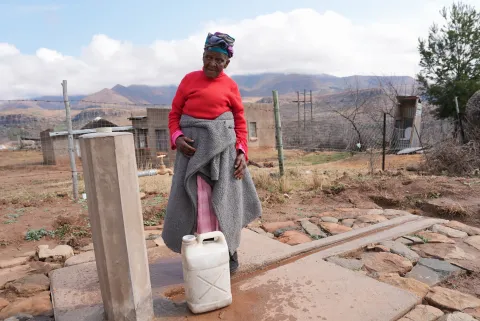
At Qhalasi Primary School in Quthing, something as simple as access to water once disrupted learning every single day. Before the installation of new water facilities, children walked long distances to fetch water from a communal tap located far from the school grounds. For younger learners, especially those in Grades 1 and 2, the journey often meant lost learning time and distraction.
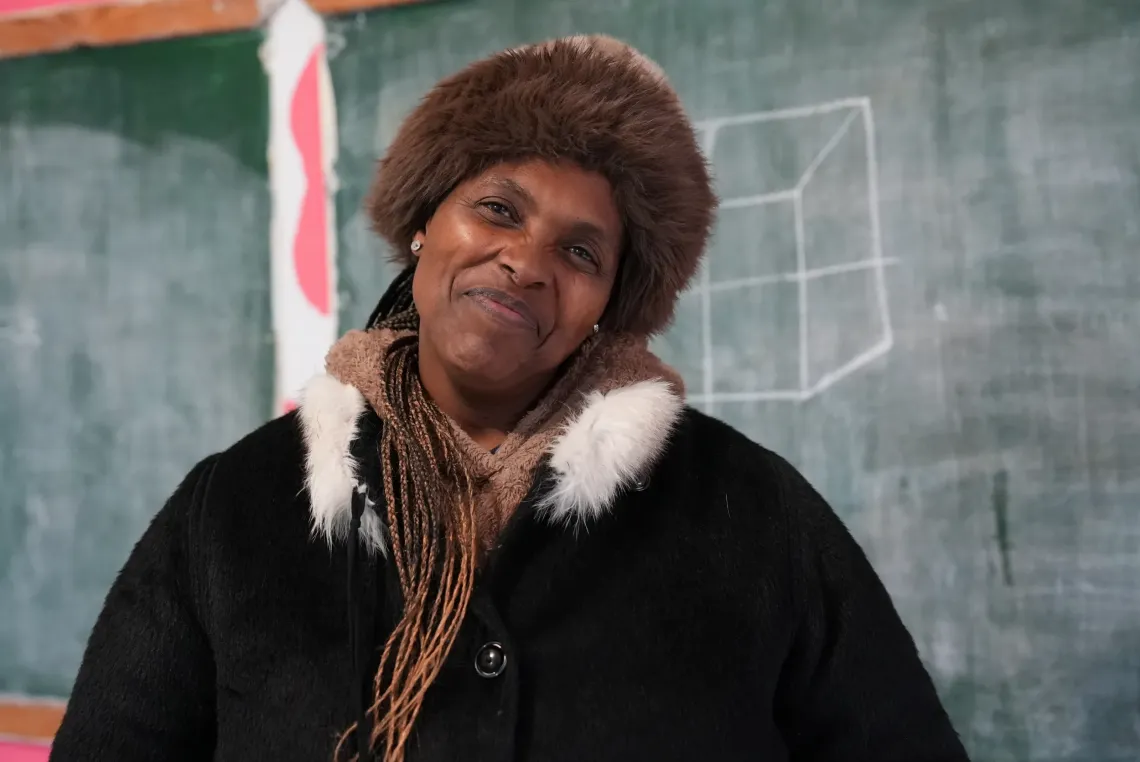
“We faced a serious challenge because the tap was located quite far from the school,” recalls School Principal, ‘Marethabile Metjeea. “Learners took longer to fetch water or wash their lunchboxes. Younger children could easily get distracted and start playing once they were out of the classroom.”
The burden became even heavier during the COVID 19 pandemic, when regular handwashing became essential. Learners carried heavy buckets of water on their heads to refill tippy taps around the school. Teachers introduced timetables to manage water collection between classes, but valuable teaching and learning time continued to be lost.
“Children had to fetch water to fill the tippy tap. It was a lot of work,” says Metjeea. “We even had to create a timetable for different classes, but this still took away from learning time.”
Whenever the communal tap broke down, the situation became even more difficult. Teachers and learners were forced to search for alternative water sources, disrupting school routines and creating uncertainty around hygiene and sanitation.
The challenges extended beyond the school. Across the community, many households struggled to access safe water due to an aging water system that no longer met the needs of a growing population.
“The water system here is very old. It dates back to 1986,” explains Tholang Petlane, a Water Committee member. “At that time, the village was small and there weren’t many people. But as the village grew, some residents had to walk very long distances to fetch water, and others even had to cross the road to access it.”
For women and girls, the long journeys to collect water often exposed them to additional safety risks, especially during early mornings and evenings.
“The support from the Ntlafatsa Bana Programme in bringing water closer has greatly improved the safety of women and girls,” says Petlane. “They no longer have to walk long distances to fetch water, and this reduces the risk of attacks on women and girls.”
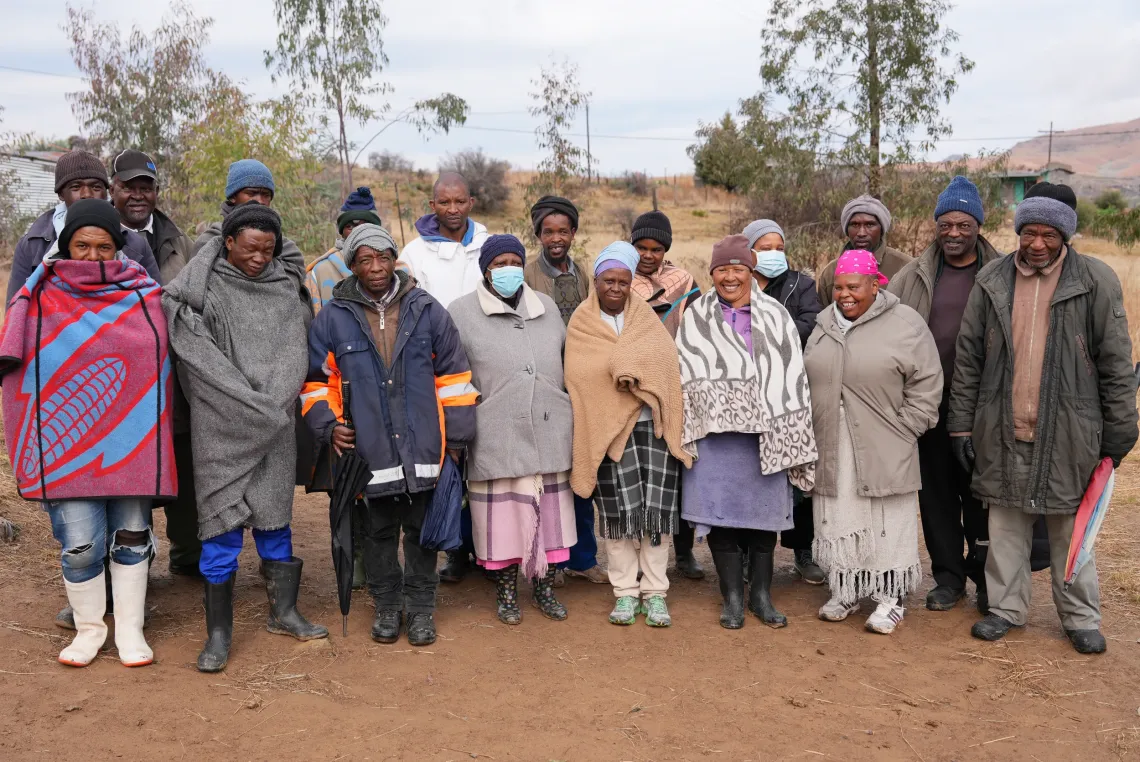
Today, the situation has changed significantly.
Through Ntlafatsa Bana, a collaborative initiative of the Government of Lesotho, the European Union and UNICEF, the school and surrounding community now have water points installed closer to homes and learning spaces. The programme aims to improve the wellbeing of children and families supported through the Child Grants Programme by strengthening access to essential services including water, nutrition, birth registration, social protection and sustainable energy solutions.
“Since the new taps were installed, there has been a big difference,” Metjeea explains. “We are now able to manage learning time better. Children can access drinking water nearby, classrooms can be cleaned easily, and hygiene has improved. The tippy tap is always filled with water.”
The improvements have gone beyond water access alone. Around the school’s water tank, teachers and learners created a small furrow system that redirects wastewater from handwashing and dish cleaning directly into the school garden. The recycled water now helps nourish vegetables grown at the school without requiring additional irrigation.
“As children wash their hands and dishes, the water nourishes our vegetables,” says Metjeea. “We no longer need to water the garden separately.”
For learners, the changes mean cleaner classrooms, improved hygiene, more time in lessons, and a healthier school environment. For community members, the nearby water points have restored convenience, dignity and safety, particularly for children, women and older people.
“We are truly grateful for this support,” says Petlane. “Now even children and the elderly can easily fetch water nearby. We are very thankful.”
The story of Qhalasi Primary School reflects the wider impact of Ntlafatsa Bana across Lesotho. Through the programme, 9,227 people now have reliable access to safe water, while 25,575 Child Grants Programme households receive digital cash transfers. The initiative has also supported 1,953 children to obtain birth certificates, activated 47 Nutrition Clubs, updated 29,189 household records in the National Information System for Social Assistance (NISSA), and reached 900 children and 1,700 women and adolescents with nutrition services. In addition, 706 households have selected preferred renewable energy solutions to improve daily living conditions for children and families.
Across communities, these integrated interventions are helping strengthen systems that support children’s health, protection, education and wellbeing. At Qhalasi Primary School, the impact can already be seen in the daily rhythm of school life, where children now spend less time searching for water, and more time learning, growing and preparing for their future.