Adolescent development
Investing in adolescents builds strong economies, inclusive communities and vibrant societies

Challenge
Adolescents in Lesotho face multiple, overlapping challenges that hinder their development and limit their opportunities to thrive. More than half of children aged 7–14 lack foundational literacy and numeracy skills, and school completion rates drop sharply after primary level—only 44 per cent complete lower secondary and just 32 per cent complete upper secondary. For those that complete education, the gap between the skills acquired and those needed in the workforce remains a pressing concern that affects their employability prospects. Adolescent girls are particularly affected by early marriage and pregnancy, with 24 per cent married before the age of 18, leading to school dropouts and heightened vulnerability to HIV and gender-based violence.
Boys are often pulled out of school for herding and informal labour, especially in rural areas. Adolescents with disabilities face stigma, discrimination, and limited access to inclusive education and services. Health challenges are also acute: adolescent girls and young women face a disproportionately high risk of HIV infection, while access to mental health, menstrual hygiene, and sexual and reproductive health services remains limited. Few platforms exist for adolescents to meaningfully participate in decisions that affect their lives.
Solution
UNICEF’s approach to adolescent development is anchored in empowering young people to be healthy, educated, and engaged. This includes strengthening inclusive education systems to reduce dropouts, expand flexible learning pathways, and equip adolescents with 21st-century skills for life and employability. UNICEF promotes gender-responsive strategies to address early marriage, pregnancy, and harmful social norms, while supporting adolescent mothers to return to school and access services.
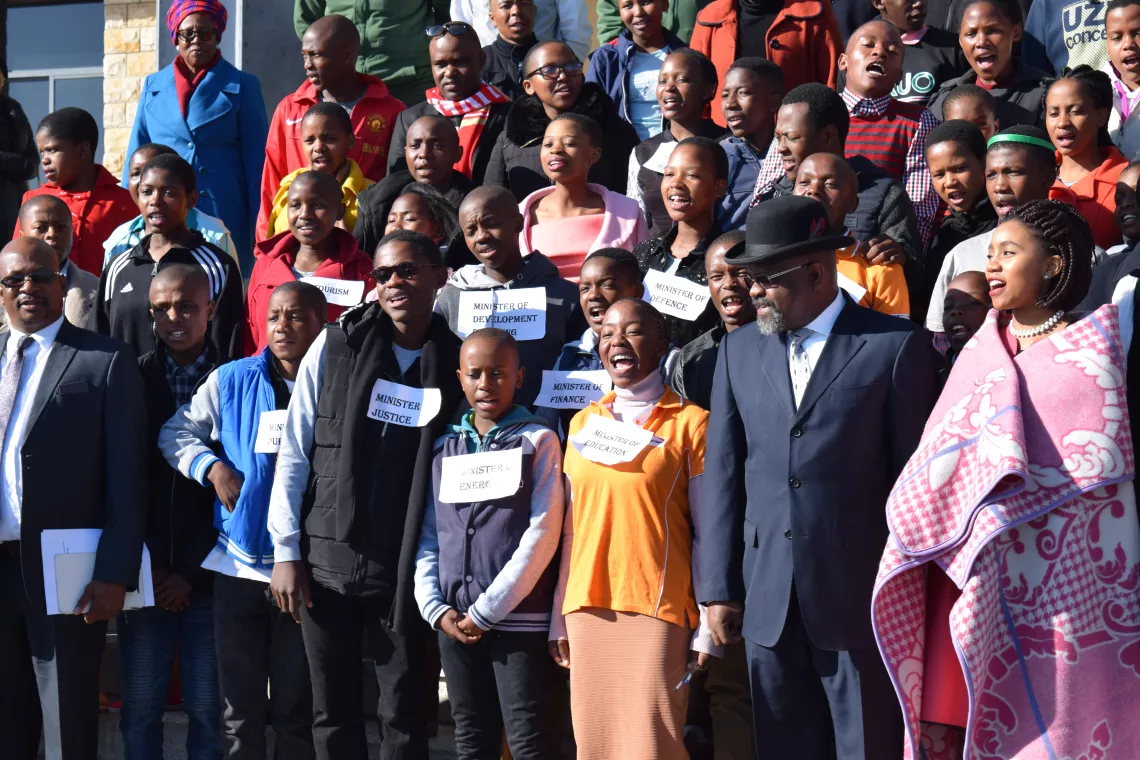
Through adolescent-friendly health services and school-based programmes, UNICEF enhances access to sexual and reproductive health, HIV prevention, and mental health support. Interventions also focus on strengthening life skills, peer-to-peer education, and civic engagement. UNICEF supports the creation of safe spaces and adolescent-led platforms—such as the Children’s Parliament and youth networks—so that adolescents can advocate for their rights and co-design solutions.
By fostering meaningful adolescent participation and cross-sector collaboration, UNICEF ensures that adolescents in Lesotho are equipped, supported, and empowered to navigate the transition to adulthood and contribute positively to their communities.