A Little Help Goes a Long Way
A cash transfer programme supported by UNICEF and Australia is helping to increase the uptake of antenatal and postnatal services and make a difference in the lives of mothers in rural Lao PDR.

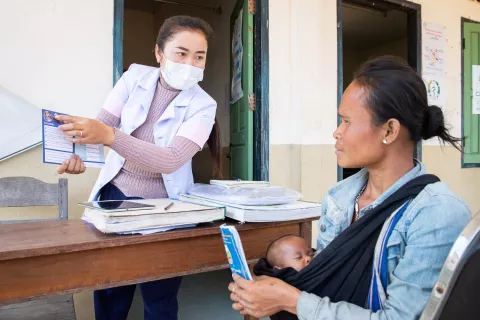
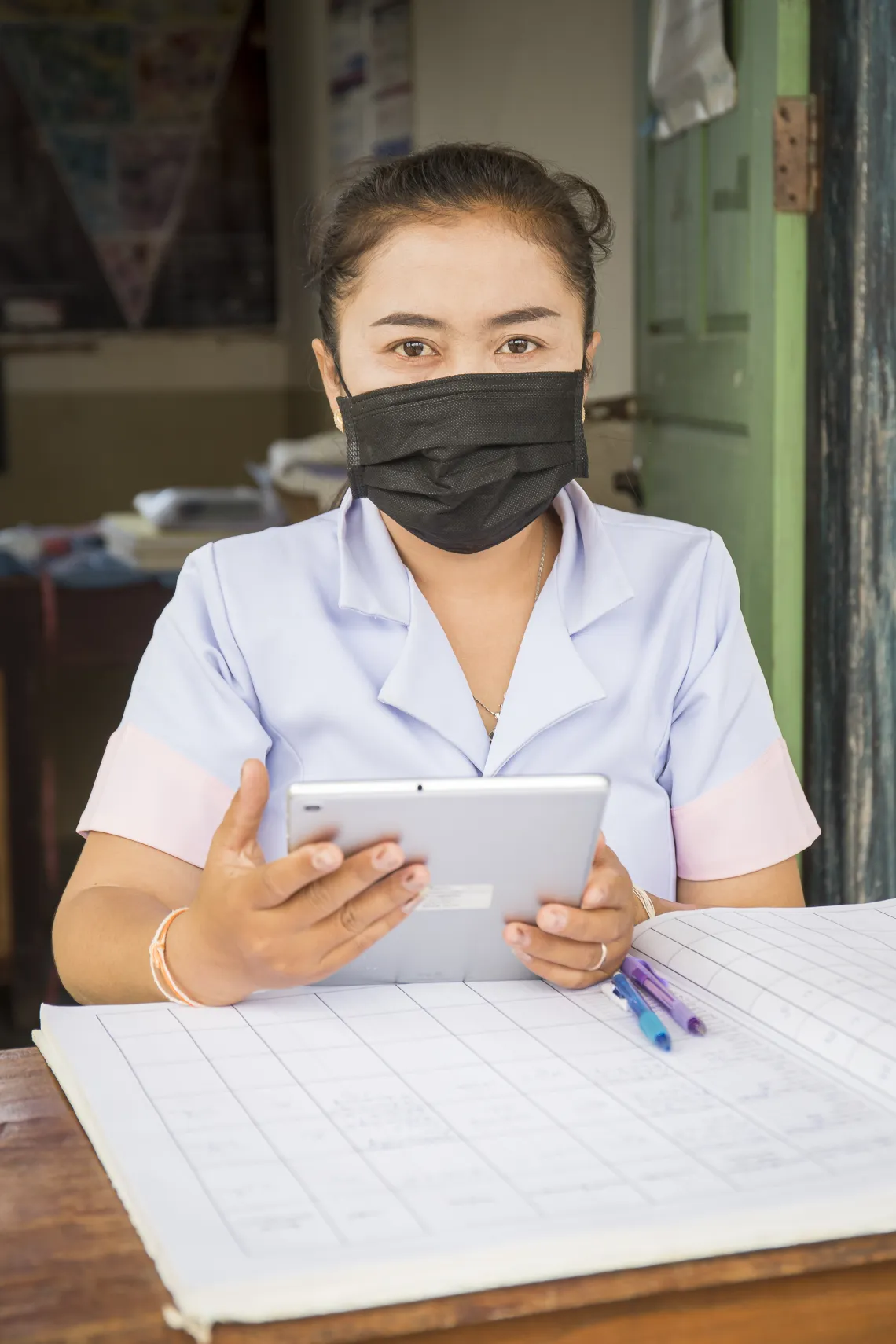
It has been a busy month for nurse Phoukham Duangsengkhom, 33, who works at the Tangalai Health Center in Nong District, Savannakhet Province. More women are visiting her health center than usual, not because they need medical attention, but because they have come to register for the Mother and Early Childhood Grant (MECG) programme.
Duangsengkhom has been collecting the registration information from the women through a tablet linked to the computerized database. The task is not easy since many women in Nong district cannot read or write and many cannot remember their own age or date of birth. The nurse has to check these details in the blue books that the women carry with them.
Many of the women also don’t speak Lao. Most of the villagers belong to the small Bru-ethnic group who have their own language and traditions. When Duangsengkhom herself moved to Nong nine years ago, the first thing she had to do was to learn the Bru language.
Despite a busy month, Duangsengkhom says she does not mind. On the contrary, it has been the good kind of hustle and bustle at the health center. A month of excitement.
More Than Just Cash Transfers
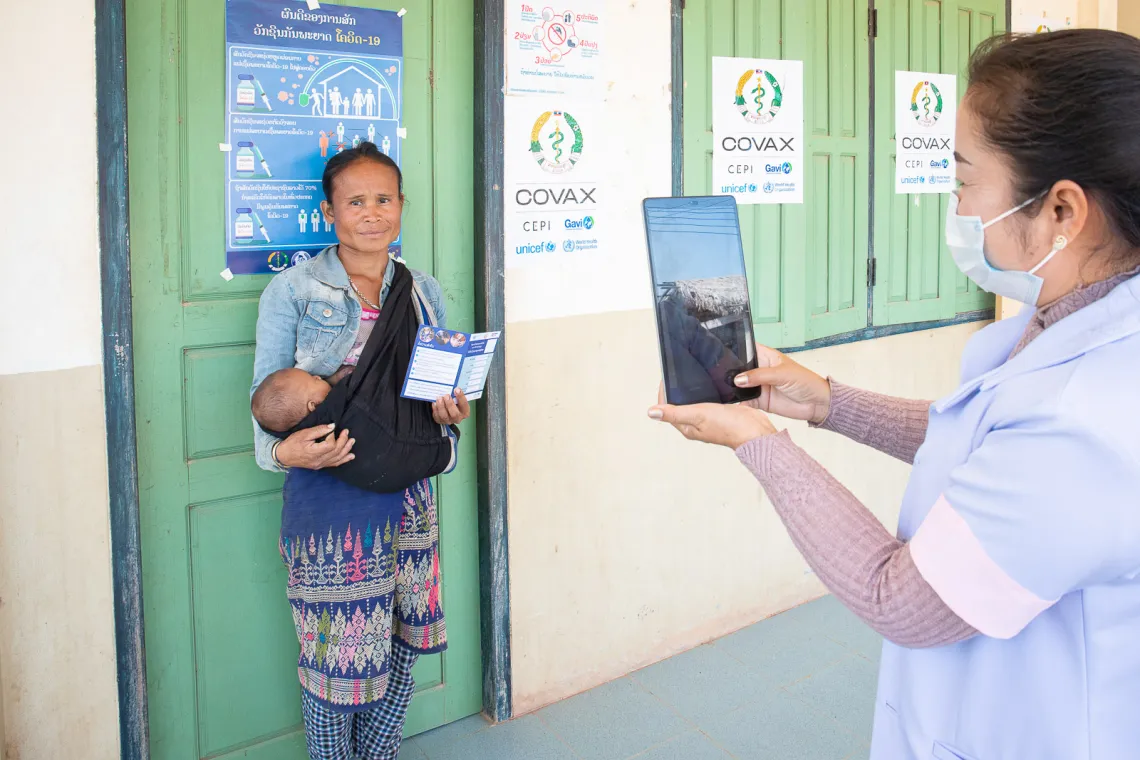
At the core of the MECG programme that Duangsengkhom is supporting in Nong district are cash transfers to pregnant women and women with newborn babies. Eligible women in these districts will get bi-monthly cash transfers of 300,000 LAK (approximately USD 26) to help them purchase healthier food for themselves and their children.
Duangsengkhom explains how having this extra cash can help pregnant women and new mothers, especially since most families rely on subsistence farming and seldom have access to cash. “People tend to have problems after giving birth because they cannot go to the farm right away. Now they get cash to support them during pregnancy and after the birth,” says Duangsengkhom.
Duangsengkhom also explains why cash can sometimes be a better form of assistance.
“Previous programmes have donated eggs, rice and milk to beneficiaries, such as families with disabilities. However, cash transfers give beneficiaries the opportunity to make these decisions themselves.”
From another point of view, the programme has an additional important dimension. As the registration process is conducted at health centers, the program also contributes toward strengthening the women’s trust in healthcare services. In remote areas like Nong district, many women still prefer to give birth at home and seldom go to the health center for antenatal and postnatal care.
However, Duangsengkhom has already noticed major change in the beneficiaries’ attitudes. “This programme makes it easier for me to keep records of pregnant women. They used to come to the health center only at the last moment. Now, they come every month for a health checkup because of the programme,” she says. The local people are also more cooperative when it comes to getting their children vaccinated because of the programme.
During these health checkups, Duangsengkhom is also able to give the women nutrition advice. “When pregnant, many of the women here mostly eat rice and bamboo shoots they find in the forest. However, bamboo is not that nutritious and I recommend them to eat more vegetables to get the necessary vitamins and nutrients,” explains Duangsengkhom.
Duangsengkhom is clearly passionate about her job as a nurse and says she does not mind greater influx of women seeking health services at her health. In a way her work has been getting easier thanks to the MECG programme.
The MECG programme is being led and coordinated by the Ministry of Labour and Social Welfare with support from UNICEF and the Australian Government. Nong district of Savannakhet was chosen one of the pilot program’s districts together with Sanamxay and Phouvong districts in Attapeu province. The MECG pilot is also part of the United Nation’s Joint-Programme (UNJP) “Leaving no one behind: Establishing the basis for social protection floors in Lao PDR”, a joint initiative between UNICEF, the International Labour Organization (ILO) and the United Nations Capital Development Fund (UNCDF).