Lao PDR marks World AMR Awareness Week with a One Health call to action
The Ministry of Health and the Ministry of Agriculture and Environment brought government leaders, United Nations partners and young people together to take stock of the national response to antimicrobial resistance and look ahead to putting a new 10-year
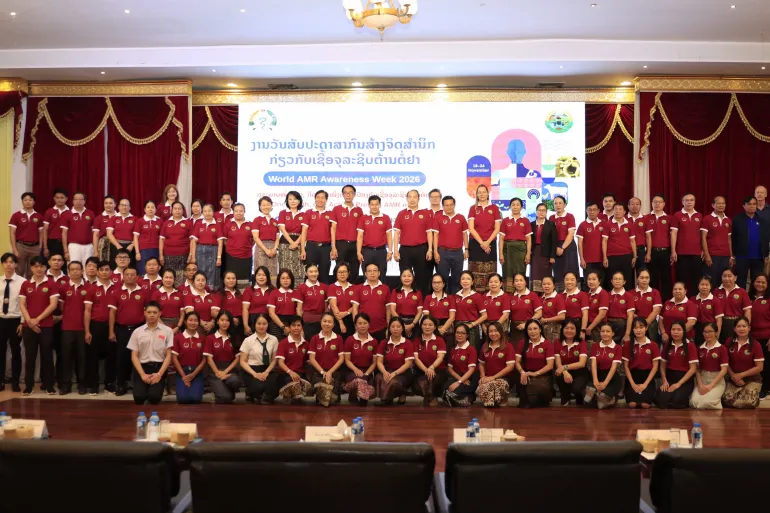
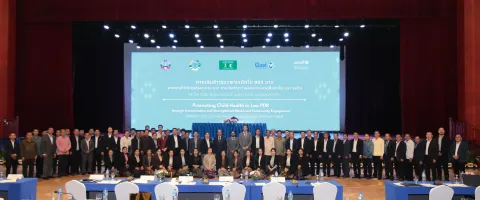
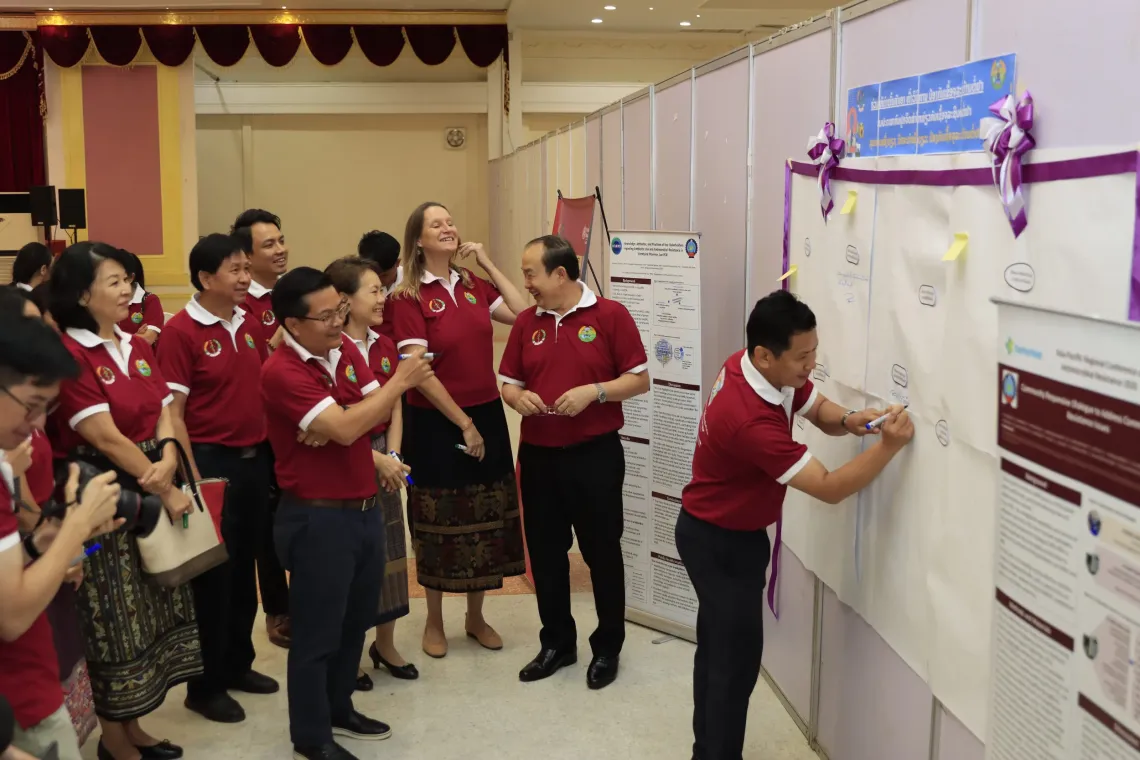
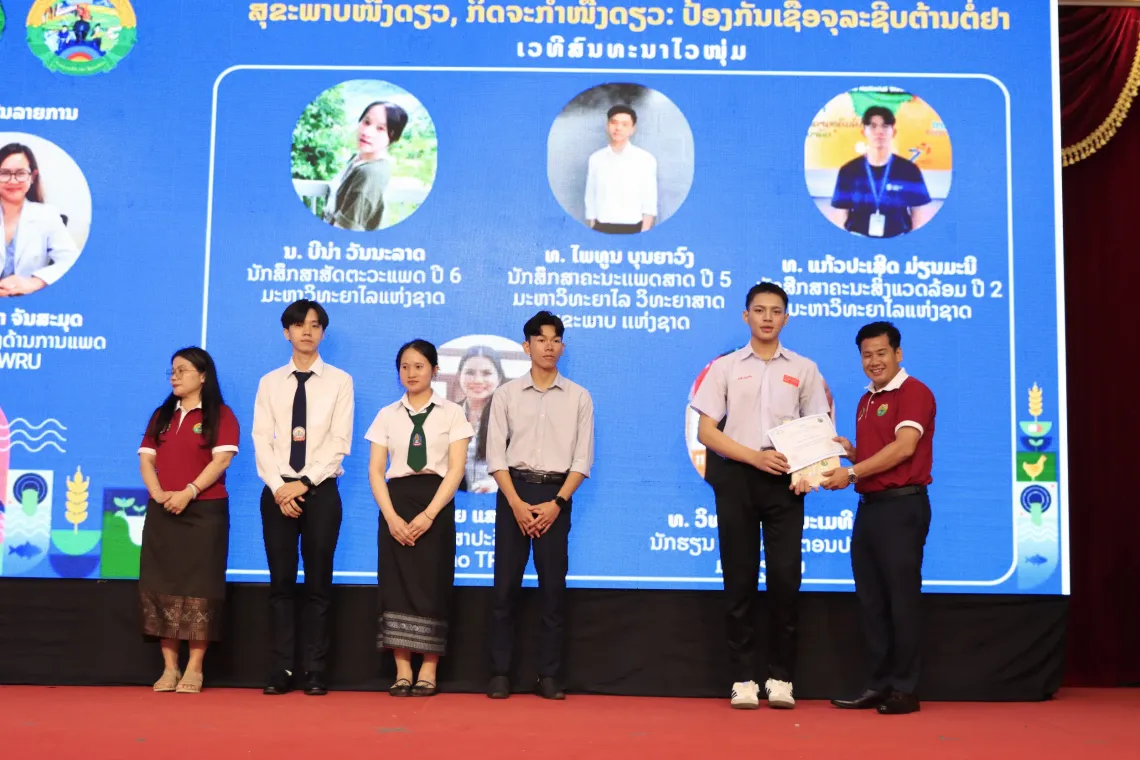
Vientiane, Lao PDR, 21st November 2026 – The Ministry of Health and the Ministry of Agriculture and Environment led the national celebration of World AMR Awareness Week on 24 November at Lao ITECC Mall in Vientiane Capital, under the theme “One Health, one action: Prevent AMR now”.
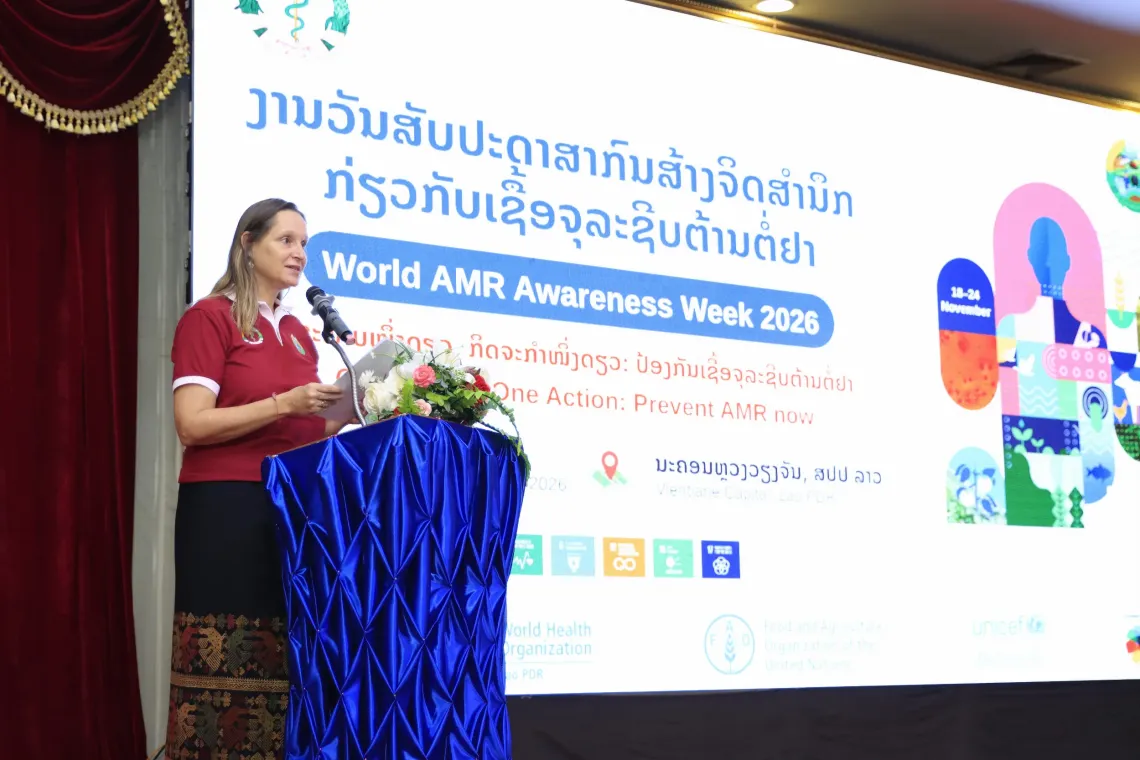
The morning opened with remarks from the Government and from the representatives of the World Health Organization (WHO), the Food and Agriculture Organization of the United Nations (FAO) and UNICEF. Senior officials from the two ministries then set out Lao PDR’s progress against antimicrobial resistance (AMR) in human health and in animal, food and environmental health, and the way forward.
“AMR threatens the health of every Lao family, and self-medication with antibiotics is still common in our communities,” said Dr. Phayvanh KEOPASEUTH, Vice Minister of the Ministry of Health. “Protecting these medicines starts with how each of us uses them. Antibiotics should be taken only when prescribed by a qualified health worker, and given to animals only on the advice of a veterinarian. Never buy them without a prescription, and never share leftovers.”
The celebration looked ahead to putting Lao PDR’s new 10-year National Strategic Plan on Antimicrobial Resistance (2026–2035) into practice, in line with the updated Global Action Plan on AMR 2026–2036 adopted by the World Health Assembly in May 2026. Because resistant germs move between people, animals, food and the environment,o single sector can tackle AMR alone; the response needs the One Health approach that the two ministries and their partners have been building together.
The One Health principle is the recognition that human health, animal health, food safety and the environment are closely interlinked and interdependent. Addressing these issues therefore requires coordination, collaboration and systematic action from all relevant sectors,” said Dr. Phanthavong Vongsamphanh, Director General of the Department of Livestock and Fisheries, Ministry of Agriculture and Environment. Our sector treats prevention as a key priority, focusing on vaccinating animals against disease, improving animal husbandry and good agricultural practices, strengthening on-farm biosecurity, and protecting water sources and the environment to reduce the need for antimicrobial use. At the same time, when antimicrobials do need to be used, they must be used correctly, responsibly and under the guidance of a veterinarian or a qualified specialist.
The Global Research on Antimicrobial Resistance (GRAM) study estimates that drug-resistant bacterial infections were linked to about 4.7 million deaths worldwide in 2021 and could directly cause 39 million deaths between 2025 and 2050 if no action is taken. A 2025 WHO report indicated that one in six laboratory-confirmed bacterial infections is now resistant to common antibiotics. In the Lao PDR, a recent study in the Western Pacific Region estimates 3,810 AMR-associated deaths in 2021, while the priority pathogens mirror the country's resistance trends.
“Drug-resistant infections do not stop at borders or stay within one sector, and no single ministry, agency or partner can stop them alone,” the representatives of WHO, FAO, and UNICEF, together with Fondation Merieux and LOMWRU in Lao PDR, said in a joint message. “Lao PDR’s new National Strategic Plan on AMR gives every sector one shared roadmap. Under the Government’s leadership, the United Nations and partners will continue to work together as one to support the Ministry of Health and the Ministry of Agriculture and Environment in putting that plan into practice, in hospitals, on farms, in schools and in homes, for the health of people, animals, plants and the environment.”
The celebration was supported through Advancing Lao PDR’s Pandemic Response and Transformation (ALERT-LAO), led by the Government of Lao PDR and funded by the Pandemic Fund, a multilateral financing mechanism dedicated exclusively to strengthening pandemic prevention, preparedness, and response in low- and middle-income countries. Project implementation by the Government is supported by FAO and UNICEF, with WHO contributing technical assistance and expertise. The US$17.59 million grant supports antimicrobial stewardship, infection prevention and control, and biosecurity in high-risk areas, alongside One Health surveillance, laboratories, and workforce.
World AMR Awareness Week runs from 18 to 24 November each year.
About the Pandemic Fund
The Pandemic Fund is a first-of-its-kind multilateral financing mechanism dedicated exclusively to strengthening critical pandemic prevention, preparedness, and response (PPR) capacities of low- and middle-income countries through investments at the national, regional, and global levels. The Fund provides a dedicated stream of additional, long-term financing for investments in areas such as infectious diseases surveillance, laboratories and diagnostics, and health workforce strengthening. Under its first three funding rounds, the Pandemic Fund is supporting 128 countries across six regions through 67 projects. Of these, 91 countries are accelerating investments in national and cross-border capacities for PPR, and six regional entities are bolstering regional PPR capacities that together reach 85 countries. These projects are country-driven, aligned with national and regional priorities. They take a disease-agnostic approach and promote collaboration across sectors, borders, and partners—including civil society—through a One Health approach.
About ALERT-LAO
Advancing Lao PDR’s Pandemic Response and Transformation (ALERT-LAO), led by the Government of Lao PDR, is supported by a US$17.59 million grant from the Pandemic Fund, a multilateral financing mechanism dedicated exclusively to strengthening pandemic prevention, preparedness, and response capacities in low- and middle-income countries. Project implementation by the Government is supported by two implementing entities: FAO and UNICEF. The grant has leveraged US$91.6 million in co-investment from domestic resources and US$14.6 million in co-financing from international partners. Learn more about the project: https://www.thepandemicfund.org/projects/advancing-LAO-PDRs-pandemic-response-and-transformation-alert-lao

Media contacts
About UNICEF
UNICEF works in some of the world’s toughest places, to reach the world’s most disadvantaged children. Across 190 countries and territories, we work for every child, everywhere, to build a better world for everyone.
For more information about UNICEF and its work for children, visit www.unicef.org.