Cradling hope through skin-to-skin contact
How the UNICEF Kangaroo Family Care Programme works in Panama
- Español
- English
👉 Follow us on our WhatsApp channel: UNICEF Parenting Portal for more tips.
You may also be interested in: Parenting | Food and nutrition | Early learning | Nurturing care | Health | Security and protection | Short masterclasses for parents and caregivers
Premature births, which occur before completing 37 weeks of pregnancy, pose a global public health challenge. In Latin America and the Caribbean, rates of premature births span from 5.8 per cent to 12.8 per cent among babies born in 2020, with a global average of 10 per cent1. In Panama, estimates show that 8 per cent of children are born prematurely2.
Since 2022, UNICEF has been implementing the Kangaroo Family Care Programme in Panama in coordination with the Ministry of Health and with the generous support of Kimberly-Clark and its Huggies brand.
This method improves both quality and humanization of health services, allowing premature or low birth weight newborns with stabilized vital functions to have 24-hour skin-to-skin contact with their primary caregivers. Additionally, the programme stimulates on-demand breastfeeding, thanks to the kangaroo position, and it ensures a proper follow-up once discharged from the hospital.
In Panama, the first phase of the programme included training health professionals, developing national guidelines and certifying the Children's Hospital as an institution of reference for neonatal care. In 2023, the training of health professionals is being expanded throughout the country's network of hospitals, and strategies are being implemented to ensure families follow the program and to demystify it.
"UNICEF in Panama works to strengthen the implementation of public policies in favour of early childhood, with evidence-based, cost-effective interventions that promote responsive and loving care in each sector, as well as in families and caregivers, so that no child is left behind," says Yohana Amaya Pinzón, Early Childhood Development Officer at UNICEF Panama.
At the Children's Hospital, neonatologist Fairuz Fadlallah, coordinator of the Kangaroo Family Care Programme, paediatric nurse Marta Orellana and psychologist Francia Quintero work with families entering the programme.
Why is skin-to-skin contact so important?
"The importance of the Kangaroo Family Care Programme goes beyond a simple technical and medical methodology; it is a story of love, resilience and the power that human touch has to change lives and make a difference".
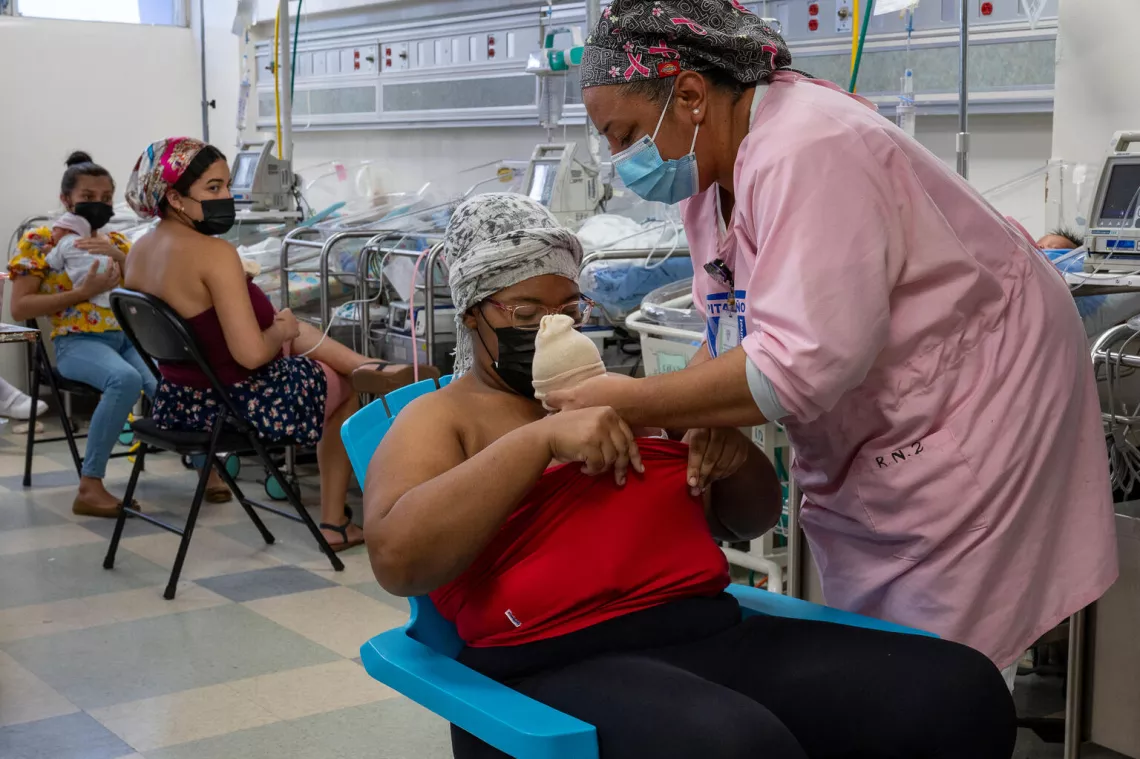
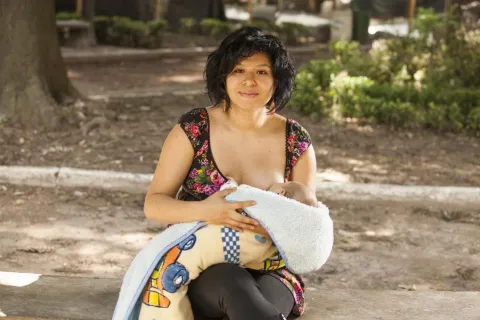
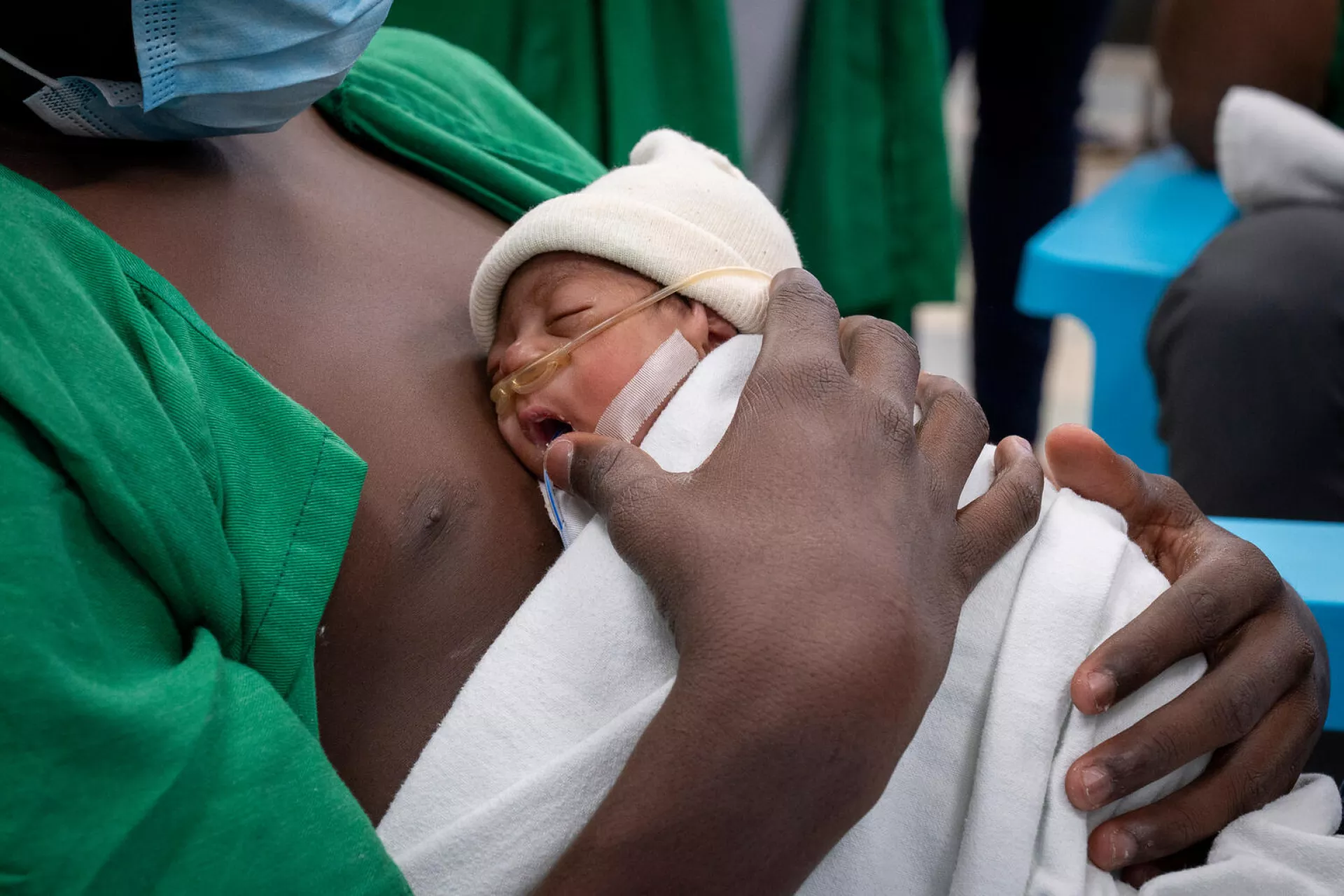
The method involves holding the baby against the bare chest of the mother, father, or caregiver for direct contact. For greater comfort, an elastic fabric wrap is used to help support the baby. With the help of the wrap, the baby is held upright with the head to one side between the mother's breasts or against the father's chest.
"Integrating the mother or father within the unit (intensive care), helps to visualize the patient as more than just a diagnosis but as an individual who is part of a family and community," says Marta Orellana, also known as Miss Marta.
"This type of reinforcement contributes to the baby's treatment; it is a unique love and bond, something that neither I as a doctor nor the health care personnel can provide," explains neonatologist Fairuz Fadlallah.
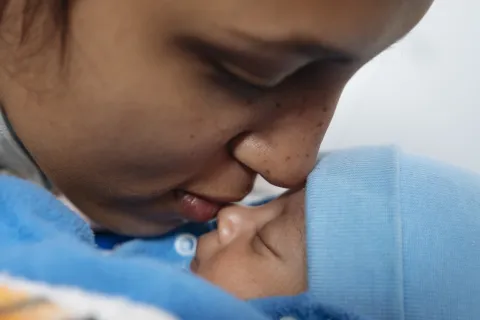
The programme helps parents strengthen their emotional bond with the baby, increase their confidence in caring for children and reduce the feeling of separation through skin-to-skin contact.
For mothers and fathers in the Kangaroo Family Care Programme, the most important thing is to be close to their babies, get to know them and ensure their safety and protection. Around 1,200 children will benefit from the donation of kangaroo wraps.
Emotion in every heartbeat
The Intensive Care Unit (ICU) is divided into several sections, depending on the severity of the patients’ condition. "On average, we take care of no more than 130 babies a day, however, lately, we are treating over 140 patients," says Dr. Fadlallah.
The Panama Children's Hospital has implemented significant changes in its neonatal care unit as part of the Kangaroo Family Care Programme. These changes include extended service hours, ergonomic chairs to facilitate skin-to-skin contact, covers to reduce light and noise in the incubators, nest conditioning for the comfort of the newborns and, of course, guidance for caregivers, contributing to the successful recovery of premature babies.
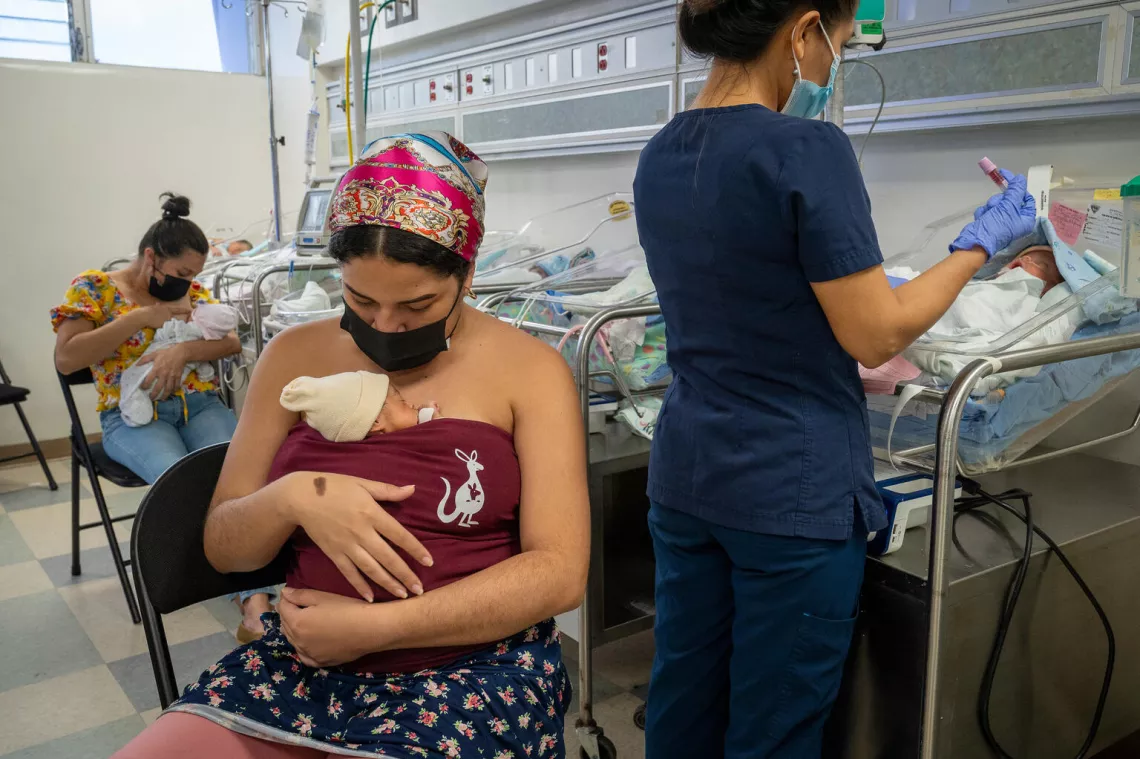
Aithany Atencio, 20 years old, has her daughter, Seinette, in the "intermediate care" hallway within the ICU; they keep each other company every day. Seinette was born at 32 weeks, and it was "love at first sight". While holding her in the wrap, Aithany can see her growing and developing as she bundles her up and feels "as if she were still in my belly".
Company during the process
When Arantxa was born, her lungs were not fully developed, and she had low birth weight: "She had surgery at 20 days." "Now Arantxa is 33 weeks and one day old. It was a natural birth, and she weighed 3 pounds," says her mom, Karen Vernaza, with great pride.
Nurse Orellana was the one who introduced her, and the rest of the families, to the Kangaroo Family Care Programme: "We explain to them what they have to do, how long they have to stay here, as well as all the benefits of using the wrap. They are also made aware of the level of commitment and the obstacles they may face along the way."
Once there is consent, and families are well-informed, the staff member in charge determines the patient's moment of stability: "Even if the baby is in intensive care, with a nasal catheter or even on mechanical ventilation, if stable, they can start the programme", says the neonatologist.
For Karen, the experience has been "unique": "I am happy because I have helped her in the growth process, in gaining weight, and above all, in getting to know her skin-to-skin. Thank God she has recovered well; I have seen the improvement in her from the surgery until now".
“If he can fight, I can too”
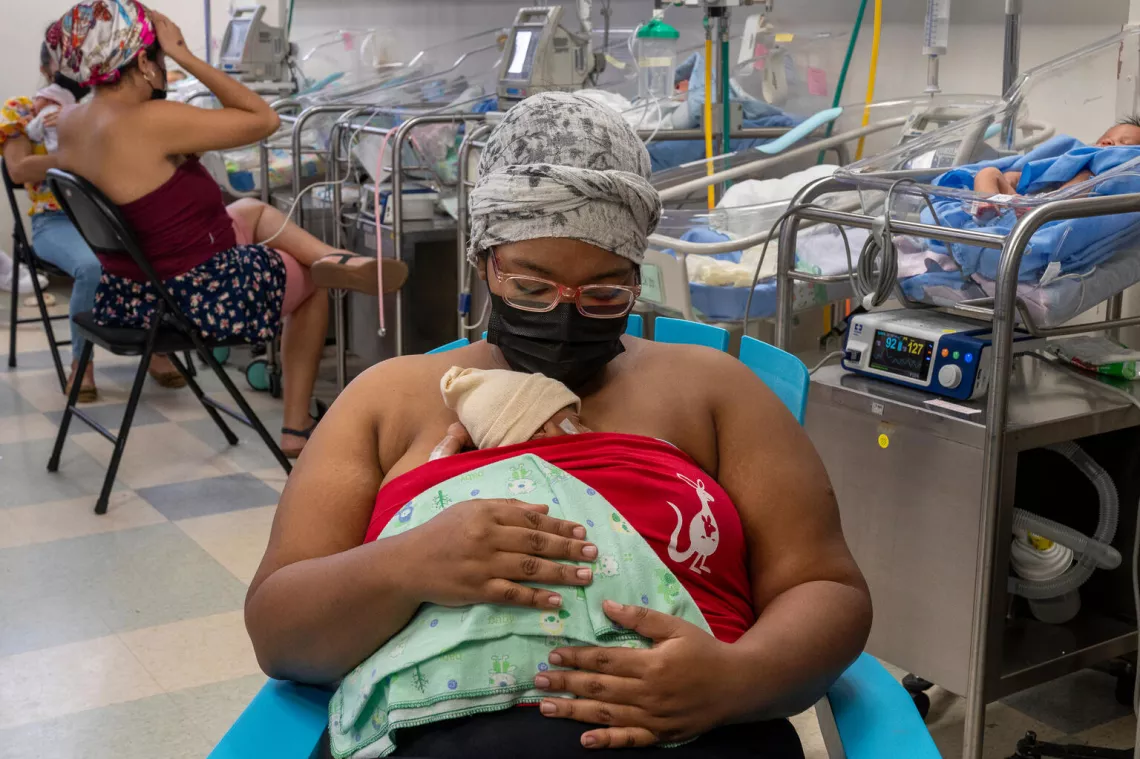
Jennyfer Simpson gave birth to Lian at 32 weeks of pregnancy: "Learning to use the wrap was simple, and for me, this experience has been beautiful. With the Kangaroo Family Care Programme, I have strengthened the bond with my baby and learned to better understand him. Lian has progressed since we started, and now I can identify his needs and help him in his development." The doctor has already authorized her to start training her baby for breastfeeding.
Being part of the Kangaroo Family Care Programme has also helped her and her husband deal with fear and stress:
"We think that having a premature baby means darkness. There will always be good and bad days, but what matters most is that light that gives you strength. If he can fight, I can too," Jennyfer reflects.
Psychological support has been essential to give Jennyfer and other relatives the emotional support they need. "We conduct educational sessions to provide them with the tools they need and at the same time give them a space to express their emotions and feelings because it is obviously a challenging situation for them. Stress and anxiety levels are high, and sometimes parents don't know how to cope with them," says psychologist Francia Quintero.
They also try to create support groups among the parents: "We bring them together so they can share their experience and feel that they are not the only ones going through these difficult times," adds Quintero. Once they are discharged, they continue to receive support.
Teamwork is key
In the ICU, it is increasingly common to find fathers who are fully involved and committed to the Kangaroo Family Care Programme. For the programme team, this has been essential to ensure that the responsibility does not only fall on mothers. "Dads love it, and most of them are very happy to do it".
One of these dads is 20-year-old Javier Barrios, proud father of Aitana and Ainoa. He feels like "the most loving dad in the universe". His daughter Aitana is recovering in an incubator, and he hopes to be able to admit her soon to the Kangaroo Family Care Programme, as he has already done with Ainoa. "We are just waiting for the doctor to give us the authorization".
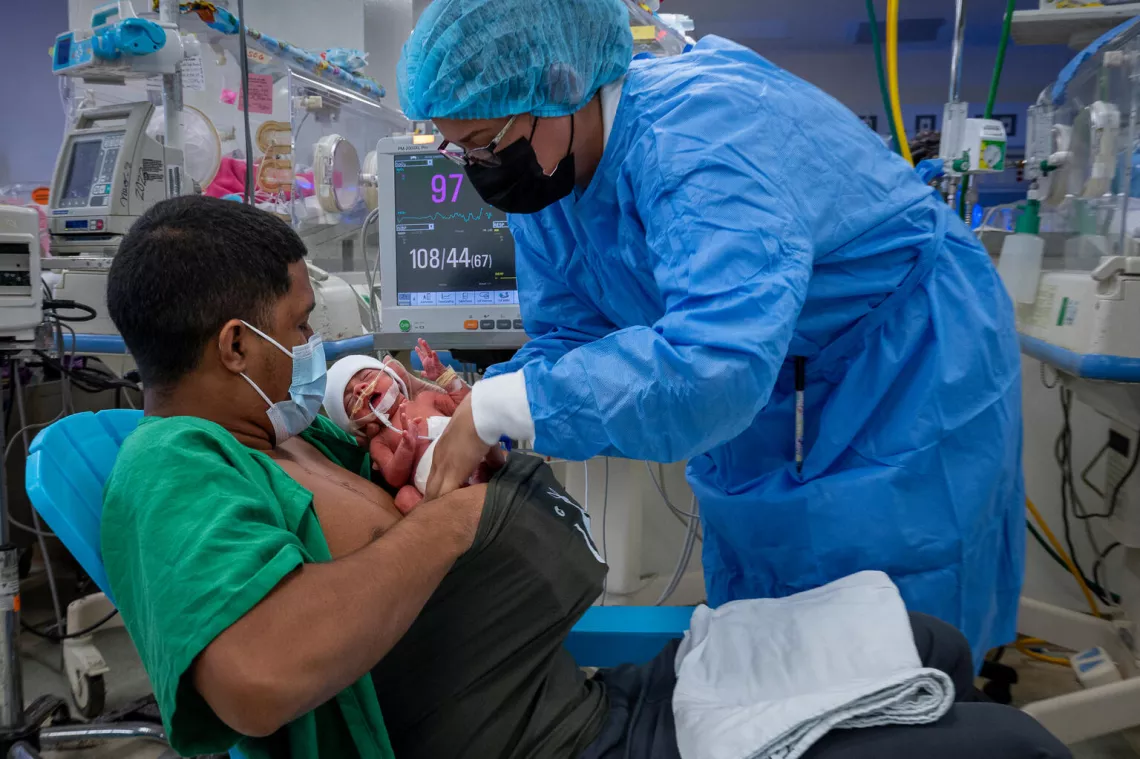
Today, for the first time, Javier is going to wear the wrap with Ainoa. He and his partner travel every day all the way from Chame to Panama City to see their daughters. "We leave there at 5 a.m. and we are here all day".
Love Stories, Happy Endings
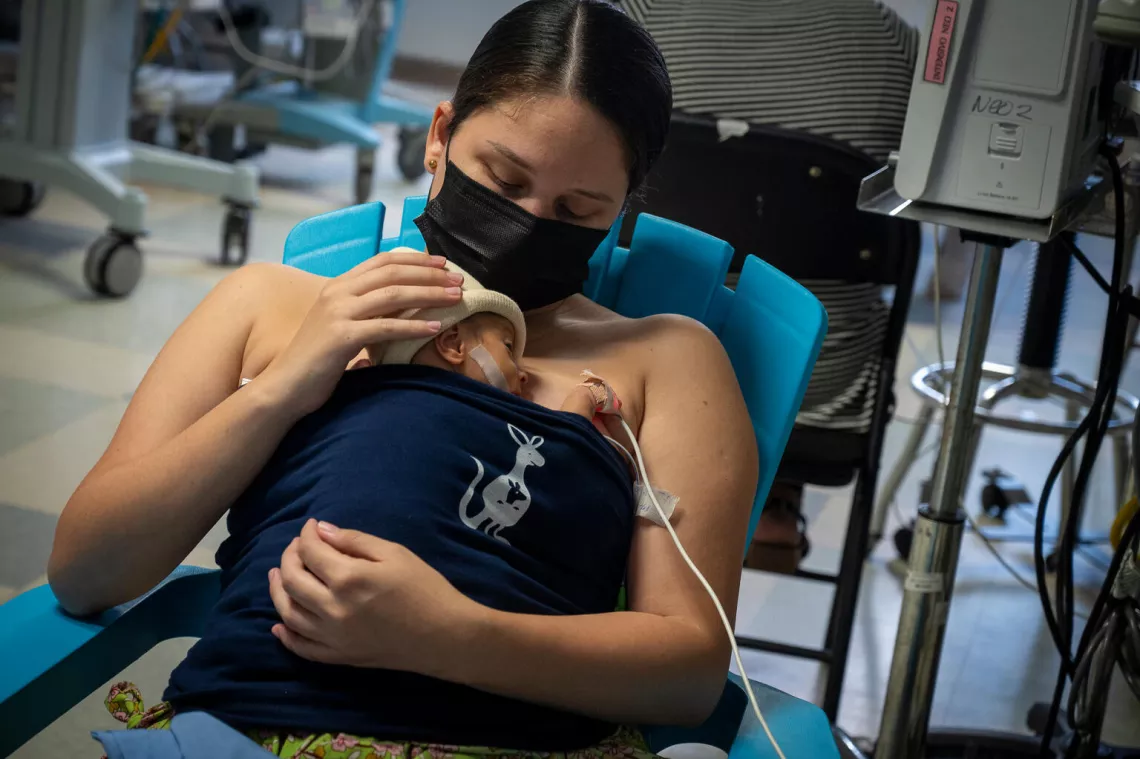
Yoryelis Guruchaga, a dental student in Panama City and native of Bocas del Toro, broke her water at just 32 weeks of pregnancy. Then Carl was born: "He cried like any child, but he would get tired, breathing was difficult for him."
She believes that it is thanks to the Kangaroo Family Care Programme that her son is recovering: "If I put him back in the incubator, he gets a bit restless, but here with me, he's very relaxed. It feels like he's still inside me. I talk to him, hum to him and he responds."
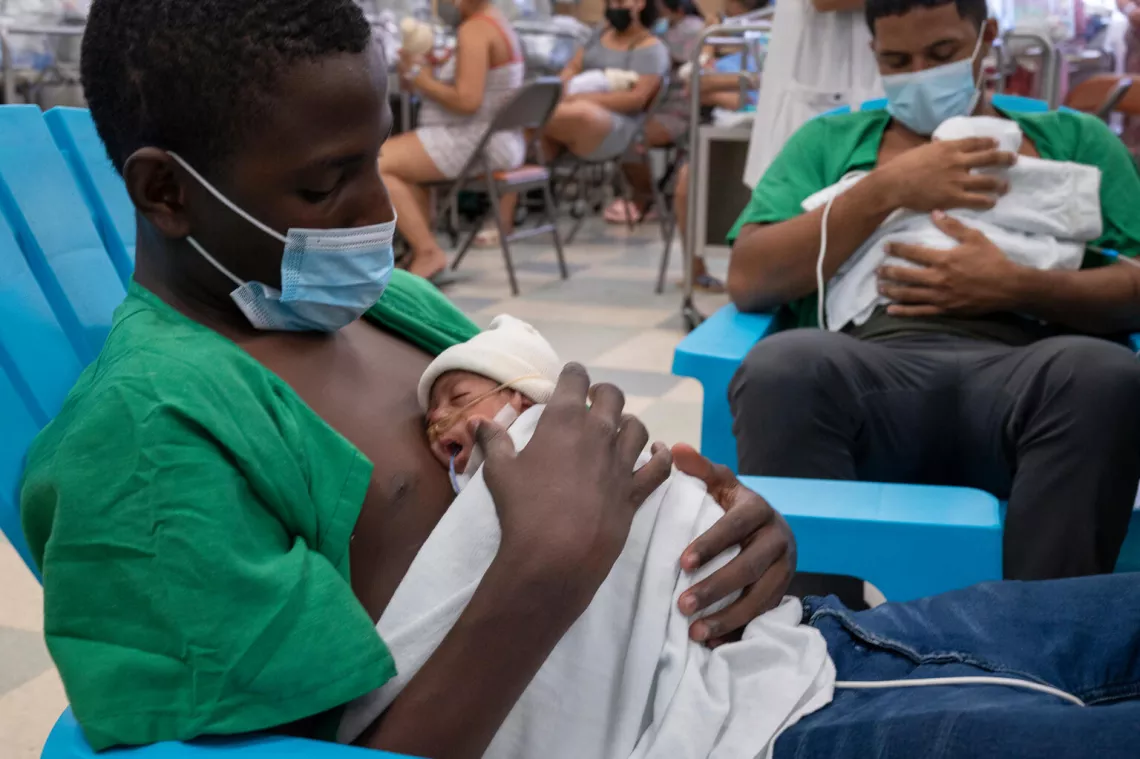
Isaias Salas is 19 years old. The local hospital told him that his baby, at only 6 months of pregnancy, could not survive such a premature birth. He refused to accept it and took his partner to another hospital. That's when Sol Milagro came into the world, she was tiny. Isaías carries her in the wrap every day: "She's gaining weight!" he says enthusiastically and gazes lovingly at her.
This journey through the Kangaroo Family Care Programme makes it clear that love, care and unwavering dedication can transform the lives of children and their families.
With the support of Huggies and other partners, UNICEF can help care for these fragile beginnings, ensuring that premature babies have the opportunity for a healthy and hopeful future, where each baby's first steps are guided by the warmth of their parents' embrace.