

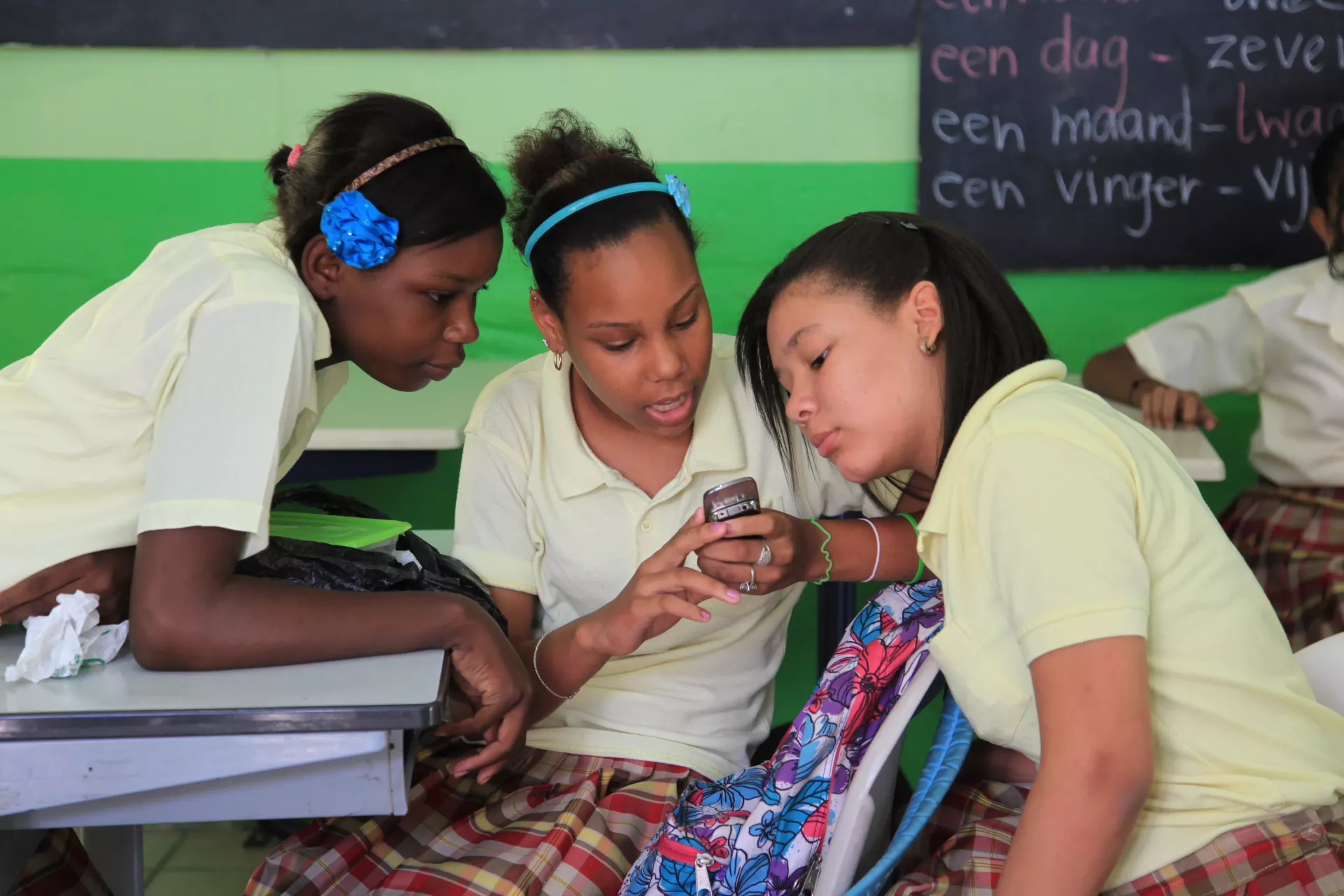
Gender analysis, data and evidence generation
Analyzing barriers to gender equality through data and evidence

In the Caribbean, a legacy of colonialism and structural inequalities has fostered a deeply-ingrained culture of gender-based violence (GBV). This culture often normalizes violence, depicting it as a disciplinary tool and an expression of masculinity, while positioning women and girls as subordinate to men. This has led to pervasive and normalized GBV in the region, with around 45 per cent of women experiencing intimate partner violence (IPV) during their lifetimes1, and rates of sexual violence exceeding global averages2.
Despite increasing research efforts, there remains a substantial lack of comprehensive, updated, and comparable data, especially concerning sexual violence against adolescent girls who are particularly vulnerable to underreporting due to fear of retaliation, often from family members or close acquaintances. This underreporting, along with barriers like social stigma, insufficient awareness, and the normalization of violence, has hindered the collection of accurate statistics. While Caribbean countries have made legal strides in addressing family violence and protecting children, much work is still needed to combat this deeply ingrained issue effectively.
In the area of Data and Research, UNICEF and partners developed an Evidence Brief on Working at the Intersections between Violence Against Women and Children in the Caribbean: Taking Stock of Challenges, Opportunities and Promising Practices, as well as a CARICOM Regional Model Tool, Knowledge, Attitudes and Practices (KAP) Tool and its training guide.
The Evidence Brief on Working at the Intersections between Violence Against Women and Children in the Caribbean. Taking Stock of Challenges, Opportunities and Promising Practices is based on a study which employed a comprehensive approach to analyze violence against women (VAW) and violence against children (VAC) services and experiences across the Caribbean region. With UNICEF’s support, the Gender and Development Programme within CARICOM developed a standardized model KAP Tool on social/gender norms and violence against women and girls, to enable the formulation of evidence-based programmes aimed at changing social norms to scale up prevention. The CARICOM Regional KAP Tool is a data collection instrument that consists of over 300 questions that can be filtered to gauge knowledge, attitude, and practice on several issues/topics such as GBV, sexual orientation, youth and sexual and reproductive health. A facilitation guide is also now available.
1 Spotlight Initiative 2020; Grenada, Guyana, Jamaica, Suriname and Trinidad and Tobago; United Nations Entity for Gender Equality and the Empowerment of Women and Caribbean Development Bank, Research brief: Intimate partner violence in five CARICOM countries: Findings from national prevalence surveys on Violence Against Women, UN Women and CDB, [n. p.], 2020.
2 United Nations Office on Drugs and Crime, 2013.
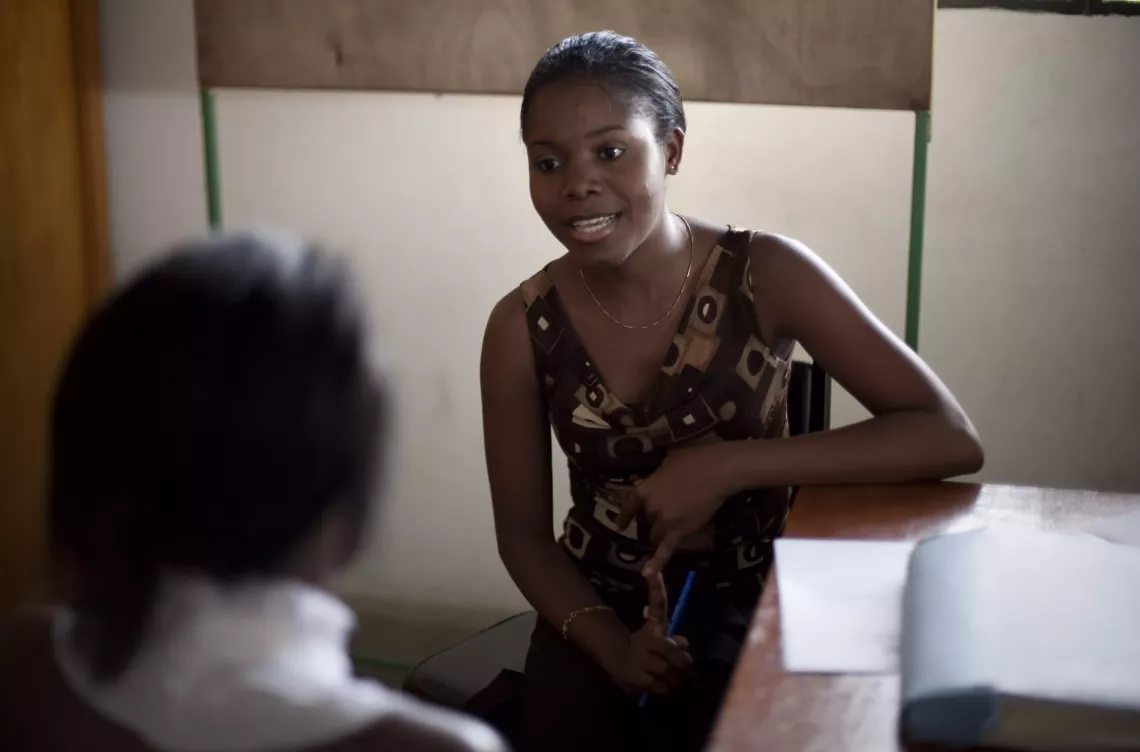
Resources
This brief is based on a stakeholder mapping that identified twelve services in six countries across the Caribbean: Babados, Belize, Guyana, Haiti, Jamaica, Trinidad and Tobago.
Its objective is to contextualize the intersection between violence against women and girls (VAWG) and violence against children (VAC) in the Caribbean region and provide evidence-based guidelines to promote integrated services, based on the opportunities and challenges identified. The aim is to enhance collaboration among service providers for women and children who have experienced violence and promote coordination across sectors, including education, parenting programmes, and adolescent health and development initiatives.
The CARICOM Regional KAP Tool is designed to provide organizations with significant flexibility in the selection of questions that will inform their survey. The tool may be utilized as a stand-alone instrument, or in conjunction with other research.
The CARICOM Regional KAP Tool Training guide is a resource to support the use of the CARICOM Regional KAP Tool. It provides information and recommendations to help organizations orient their approaches to VAWG research through good practices for exploring issues affecting vulnerable and marginalized communities, particularly survivors of family violence and child and adolescent respondents. For effective navigation of the Tool, the guide provides visual modules to support navigation through the questions, to arrive at opportunities for intersectional and multi-dimensional research. The Training Guide can also be utilized to help inform other research activities where there is a desire to implement gender-responsive approaches.
Exploring the pathways: The Spotlight regional programme process
Highlights from the June 2023 Knowledge, Attitudes, and Practices (KAP) Tool Training in Port of Spain, Trinidad and Tobago.