

The impact of armed violence on children and adolescents
Working together to protect children and adolescents in Latin America and the Caribbean
- Español
- English
Armed violence
Armed violence is a complex challenge that disproportionately affects children and adolescents in Latin America and the Caribbean (LAC).
The region has the highest child and adolescent homicide rate globally, four times that of the global average, and homicide is the leading cause of death of adolescents. Eight of the 10 countries with the highest homicide rate globally are in LAC.
This crisis is rooted in complex factors including inequality (LAC being the most unequal region globally), weak governance systems, organized crime, urban marginalization and the proliferation of small arms. For every youth homicide, there are 20-40 additional victims of non-fatal armed violence requiring hospital care.
This devastating reality has made the region account for a third of the world’s homicides with just 8 per cent of the global population, resulting in children being at risk of violence in multiple settings including their homes, schools, and streets, threatening the fundamental rights and safety of children throughout the region.
What we do

To protect children, UNICEF addresses armed violence through both preventive and responsive approaches, combining direct interventions that target specific risk factors with indirect programming that addresses broader development challenges.
Our work focuses on strengthening institutional coordination mechanisms, implementing evidence-based interventions, and engaging multiple stakeholders to protect children from violence. UNICEF works closely with communities, partners and governments to build resilience and strengthen child protection systems that protect children from armed violence. By expanding our knowledge base and implementing targeted interventions, we aim to create safer environments for children and adolescents throughout the region.
Resources
UNICEF shares resources and insights to address armed violence. These have been produced from both the Latin America and Caribbean Regional Office and the network of 24 country offices operating across 36 countries and territories in the region, providing comprehensive information, data, news, and stories about our work to protect children and adolescents.
Regional resources
Country office resources
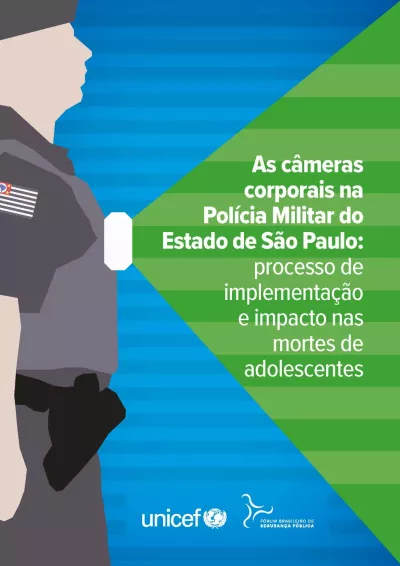
Estudo “As câmeras corporais na Polícia Militar do Estado de São Paulo”
O estudo “As câmeras corporais na Polícia Militar do Estado de São Paulo: processo de implementação e impacto nas mortes de adolescentes” do Fundo das Nações Unidas para a Infância (UNICEF) e do Fórum Brasileiro de Segurança Pública analisa as principais políticas de controle do uso da força desenvolvidas no estado de São Paulo e que contribuíram para a redução da letalidade policial entre 2020 e 2022.
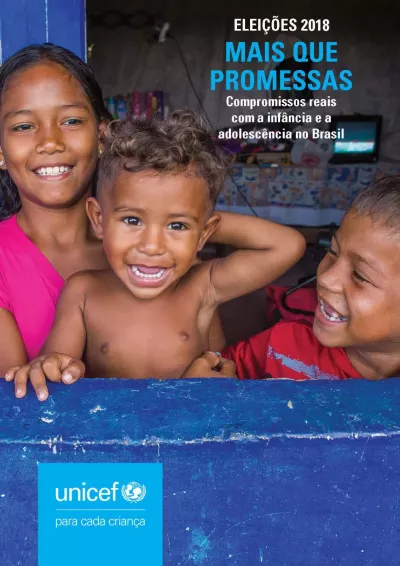
Mais que promessas compromissos reais com a infância e a adolescência no Brasil
O documento “Mais que promessas: compromissos reais com a infância e a adolescência no Brasil”, lançado pelo UNICEF no âmbito da campanha eleitoral brasileira de 2018, identifica seis prioridades e propõe iniciativas concretas para responder aos desafios nas áreas de pobreza multidimensional; homicídios; educação; saúde infantil; nutrição; e participação dos adolescentes. Com essas propostas, o UNICEF convocou candidatas e candidatos a colocar a infância e a adolescência no centro da agenda eleitoral.
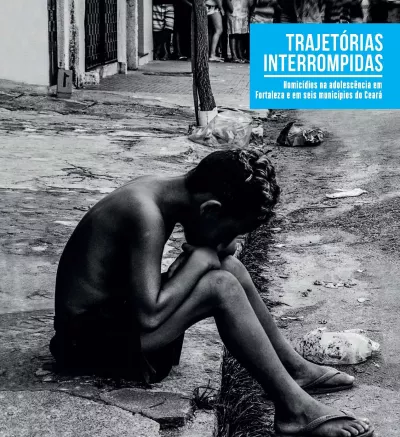
Fortaleza é uma das cidades em que mais adolescentes foram mortos vítimas de homicídio. O perfil já é conhecido: jovem, negro, pobre e morador da periferia. Pais, mães, irmãos, tias, primas e avós dos adolescentes mortos contaram suas histórias para que elas não se repitam. Por meio de grupos focais e de entrevistas com 224 familiares de adolescentes de 12 a 18 anos assassinados em 2015, em sete municípios cearenses, o estudo Trajetórias Interrompidas reconstrói a história de vida desses jovens, tirando-os da invisibilidade dos números e das siglas que os cercam.
A pesquisa é parte da estratégia de enfrentamento à violência contra o adolescente do Comitê Cearense pela Prevenção de Homicídios na Adolescência. Criada em 2016, a iniciativa surge de uma articulação entre o Fundo das Nações Unidas para a Infância (UNICEF), a Assembleia Legislativa do Estado do Ceará e o governo do Estado e envolve ainda outros parceiros, tanto do poder público como da sociedade civil.

Mapping and dynamics of violence involving youth and children in urban areas in Port-au-Prince
This study aims to map and explain the dynamics of gang violence and armed actors which involve and impact young people and children (0-24 years old) in urban areas of Port-au-Prince between 2016 and 2022. Its main goal is to understand the context, dynamics and impacts of violence on children and young people in order to create strategies to protect them from violence and to prevent their recruitment into gangs.
Gang violence affecting children is examined through the conceptual framework of the socio-ecological model. This provides an analysis at the individual, relational, community and societal levels of the factors contributing to the evolution of violence in Haiti.