

Building Peace in Schools: Young Mediators Leading Change
Students help transform school environments through peer mediation
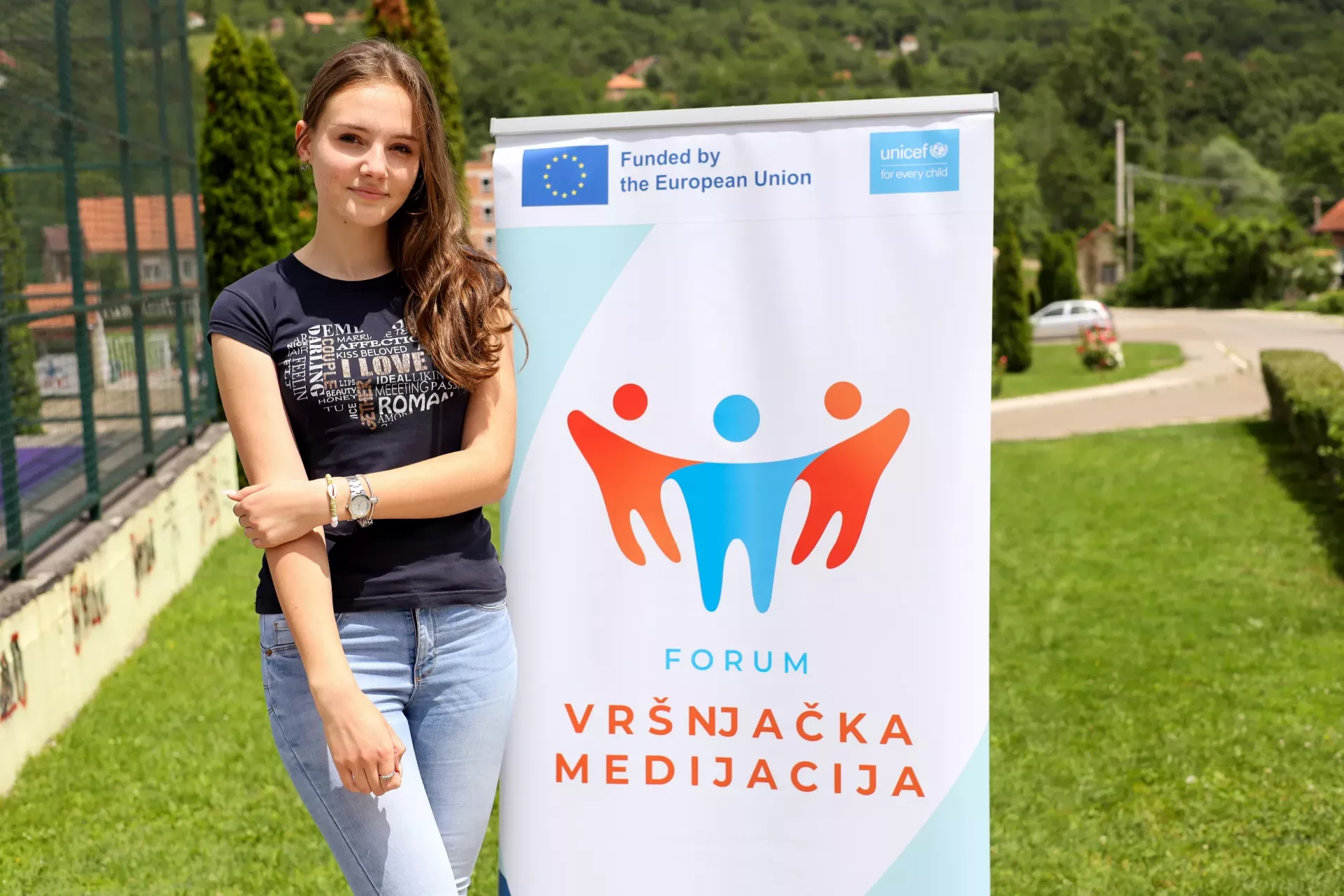
In the northern municipalities of Kosovo, something remarkable is happening. Teams of young mediators are stepping up to resolve conflicts and create safer, more supportive learning environments. These students, trained in peer mediation, are not only helping their peers find peaceful solutions to disagreements but are also developing valuable skills that shape their personalities and futures.
Petra, a 16-year-old student at the "Grigorije Božović" high school in Zubin Potok, is one of these mediators. Reflecting on her experience, she shares, "I was part of the initial training to learn how to help in peer mediation. The training focused on preventing violence and peacefully resolving conflicts—both topics really interested me." Petra has been a part of the mediator team for about a year now and takes pride in her role.
"I feel very happy that I can help keep myself and my peers safe so that small problems can be solved, and learning can continue as it should."
For Petra, being part of the mediator team has been about more than just conflict resolution—it’s been about growing as a person. "We are at an age when, normally, there are problems at school. They can be simple, but there's always a bigger danger. My school is safer and healthier today because of the team of mediators," she says.
Globally, half of students aged 13–15 – some 150 million – report experiencing peer-to-peer violence in and around school. Slightly more than 1 in 3 students between the ages of 13 and 15 experience bullying, and about the same proportion are involved in physical fights.
In Kosovo, interventions targeting school violence and bullying in are limited and evidence-based approaches are lacking as they are not considered a priority by policymakers, school managers and teachers. Schools also lack school psychologists who could promote the implementation of anti-school violence and bullying preventions programmes.

Lav, a 13-year-old student at "Sveti Sava" elementary school in Mitrovica, is also a mediator. For him, the role is not only important but also a source of pride. "The good thing is that my best friends are part of the team too, so we share the responsibility. Everyone at school knows I’m part of the team, and it’s helped me develop my personality and how others see me," Lav explains. In seventh grade, Lav is at a delicate age when small disagreements can easily escalate into bigger issues. But thanks to the mediation team, many potential conflicts are resolved before they can spiral out of control.
"We’re very attentive to everything that happens at school. I believe many situations are avoided just because we are here," says Lav, a boy with big dreams, who loves movies and basketball.
“The goal of the “Peer mediation programme” is to help students to become more skilled at resolving conflicts by developing small-group leadership and providing support and mentoring to their peers. This programme fosters student collaboration, increases awareness of the need to address rather than avoid current issues, and gives students a direct voice in prevention of violence in school,” said Tamara Slavković, Early Childhood Development Officer from UNICEF Kosovo.

The Peer Mediation Project, funded by the European Union in Kosovo in partnership with UNICEF and implemented by the NGO “Domovik", has engaged a total of 96 students as mediators across seven schools in northern Kosovo. The project has already shown impressive results, with the most active participants becoming educators who pass their knowledge on to younger generations.
Marina Jakovljević, who leads peer mediation workshops, describes how these workshops equip students with essential life skills. Held annually, the workshops cover topics like non-violent communication, emotional intelligence, and active listening. "The most common forms of peer violence are online bullying, exclusion from peer groups, and spreading rumors," Marina explains. "For boys, physical violence is more common. That’s why we saw the need to train mediators who could help prevent violence by working with their peers and school staff."
Marina further mentioned an interesting technique that uses animal imagery to reflect students' personalities and behaviors. "For example, a dolphin represents someone who is enthusiastic and creative," she explains. "This method not only makes the process more engaging but also encourages students to reflect on their actions. They begin to recognize how they may have discriminated against or acted violently toward others and learn to stop these behaviors within themselves first, and then toward their peers.
The mediators are making a real difference, not only in resolving conflicts but also in fostering a culture of understanding and respect among students. Before the introduction of peer mediation, conflicts were usually escalated to teachers or school administrators. Now, students can address issues among themselves in a safe, supportive environment, thanks to the efforts of these young mediators.
Parents have also noticed the positive impact of the mediation teams. Simona Božović, a mother whose daughter participated in the program, recalls how the experience transformed her child. "During the period when my daughter was a mediator, she was 14 years old. She met so many peers and learned to understand and empathize with others. The program gave her confidence, especially in public speaking. It was wonderful to see her grow," says Simona.
Similarly, Svetlana Baldini speaks warmly about the changes she saw in her daughter after joining the mediation team. "She realized how important communication is in preventing conflicts, not just at school, but in life. She learned that by listening to others and understanding their feelings, many problems can be avoided," Svetlana shares.
As Petra, Lav, and their fellow mediators continue their work, they are setting an example for their peers and future generations. Their efforts are not only preventing violence but also building a more compassionate and connected school community. With support from parents, teachers, and organizations, these young mediators are proving that even the smallest actions can create lasting change.
