From Surviving to Thriving: How Gurhan Is Building a Future in Dadaab
Supporting young people in developing their skills

In Kenya’s largest refugee settlement, life is becoming more difficult. Funding cuts have forced families to cope with less food and water and fewer services. At the same time, extreme weather - long droughts followed by heavy floods - puts even more strain on limited resources.
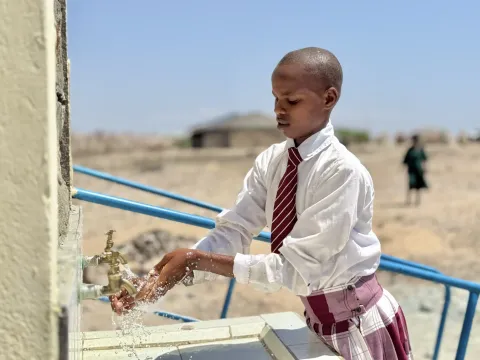
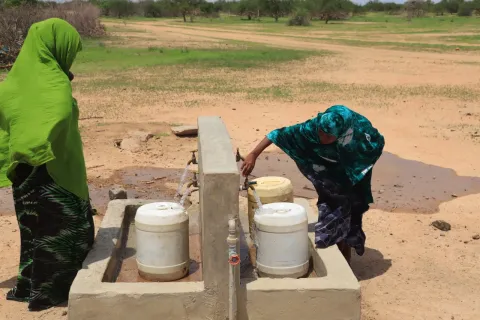
Today, refugees in Dadaab are receiving less than half the minimum amount of water needed per day. With fuel shortages affecting boreholes, water is pumped for fewer hours, leaving families with as little as 8.5 litres per person a day, far below the recommended 15–20 litres.
For young people like Gurhan Mohamud Aden, this reality has changed everything.
A future on hold
Gurhan, 21, lives in Ifo camp with his younger siblings after fleeing conflict in Somalia. After finishing high school, his hopes of continuing his education slipped away.
“I had dreams of pursuing further education, but no opportunity,” Gurhan says. “I was held back because there was no money and I had other responsibilities.”
Like all young people in Dadaab, Gurhan lives in a place where families can no longer depend fully on aid. With food rations reduced and basic services under pressure, people must find their own ways to survive. “I watched my hopes fade as I struggled to find direction.”
Learning skills that matter
Gurhan’s turning point came when he joined a skills training course at the Dadaab Technical and Vocational Education and Training (TVET) centre. The training is part of the PROSPECTS programme, a multi-year initiative supported by the Government of the Netherlands. Working with partners including UNICEF, World Vision and the Government of Kenya, the programme focuses on helping refugees and host communities build practical skills, find work, and become more self-reliant.
Over six months, Gurhan learned plumbing and basic construction - how to install and repair pipes, fix leaks, improve sanitation systems, and help keep water flowing in his community. These are not just skills. In Dadaab today, they are essential services.
From training to income
Even before completing the course, Gurhan began taking on small jobs. A talented plumber, he now earns between KES 3,000 and 8,000 a month (up to $60 USD) - money that helps him support his siblings and meet daily needs. In a context where families are increasingly responsible for their own survival, these opportunities are critical.
“This training changed my life,” he says. “I can now support my siblings, make sure we have enough, and even help my neighbours fix their plumbing problems”.

A changing reality in Dadaab
Dadaab is home to more than 400,000 refugees, making it one of the largest refugee settlements in the world. As resources shrink, the need for long-term solutions is growing.
Programmes like PROSPECTS, which started in 2018, are helping young people prepare for a new reality - one where skills, not aid alone, sustain livelihoods. The programme focuses not only on training, but also on education, child protection, and infrastructure, helping communities become stronger and more resilient over time.
Opening new opportunities
Kenya’s Shirika Plan is also creating new possibilities. By encouraging refugees and host communities to live and work together, it opens access to wider markets. This means young people like Gurhan can offer their services beyond the camp, reaching both refugee and local populations. For someone with practical, in-demand skills, this can make all the difference.
“There is always a need for plumbing. Water and sanitation are important everywhere,” says UNICEF WASH Officer Yelin Heo.
Building hope in uncertain times
Gurhan is one of over 100 young people gaining skills through the programme. Many graduates are already putting their skills to use - some have secured work with humanitarian agencies or within their communities, while others are gaining experience through placements with water and sanitation utility companies, helping them build confidence in real work settings. These efforts are helping young people move towards earning their own income, while also improving essential services like water and sanitation in their communities.
For Gurhan, the future looks different now. “My dream is to become a professional plumber and start my own business,” he says. “I want to be self-reliant and serve my community”.
More than a job
In a place where uncertainty is growing, Gurhan’s story is a reminder that investing in young people works. With the right skills and opportunities, they are not just surviving difficult conditions - they are building solutions, strengthening their communities, and creating hope for the future. Gurhan’s journey shows how young people can move from relying on aid to building stable, self-reliant lives.
“I’m not just surviving anymore” Gurhan says, “I’m building a future.”