How a kitchen garden saved and brought Evalin back to her family
In a village outside Maralal, a young mother's first harvest of kales marked the end of one life and the beginning of another
A few months ago, if you had asked Evalin Namuli what was for dinner, the answer was almost always the same: tea and mandazi (fried bread).
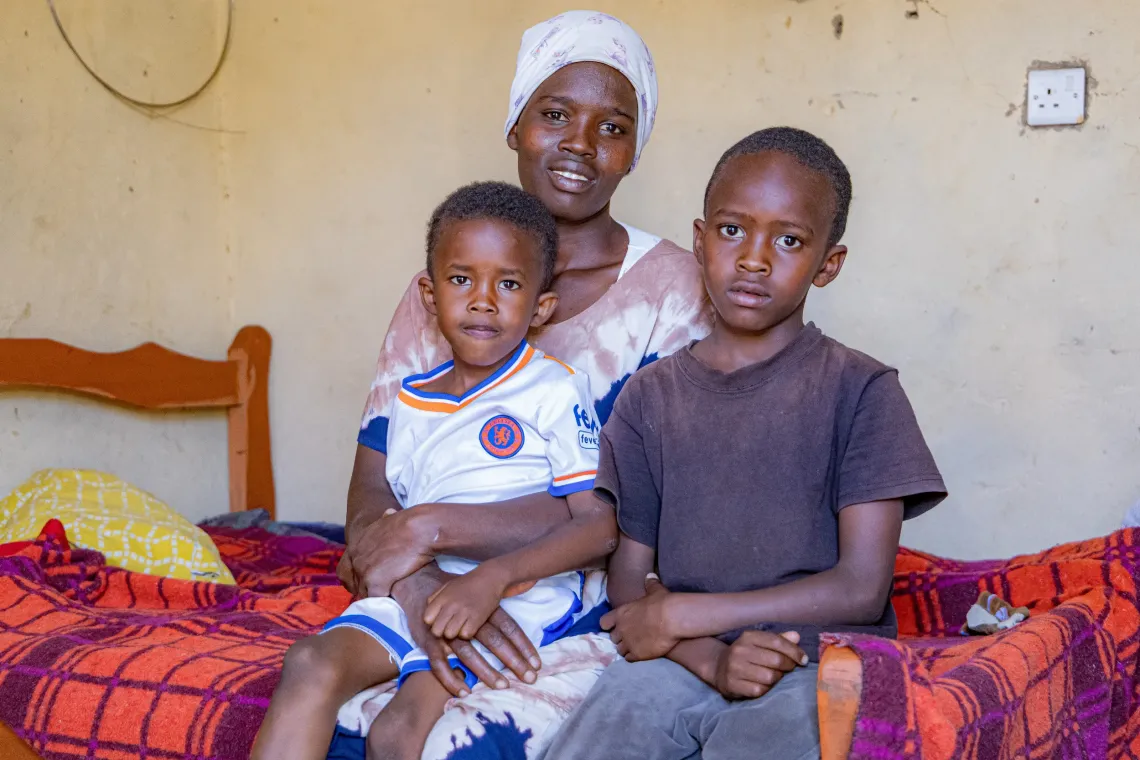
"I used to come home drunk, so the easiest meal to serve my family was to make tea and buy mandazi," the 25-year-old mother of two recalls. On a good day, there might be rice or potatoes — whatever was quick, whatever was easy. Vegetables rarely featured. Protein almost never.
Her younger son, Liam, five, was paying the price. He was weak. His weight was falling. His skin had begun to wrinkle like an old man's — a telltale sign of malnutrition. But Evalin never took him to the health centre.
"Because of shame," she admits quietly. "I used to hide the children. They were not receiving the help that they needed."
She was not eating well herself. The drinking, which had started at 18 — when she fell pregnant, dropped out of school two years short of finishing, and found herself in a marriage strained almost to breaking — had come to consume her days, her money and her health.
"There was a time I was about to lose my life, my baby, and my family," she says.
A neighbour who wouldn't give up
Magdalene had known Evalin for 17 years — long enough to see what was happening, and long enough to refuse to look away.
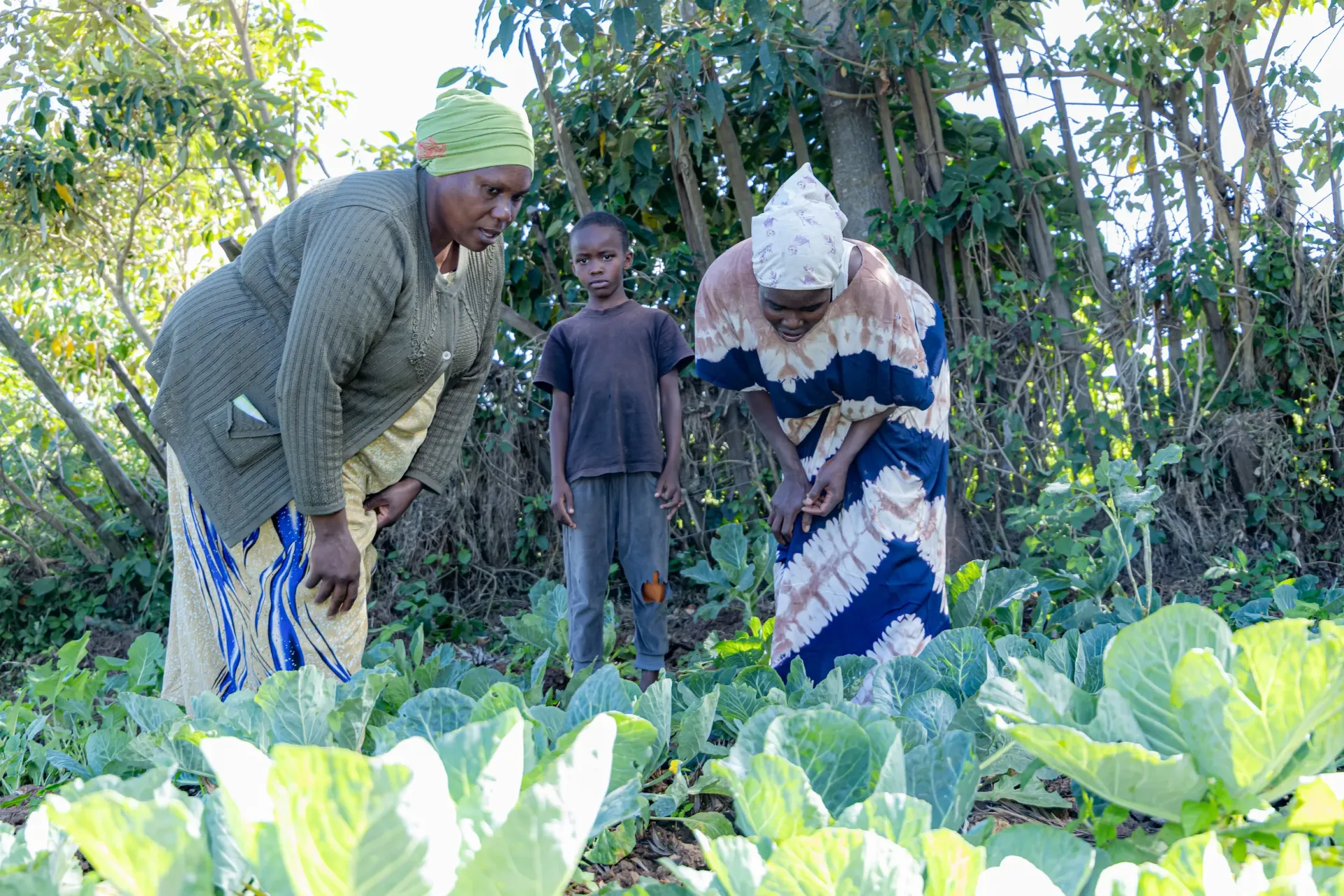
A farmer trained through the Engaging Kenyan Youth in Agriculture and Nutrition (EKYAN) programme, Magdalene has been actively inviting neighbours and friends to start small backyard gardens to plant green, leafy vegetables.
Magdalene saw in Evalin a young mother who couldn't find decent work, had no money, and had a child slipping into malnutrition. So she made Evalin an offer: come and learn to plant vegetables.
"I told her, plant greens with us. You have no money now, but per day, you could earn 100 or 200 shillings. In three months, the crop will start giving you food you can sell."
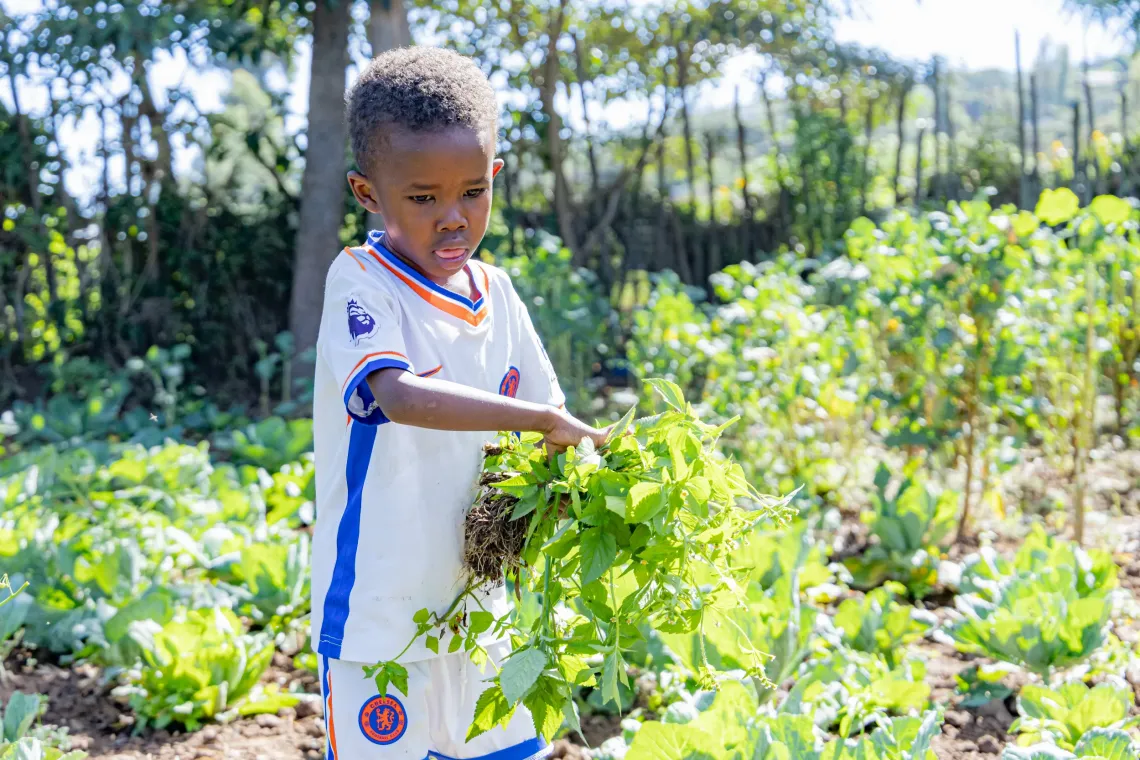
Evalin was hesitant. The work looked hard — the digging, the spacing, the watering twice a day, and the weeding. It took Magdalene a month of gentle persistence to convince her. But eventually, Evalin joined a week of training and put her first seedlings — managu and terere, supplemented by kale seedlings she raised herself in a nursery — into the soil.
The first harvest
When Evalin sold her first harvest of kales — 25 shillings a kilo, 400 shillings in total — something shifted.
"It gave me morale to continue farming," she says, smiling.
Today, three months in, her small rented shamba (farm) supplies two regular customers who come every day, earning her around 600 shillings daily. She has learned to manage the money carefully: first, reinvesting in the farm; second, saving 400 shillings every Friday through a village savings group she joined with Magdalene; and only then spent on the family. When we met, Evalin’s savings stood at around KSH5,000 ($40), the first she has ever accumulated. From her farm earnings, she has also bought a few chickens, which provide the family with eggs and meat.
The family menu has been transformed. "The children like ugali (cornmeal), so one day it's ugali and sukuma wiki (kale), the next day ugali and spinach, another day managu and terere (African leafy green vegetables)," she explains. "Even if I prepare rice, I make sure there are greens on the side. I also boil or fry eggs and the boys like it. Once in a while, I also prepare chicken, which we all enjoy.”
The results are visible. When community health promoters — volunteers trained with UNICEF support to conduct household visits — weighed Liam recently, he had gained two kilograms. The weakness is fading. The little boy who once hid indoors now runs, plays and smiles.
A family restored
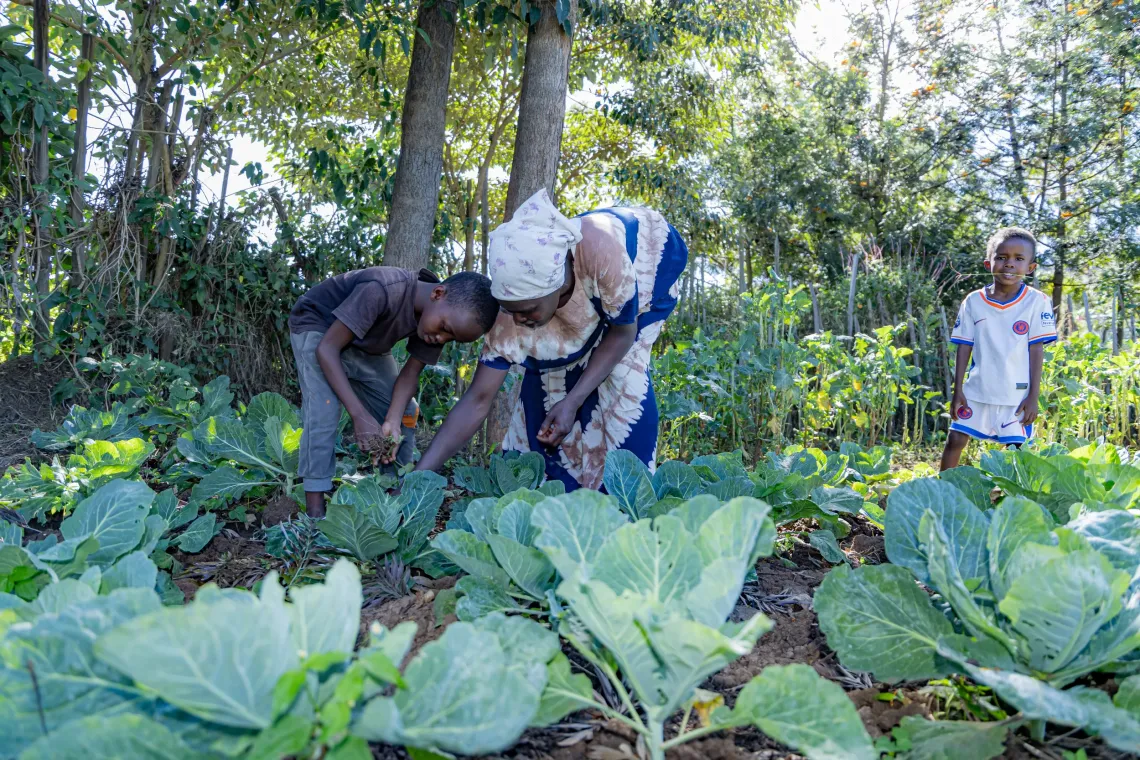
The change has rippled far beyond the dinner table. Farming filled Evalin's days and pulled her away from the friends who used to draw her into drinking. Three months on, she has stopped entirely — and so has her husband, Gabriel, 28, a construction worker.
"A woman is a role model," Evalin says. "When I stopped drinking, my husband followed and stopped as well."
The farm has become a joint venture. When Evalin finds casual work elsewhere, Gabriel tends the crops and serves the customers; when the farm needs reinvestment, he contributes from his wages. The quarrels and fights that once threatened to tear the family apart have given way to something Evalin describes simply: "We are more peaceful than before. Our money is not going to waste like it used to."
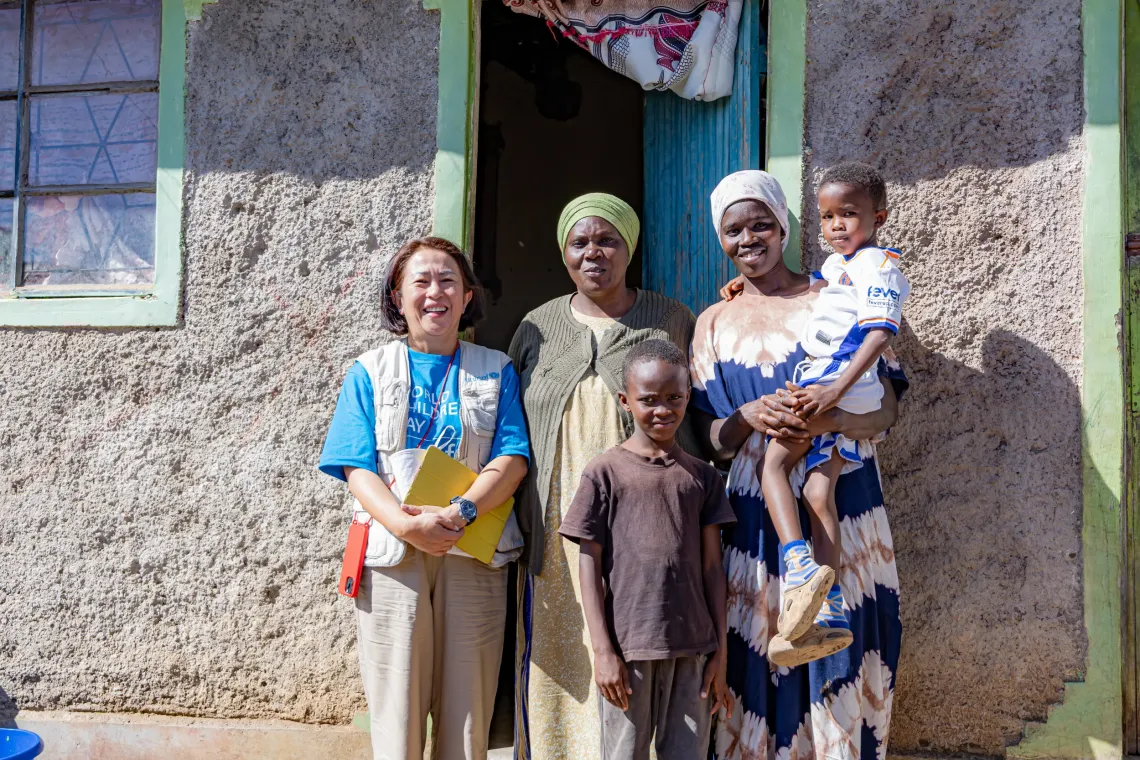
Her influence is spreading. Her mother, inspired by her daughter's success, has started her own farm, growing vegetables and raising avocado and mango seedlings to sell. The friends Evalin left behind in her drinking days now hear from her regularly — she visits, advises, and invites them to train and try farming for themselves.
“Cross over to this side"
Evalin and Gabriel are already planning their next chapter: moving the farm to a larger piece of land, six kilometres away, given to them by Gabriel's father — a place where they can plant and grow more vegetables to sell, build a home, and put down roots.
Her greatest hope is for her boys, Nelan, seven, and Liam. "I want to work hard for my children so they can have a good life and a good education," she says.
And to Magdalene, the neighbour who refused to give up on her, she has a simple message: "I want to thank her so much. I was about to lose my life, my baby and my family — and she brought us back together."
Asked what she would say to the Evalin of three months ago, she doesn't hesitate.
"I would tell her to leave that life. It was destroying her. Cross over to this side — and join the new Evalin."
######
ABOUT EKYAN
Engaging Kenyan Youth in Agriculture and Nutrition (EKYAN) is a Generation Unlimited and UNICEF Kenya programme that equips young people, especially women, with skills, digital tools, and hands-on learning opportunities to build livelihoods and businesses in agribusiness.
Supported by the Governments of Kenya, the Netherlands and Canada, and implemented with Kuza Biashara and SNV, EKYAN works alongside the World Bank, Kenya's county governments, and private-sector partners, including FMC Corporation, to help young agripreneurs build viable enterprises, support farmers through climate-smart agriculture, and promote food systems and nutrition.
By strengthening skills, entrepreneurship, and private-sector linkages, EKYAN contributes to improved livelihoods, resilient food systems, and better nutrition outcomes across Kenya.