Climate-Resilient Water Bringing Children Back to School in Kenya’s Arid Region
A solar-powered water system transforming the daily lives of children and communities

"Now I have more time to read my books and prepare for class," says 14-year-old Asha Kapua Kenyatta from Aterika Primary and Junior Secondary School in Turkana County.
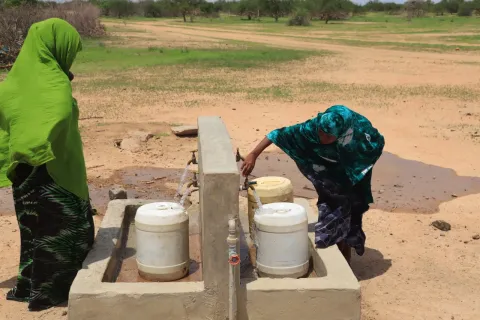
Aterika village is located in Nakalele Ward, Turkana North Sub-County, in Kenya's arid north, where communities have long struggled with water shortages. Until recently, fetching water was part of every child's daily routine.
Before school each morning, Asha walked long distances to collect water for her family and school.
"Getting to school on time was difficult," she recalls. "There was no water at home or at school, so each morning we fetched water from a hand pump or seasonal river. The walk was long, and we often had to wait in line. Most days, I arrived late for school."
For many children in the community, missing the first lessons had become routine. After fetching water early in the morning, they returned home, got ready for school, and often arrived after the first two lessons had already begun.
Today, school days in Aterika are different.
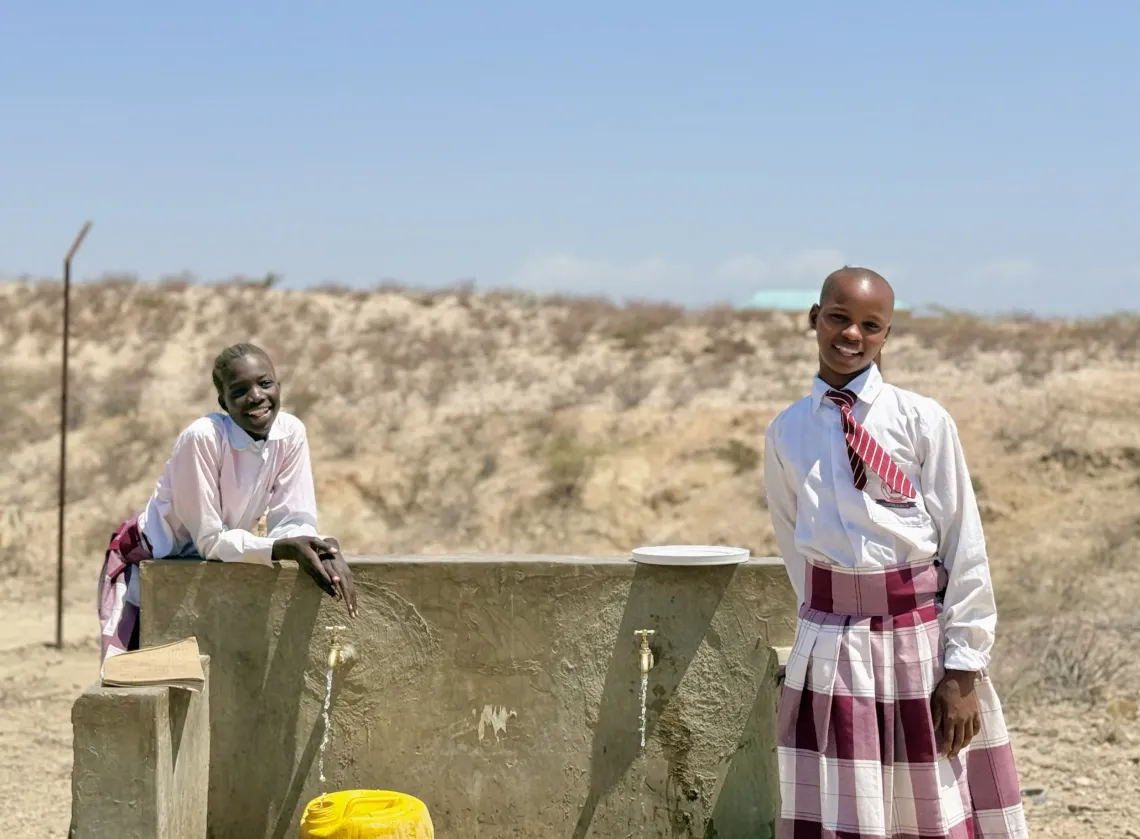
Through the partnership between UNICEF, the Korea International Cooperation Agency (KOICA), the County Government of Turkana and the Diocese of Lodwar, a non-functional hand borehole was rehabilitated and upgraded with a solar-powered pumping system. Two communal water points and one livestock watering trough were installed, with a 24,000L steel elevated water storage tank, providing safe drinking water for more than 2,700 people in the community.
The new water system also supplies safe water directly to Aterika Primary and Junior Secondary School and early childhood development and education (ECDE) center, allowing children and teachers to access water throughout the school day.
"Now I only need to carry my books and firewood," Asha says with a smile.
Without the daily burden of carrying heavy jerrycans, children can focus on what matters most, learning.
Teachers have already seen the impact.
"Since water became available at the school, enrolment, attendance and academic performance have all improved," says Robert W. Masinde, a head teacher of Aterika Primary and Junior School. “Enrolment has grown from 120 learners in 2024 to 262 in 2026.”

Access to water has also transformed hygiene at the school.
"Before, we could not wash our hands because there was no water. We became sick with diarrhea. But now, we wash our hands after using the toilet, and we can even take a shower at school," says Asha.
Access to water has strengthened health and student-led environmental activities across the school.
"Children now wash their hands regularly, and we have seen fewer diseases." explains Robert. "Our school health club also cleans the school and toilets, plants trees and manages a small kitchen garden. The vegetables are used for school meals, teach children agricultural skills, and any surplus can be sold to support school activities."
Reliable water has also made a big difference for girls.
"Because there is water in the toilets and changing rooms, girls feel much more comfortable staying at school during their menstrual periods," says Robert.
For Asha and her classmates, safe water has brought better health, greater dignity and more opportunities to learn.
Community ownership for long-term sustainability
Behind this transformation is not only a new water system, but also a community committed to keeping it running for generations to come.
To ensure the water system continues to serve the community, members established the Aterika Water Users Association (WUA). 15 members (4 women and 11 men) were elected to the committee after receiving management, operation and maintenance training from the Diocese of Lodwar.
Benjamin Elim, the Chairperson of the Aterika WUA, remembers what life was like before.
"When we relied on the handpump, people sometimes had to wait up to three days for water. Long queues often led to arguments and conflict. But today, everyone can access enough water whenever they need it."
The committee is responsible for operating and maintaining the borehole and water points, keeping the facilities clean and secure, and ensuring inclusive access to water for everyone in the community.
To strengthen long-term sustainability, the committee has subscribed to Diocese of Lodwar’s insurance model. The community contributes KES 18,000 per year, allowing technicians from Diocese of Lodwar to repair major breakdowns whenever they occur.
"Every afternoon at around 1 p.m., we open the valves," Benjamin explains. "Households pay 5 Kenyan shillings for a 20-litre jerrycan of water. Livestock owners pay 150 Kenyan shillings monthly separately for using the animal trough. The money is managed by our treasurer. We keep it in our bank account, use it to repair minor problems ourselves, and for major repairs we call Diocese of Lodwar."
By putting communities at the centre of managing their own water systems, the project is helping ensure that safe water continues to flow long after rehabilitation is complete, creating new opportunities for families to thrive.

Water creating new opportunities for family
Reliable access to water has transformed everyday life of Amus Napas Ewoton, a mother of five in Aterika.
"In the past, life was very difficult because there was no water," she recalls. "Sometimes we even went to bed without water. We spent many hours searching for it, and people often argued or fought while waiting at the water source. Those who were weaker often returned home with nothing. But now, we collect water from the nearby community water tank. The water is clean, there is enough for everyone, and we no longer have conflicts over water."
With safe water available close to home, Amus spends far less time searching for water and more time caring for her family.
"We use the water for cooking, washing clothes and dishes, cleaning, small farming, for livestock and many other household activities. It has made our daily life much easier."
Reliable access to water has also created new economic opportunities, enabling families to use water for small-scale farming and other productive activities.
"I started farming earlier this year," Benjamin says. "With the water from the borehole, I grow watermelons, tomatoes, spinach and kunde (cowpeas). My family now has fresh food to eat, and I also sell extra produce to earn additional income."
For Amus and Benjamin, access to safe water means more than convenience. It reduces the hardship during droughts, when water becomes scarce, strengthens household resilience, and creates new livelihoods opportunities.

More water, more resilient future for Turkana
The SCORE II project (Strengthening County-Resilience against WASH-related Climate Crisis in Turkana, Phase II) is a USD 7.8 million initiative funded by KOICA and implemented by UNICEF in partnership with the County Government of Turkana from late 2024 to 2027. Building on the success of SCORE I, the second phase of the project will provide climate-resilient water, sanitation and hygiene services to more than 139,500 people across five Sub-Counties: Turkana Central, Loima, Lokiriama, Kibish and Turkana North.
Including Aterika water supply system, SCORE II will rehabilitate/upgrade 38 non-functional water supply systems and construct three new multi-village water supply systems, bringing safe water closer to homes, schools and health facilities. Beyond infrastructure, the project is strengthening community-led water management and sustainable maintenance models so that communities can continue to benefit from reliable water services long into the future.
For children like Asha, access to water means getting to school on time with no heavy jerrycans and having more time to learn.
For community leaders like Benjamin, it means building a stronger, more responsible community and a more resilient future.
For mothers like Amus, it brings greater confidence and new opportunities for their families.
The Aterika water supply system is transforming people’s lives and laying the foundation for a healthier, more resilient community. UNICEF Kenya will continue supporting communities in the driest areas to build a future where every child and family has access to safe, climate-resilient water solutions.