UNICEF and Kazakhstan Strengthen Cooperation on AI and Child-Focused Digital Transformation
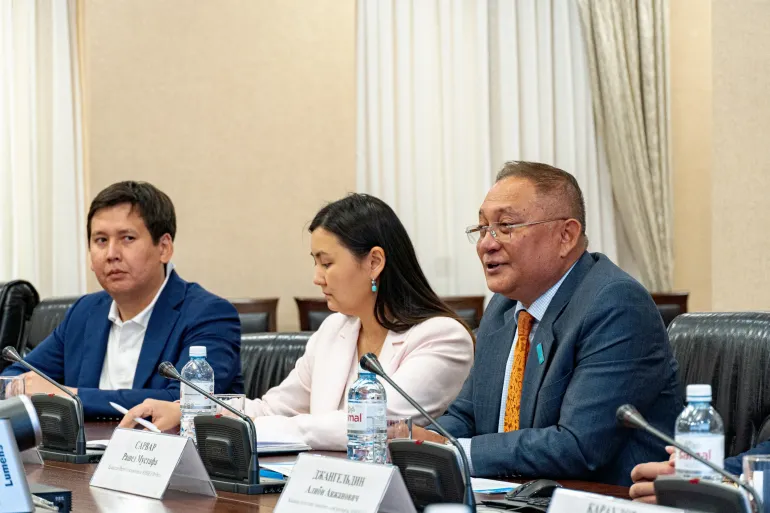
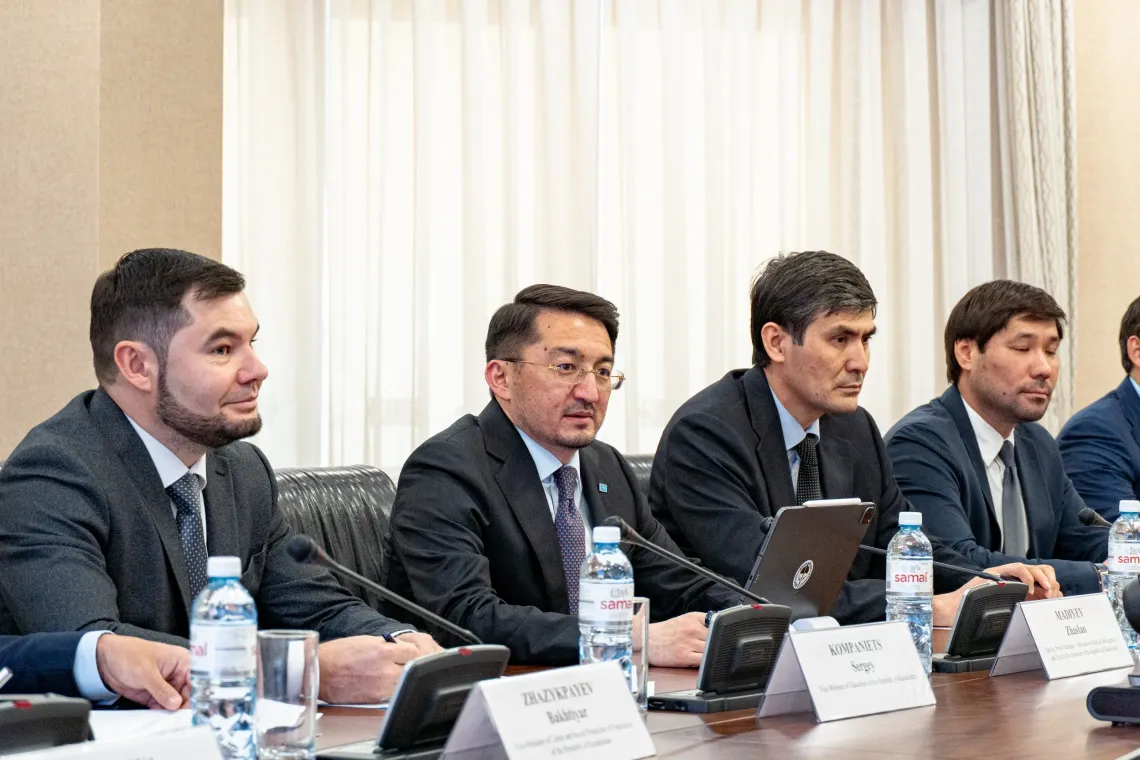
ASTANA, Kazakhstan –Today, Dr. Rashed Mustafa Sarwar, UNICEF Representative in Kazakhstan, met with Jaslan Madiyev, Deputy Prime Minister and Minister of Artificial Intelligence and Digital Development, in Astana during a high-level working meeting attended by senior officials from key government ministries.
Participants discussed joint priorities in artificial intelligence and digital transformation, focusing on improving child wellbeing and expanding opportunities for the younger generation. They highlighted the partnership’s contextual importance as the Government declared this the ‘Year of Digitalisation and Artificial Intelligence’.
During the dialogue, UNICEF recognised the strong progress Kazakhstan has made in advancing innovation reforms. These reforms include modernising public services, strengthening ethical standards for artificial intelligence, and improving data protection systems. Both sides reaffirmed that their long-term partnership aims to build a safe, ethical, and inclusive digital environment that expands children’s access to education and social opportunities.
Minister Madiyev stated:
“Following the Head of State’s instructions on large-scale digitalisation, we understand clearly that technology must develop in line with human values and must first and foremost ensure safety, especially for children. Our strategic partnership with UNICEF allows us to integrate global best practices and ethical standards into national IT projects. We aim to ensure that every digital service and AI-powered solution in Kazakhstan is not only advanced but also serves as a strong foundation for protecting children’s rights and unlocking their potential.”
Dr. Sarwar stated:
“Digital technologies and artificial intelligence open new opportunities for children’s learning, development, and social participation. At the same time, we must ensure that these technologies remain safe, inclusive, and focused on protecting children’s rights. UNICEF welcomes Kazakhstan’s leadership in digital innovation and remains committed to supporting the Government in developing solutions that reduce inequality, improve social services, and create conditions where every child can realise his or her potential in the digital age.”
Both sides confirmed that the Ministry of Artificial Intelligence and Digital Development, UNICEF, and relevant government agencies have already implemented a joint working plan in this area. They apply AI-based data analytics to improve social assistance targeting for vulnerable families, drawing on findings from pilot studies.
The partners plan to hold a foresight session during ‘AI Week’ in Astana to assess the impact of national AI strategies on children. UNICEF will also take part in the ‘AI & Digital Bridge 2026 International Forum’, to promote principles of responsible artificial intelligence.
In addition, the partners will launch a pilot project in Astana and the Mangystau region. The project will integrate a composite socio-economic development index into the ‘Digital Family Map’ system to improve local-level child wellbeing monitoring.
UNICEF and the Ministry of Artificial Intelligence and Digital Development reaffirmed their commitment to building a child-centred digital ecosystem that ensures safety, inclusion, and equal opportunity for every child in the digital space.
Media contacts
About UNICEF
UNICEF, the United Nations agency for children, works to protect the rights of every child, everywhere, especially the most disadvantaged children and in the toughest places to reach. Across more than 190 countries and territories,
we do whatever it takes to help children survive, thrive, and fulfil their potential.
For more information, visit www.unicef.org.