Kazakhstan Strengthens Child Health Leadership With Support From WHO and UNICEF
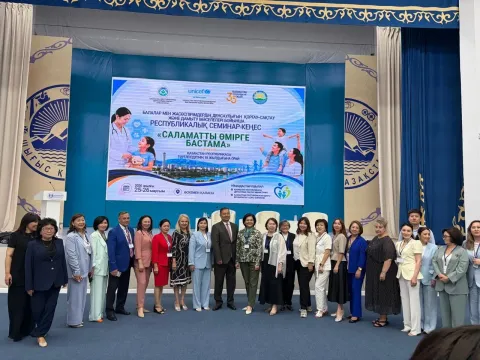
Today, UNICEF and WHO held a high-level international conference titled ‘Health and Well-being of Every Child: Modern Strategies for Child Health Protection’ in Astana.
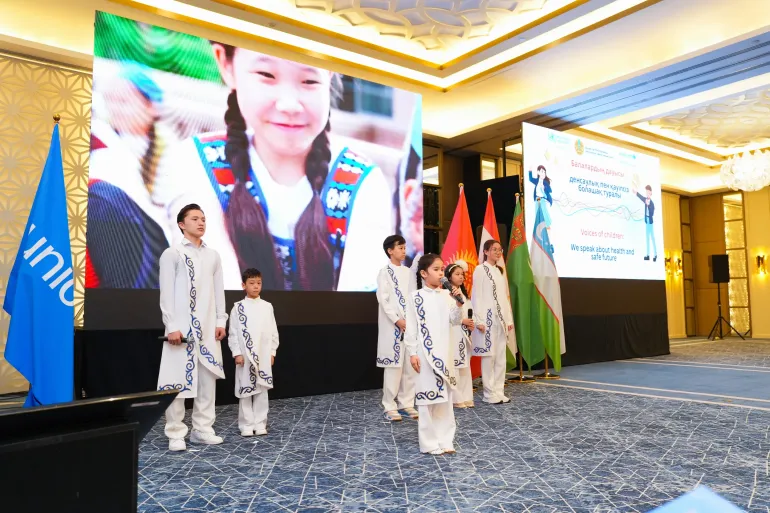
The conference brought together the Director-General of the World Health Organization, Tedros Adhanom Ghebreyesus; WHO Regional Director for Europe, Hans Kluge; and the Acting Regional Director of UNICEF for Europe and Central Asia, Octavian Bivol.
The Minister of Health of Kazakhstan, Akmaral Alnazarova, also attended the forum, as well as the heads of relevant government agencies from countries across Central Asia.
Participants highlighted the importance of the unified ‘Children of Kazakhstan Concept for 2026–2030’, aimed at consolidating state efforts in the areas of child health, safety, education, and well-being.
Since gaining its independence, Kazakhstan has achieved significant progress in maternal and child health. Maternal mortality has fallen sixfold, while infant mortality has been reduced by nearly 87 per cent . Additionally, life expectancy has reached 75.97 years.
Kazakhstan is demonstrating steady progress towards achieving the Sustainable Development Goals, with an overall index score of 71.5. In maternal and child health indicators, the country ranks among the regional leaders.

Children’s health remains a state policy priority and is being closely monitored by the Head of State. In recent years, Kazakhstan has modernised its primary healthcare system, opening 366 paediatric departments and more than 370 development and early intervention center's, where over 72,000 children have already received support.
Octavian Bivol highlighted the importance of cross-sector collaboration:
“We want every child to grow up healthy and feel supported. This is possible when health systems, families and partners work together and help one another respond to modern challenges.”
These measures have delivered concrete results: developmental disorder detection increased by 21.5 per cent, child mortality at home declined by 22 per cent, late hospitalisation fell by 5 per cent, prenatal screening coverage increased by 8 per cent, foetal anomaly detection rose by 13 per cent, infant mortality from congenital defects decreased by 15 per cent, and primary disability rates fell by 7.5 per cent.
The child health system of Kazakhstan is also undergoing large-scale modernisation of inpatient care. Paediatric hospital bed capacity has increased by 38 per cent (including a 20 per cent rise in neonatal surgery capacity). Further, the survival rate of children with congenital defects has reached 86 per cent.

Kazakh paediatric hospitals perform around 2,000 open-heart surgeries annually. Introducing 19 innovative technologies has also halved the number of children referred abroad for treatment.
Forum participants particularly emphasised the need for an integrated approach to ensure the health and well-being of children and adolescents by bringing together the health, education, social protection, and other sectors.
The conference’s key outcome was adopting the ‘Astana Call to Action’, reaffirming the political commitment of Kazakhstan and surrounding countries to implement the WHO and UNICEF strategy ‘Healthy Beginnings for a Healthy Future for 2026–2030’.
The document outlines a series of coordinated measures for improving child well-being, including strengthening primary healthcare, reducing inequalities, supporting parents, protecting children from harmful influences, and expanding children’s participation in decision-making.

During the conference, leading international experts presented on major themes including early childhood systems development, primary healthcare, reducing inequalities, and creating safe and supportive environments in mental health, school, and digital settings to encourage child participation.
The conference marked an important step in strengthening the role of health systems in promoting children’s health and well-being while signalling a new level of regional cooperation.
Adopting the ‘Astana Call to Action’ while implementing the ‘Children of Kazakhstan Concept’ confirms the region’s strong political commitment to ensuring the health and well-being of every child.
Media contacts
About UNICEF
UNICEF, the United Nations agency for children, works to protect the rights of every child, everywhere, especially the most disadvantaged children and in the toughest places to reach. Across more than 190 countries and territories, we do whatever it takes to help children survive, thrive, and fulfil their potential.
For more information, visit www.unicef.org.