Kazakhstan reviews progress on protecting children from online violence and exploitation
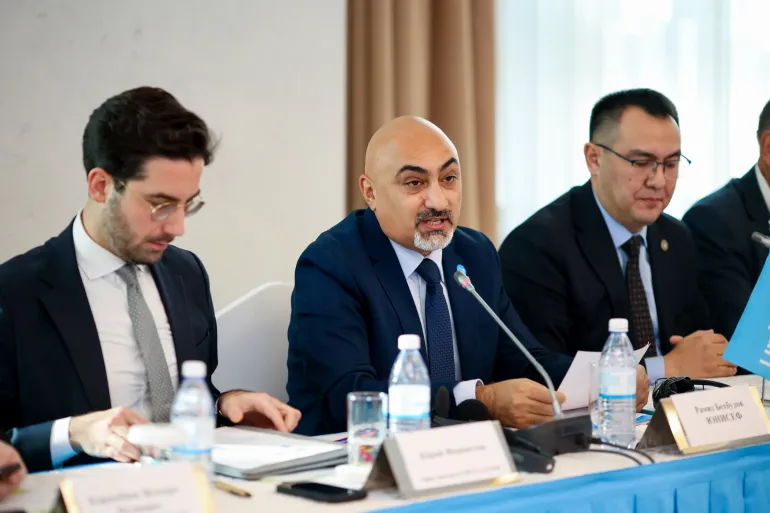
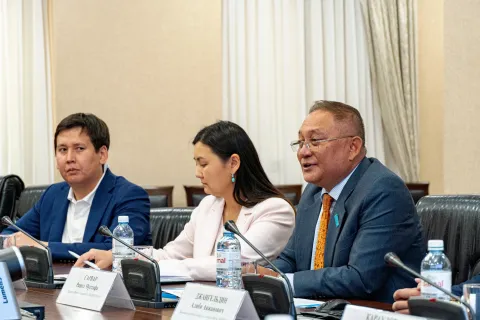
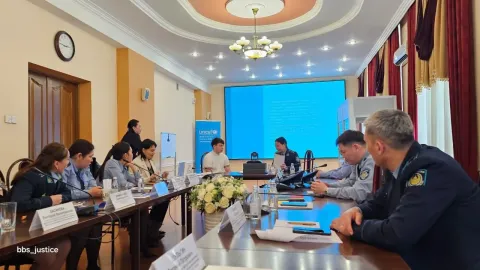
Astana, 14 November 2025 — Members of Parliament, Government bodies, international organizations, private sector and child protection experts met in Astana today to review progress under the national programme “Protecting Children from Online Violence, Abuse and Exploitation in Kazakhstan”, funded by the Safe Online Global Fund.
The initiative, launched in 2024, aims to build a safer digital environment for every child by strengthening national legislation, boosting capacities of specialists, and expanding preventive education across schools and communities. The Steering committee meeting was co-organized by the Ministry of Internal Affairs, the Committee for the Protection of Children’s Rights of the Ministry of Education, the Committee on Youth and Family Affairs of the Ministry of Culture and Information and UNICEF in Kazakhstan.
As part of the meeting, the OSCE Programme Office in Astana presented the results of the Competency Assessment on combating cybercrime, based on the Europol framework, to help developing national strategy for strengthening law enforcement capacity to investigate online offences including those committed against children.
Opening the session, representatives of the Parliament and the Government reaffirmed Kazakhstan’s commitment to tackling online threats to children and to ensuring that national policies reflect international standards. Chairperson of the Committee on Social and Cultural development and Science of the Senate of the Parliament of the Republic of Kazakhstan, Zhussip Nurtore, emphasized the importance of continuing cooperation to strengthen child protection in the digital environment, noting that “Protecting children in the digital space is a strategic priority for the state. New technologies bring not only opportunities but also risks, and therefore our common task is to stay ahead of emerging challenges, strengthen legislation, and foster a culture of digital responsibility.” Recent legislative reforms have strengthened accountability for online abuse: in 2024 alone, 38 cases of sexual harassment of children via telecommunication networks were registered under the new national law, highlighting relevance of the issue and the need for expanding preventive and response mechanisms.
UNICEF presented the latest updates under the joint programme, emphasizing efforts to build institutional capacity to identify, prevent, and respond to online exploitation and abuse. Since the Committee’s first meeting in February, the programme has moved from planning to action, taking concrete steps to strengthen specialist training, advance digital forensics expertise, enhance inter-agency coordination, develop child-friendly services, and raise awareness on safe online practices among children, parents, educators, and media.
Speaking at the event, Mr. Ramiz Behbudov, UNICEF Acting Deputy Representative in Kazakhstan, emphasized that children’s online safety is becoming an increasingly important area of joint work and requires constant attention, innovative approaches, and coordination among all partners. He noted that Kazakhstan has already made tangible progress, including strengthened legislation, enhanced inter-agency cooperation, and new initiatives to build the capacity of specialists and raise public awareness.
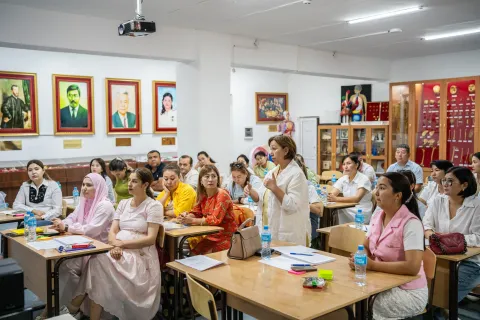
During the meeting, the Committee for the Protection of Children’s Rights presented ongoing efforts to integrate online safety into school-based personal safety and parenting programs. The Centre for Analysis and Information of the Ministry of Culture and Information highlighted key issues and trends in detection and removal of harmful content. The Ministry of Internal Affairs shared progress on enhancing the investigative capacity of law enforcement, including training programmes at the Karaganda Academy aligned with international standards.
Kazakhstan’s national programme on online safety is part of a broader effort to strengthen child protection systems and align national mechanisms with global standards. By connecting government agencies, academia, law enforcement, private sector and civil society, the initiative aims to ensure that children can benefit from the digital world without facing harm.
At the close of the meeting, participants agreed to continue joint efforts to combat online violence and underscored that protecting children in the digital environment is now an essential part of protecting them everywhere — at home, in school, and in society.
Media contacts
About UNICEF
UNICEF, the United Nations agency for children, works to protect the rights of every child, everywhere, especially the most disadvantaged children and in the toughest places to reach. Across more than 190 countries and territories, we do whatever it takes to help children survive, thrive, and fulfil their potential.
For more information, visit www.unicef.org.