Young social innovators emerge as climate champions
UPSHIFTers across the world are building solutions to environmental challenges affecting their communities and leading the change they want to see in the world
One billion children are growing up on the frontlines of the climate crisis. For young people, climate change is not abstract – it shapes how they live, learn and imagine their futures.
It is in the polluted air they breathe, in the water no longer fit to drink, in the overheated schools they cannot attend.
According to UNICEF data, children today are expected to face more extreme climate events than any previous generation. But there’s hope: equipping young people with the skills and opportunity to meet the needs of their communities leads to impactful solutions.
From concern to action
UPSHIFT, UNICEF’s social innovation accelerator, has equipped almost 7 million young people across more than 50 countries with the skills, mindset and opportunities to create real and tangible change in their communities and beyond. Throughout UPSHIFT’s decade-long history, climate has emerged as a consistent theme.
These five solutions illustrate the drive and commitment of UPSHIFTers solving environmental challenges in their communities.
Laos: Protecting bee populations
In Laos, a team of UPSHIFT participants from the northern Luang Prabang Province noticed something others had overlooked: declining bee populations that were quietly threatening biodiversity and local agriculture.
To help restore pollinator populations, the team introduced beehives and worked with local communities to promote sustainable environmental practices – creating a model that connects ecosystem restoration with economic resilience.


Their initiative, called Better Bee Better Life, is part of UNICEF Laos’ Project Sinxay supported by Arm. After participating in an UPSHIFT bootcamp, they introduced artificial beehives and worked with local communities to help restore pollinator populations. The team partnered with local mentors, sourced hive equipment and began running awareness sessions in surrounding villages. The project offers a scalable, locally owned model that addresses biodiversity loss while giving young people a tangible role in their village’s future.
“Protecting small living things can create long-term sustainability,” said 17-year-old Nalilattana Chanpradid, the Better Bee Better Life team leader.


North Macedonia: Turning footsteps into energy
In North Macedonia, a team of UPSHIFTers from Gymnasium ‘Goce Delchev’ in Kumanovo wondered whether their footsteps could become a source of clean energy.
Kaja Trajkovikj, Mateo Mitevski, Melanija Cvetkovska and Andrej Donevski, from the UPSHIFT team Step Up, designed floor tiles that transform kinetic energy from footsteps into electricity, turning everyday movement into a practical demonstration of clean energy inside their school.


Installed in a high-traffic area of the school, the solution has the potential to capture thousands of footsteps each month. Serving as an interactive learning tool, it engages around 750 students directly and reaches more than 1,000 students, parents and visitors annually, helping make sustainability tangible and encouraging climate-conscious thinking.
Reflecting on the UPSHIFT experience, the team said, “We learned many new things that are not part of everyday education, but that we are sure will be useful for us in life.”
Bolivia: Turning robotics into climate action
In Bolivia, 15-year-old Mary Luz Laura Canaviri dreamed of nearby Lake Titicaca being free from pollution and plastic waste.
Supported by UNICEF Bolivia, the national robotics competition FIRST Bolivia integrated UPSHIFT and STEM learning, inviting adolescents to build prototypes in response to challenges. Mary Luz’s solution, called Pachahuma, was a robotic boat designed to collect waste from rivers and lakes using a conveyor belt mechanism. Equipped with sensors, a camera and environmental monitoring tools, the prototype could also monitor environmental conditions such as wind speed, temperature and humidity, demonstrating how technology can help communities respond to both pollution and climate resilience.
That innovation took Mary Luz all the way to the world stage. In 2024, she represented Bolivia through FIRST Bolivia at the FIRST Global Challenge in Athens, Greece - one of the world’s largest robotics competitions - showing how a young person’s determination to solve a local environmental challenge can spark innovation with global relevance.
India: Building energy-smart villages
In rural Telangana, in southern India, a group of young people wondered why streetlights stayed on during the day when no one needed them.
Following their participation in UPSHIFT, young innovators from local company Vishwakarma Evolution Solutions (VES) developed an automated streetlight system that switches lights on at dusk and off at dawn, reducing unnecessary electricity use, costs and emissions without requiring any change in behaviour from residents. The solution was low-cost, practical and immediately effective.


Ukraine: Reclaiming a river
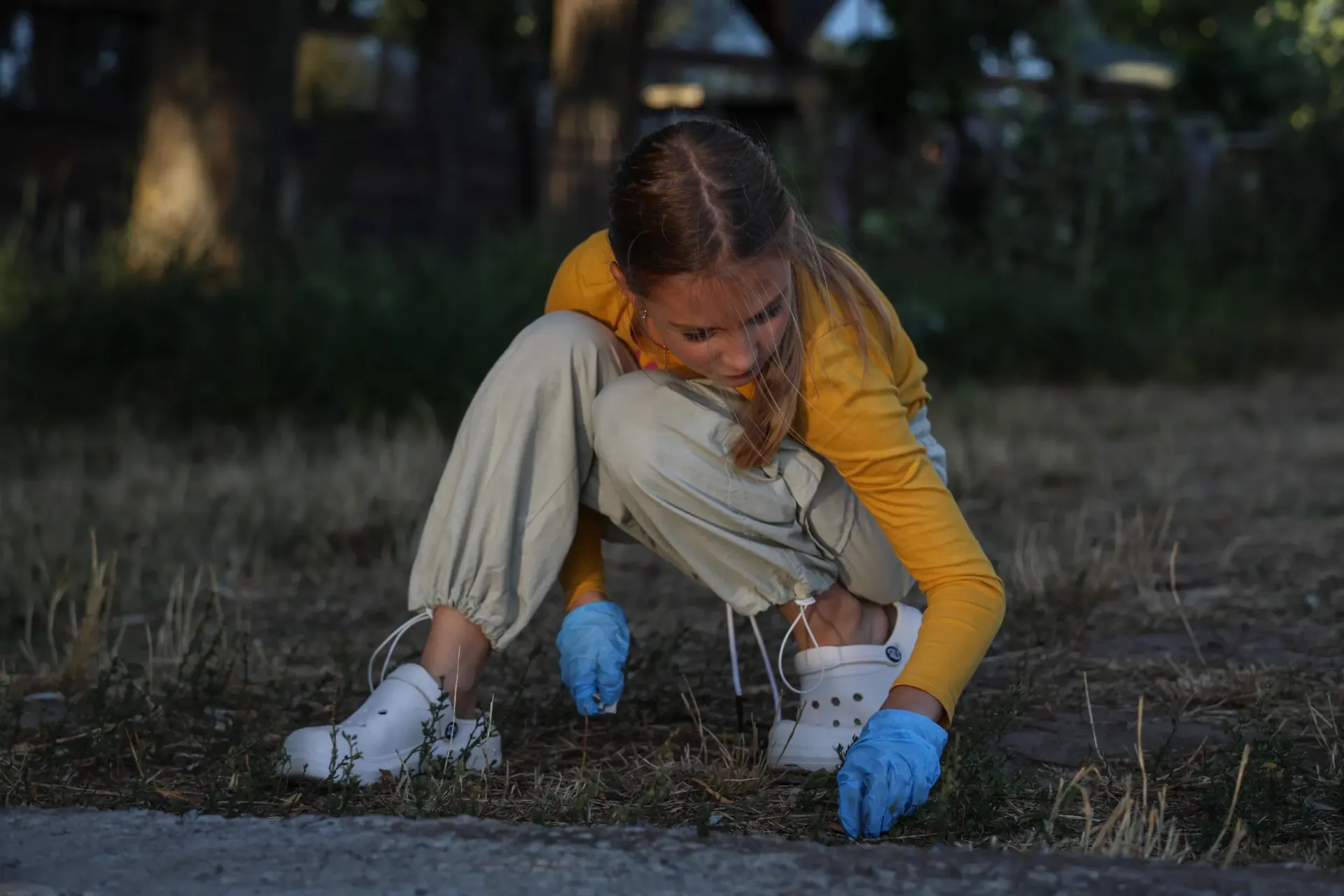
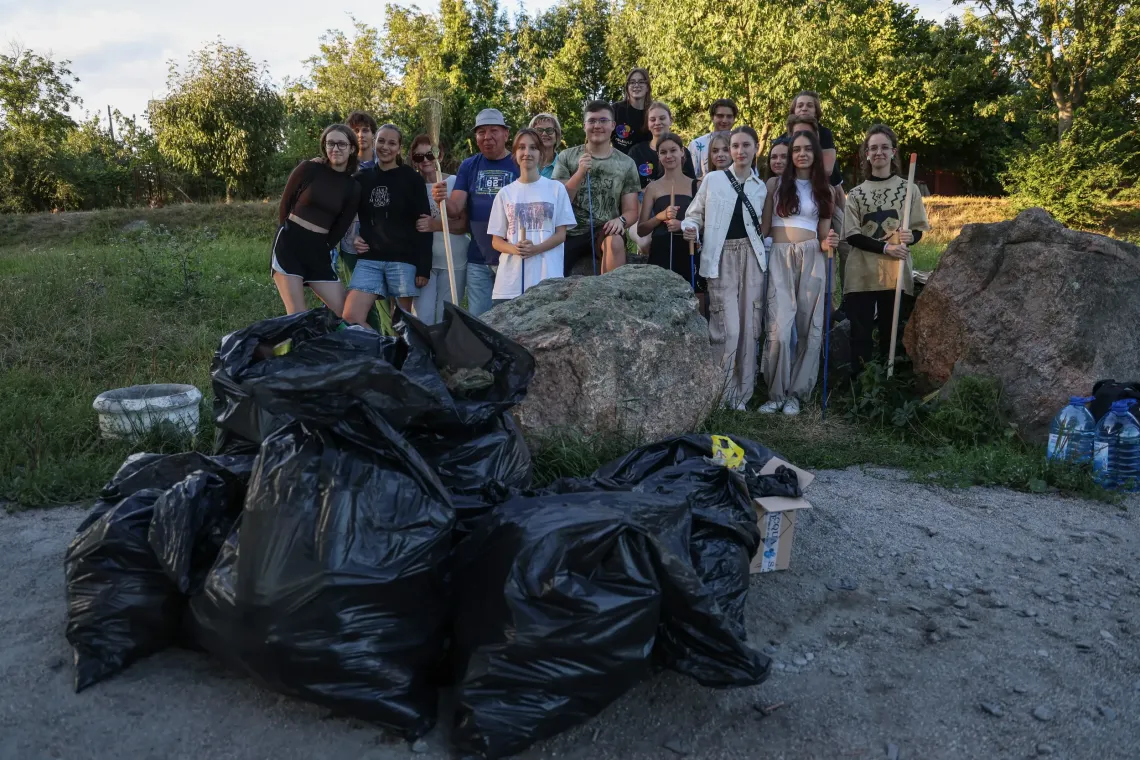
In central Ukraine, 16-year-old nature lover Anastasia Kutishenko enjoyed walking along the Ros River in her home city of Bila Tserkva, but pollution from industrial and domestic waste had become so severe that many locals no longer felt connected to the river.
As both a vital waterway and the source for four drinking water enterprises, Anastasiia and her friends could no longer ignore what was happening.
Together, in 2024, they created Molecule, a youth initiative implemented through UPSHIFT and focused on restoring and protecting the local environment.
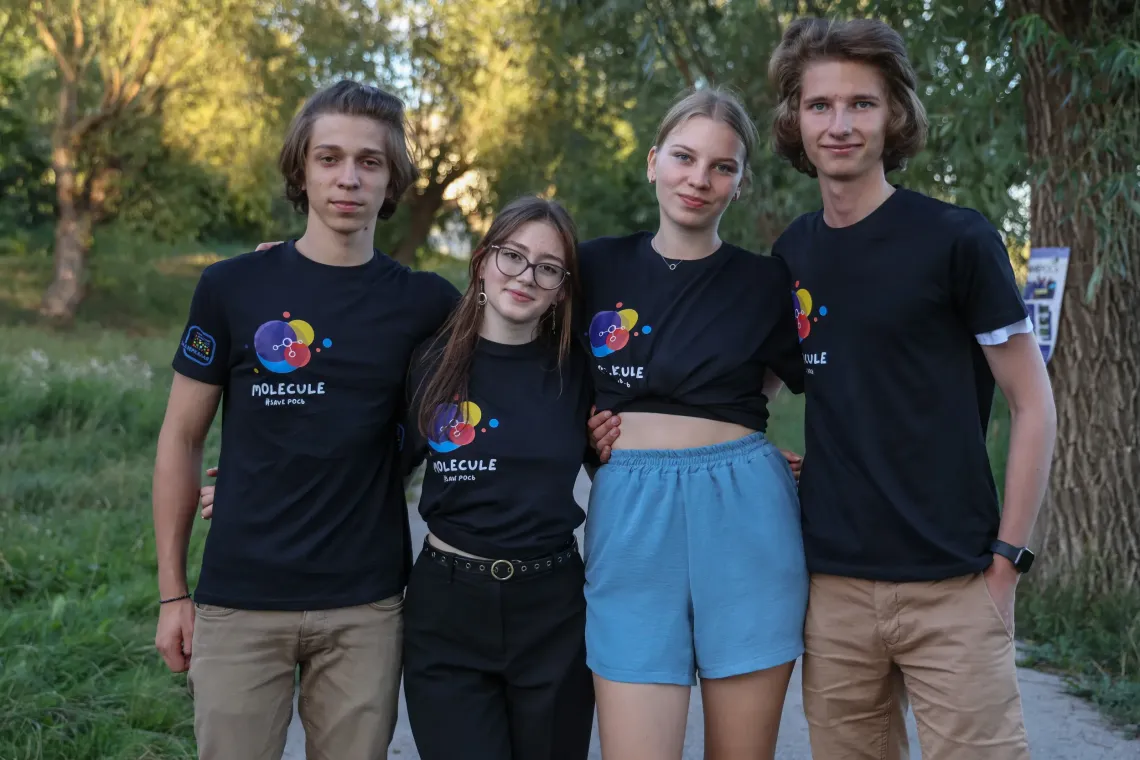


“You sit on the bank and watch the trash float by,” said 16-year-old Vladyslav Pecheniuk. “To be honest, it's embarrassing to bring a girl here on a date! That's why I’m committed to continuing these clean-ups, to draw attention to what’s happening to the river.”
These five solutions, addressing five different challenges in five countries, show the breadth of the global climate crisis and the diversity of innovative youth responses.
As 18-year-old Mark Mamenko, in Bila Tserkva, put it: “We want to build a better future. Not just for ourselves but for our children.”